


Views: 0 Author: Site Editor Publish Time: 2026-08-05 Origin: Site


Workshop lighting was once treated mainly as a fixed part of the building. Ceiling fixtures illuminated the general floor, while a flashlight was kept nearby for an occasional dark corner. That arrangement is no longer enough. Technicians now work inside engine bays, behind production equipment, beneath benches, and around components that create deep shadows even when the room appears bright.
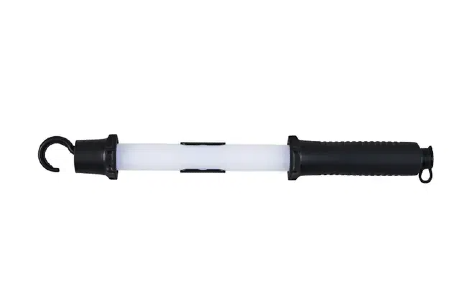
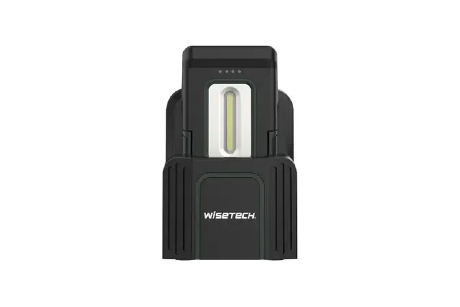
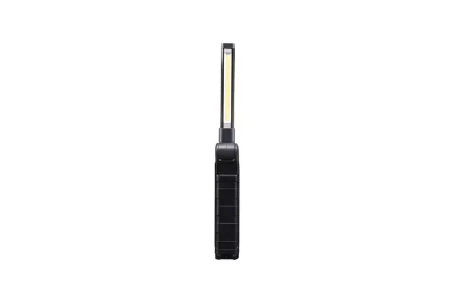
This change has pushed portable task lighting from the edge of the toolbox into the center of daily work. Professional Hand Lamps are designed to place useful light exactly where inspection, assembly, repair, or adjustment is taking place. Their value is not simply that they are portable. It is that they can support the way technicians actually move, position tools, and examine details throughout a shift.
A workshop can be well lit overall and still contain dozens of poorly illuminated work areas. A vehicle hood blocks ceiling light. A machine guard creates a narrow shadow around a belt or bearing. A technician leaning over a bench may cast a shadow directly across the component being measured. These are task-level problems, and they require task-level lighting rather than more general illumination.
Many workshop decisions are based on visual details that are easy to miss. A slight fluid leak, hairline crack, damaged connector, uneven coating, loose fastener, worn seal, or contaminated surface may not be visible under weak or badly directed light. A hand lamp brings the light source close to the subject, helping the user control angle, contrast, and shadow. That makes it easier to distinguish surface condition instead of merely seeing the general shape of a part.
Technicians rarely stay at one fixed workstation. They move from a bench to a machine, from a machine to a storage area, and from there to a vehicle or installation site. A portable lamp can travel with the worker and provide consistent illumination across those locations. This reduces dependence on extension cables, fixed lamps, or whatever light happens to be available in each area.
 |  |  |
A flashlight remains useful when the main objective is to look ahead or identify an object at a distance. Workshop tasks are different. The user often needs a broad area of even illumination at arm's length while both hands are occupied. Holding a narrow-beam flashlight in one hand can make simple maintenance awkward, and placing it on a nearby surface may send the beam in the wrong direction.
A narrow beam creates a bright center with darker surroundings. That is effective for searching, but less effective for reading a wiring layout, inspecting a panel, working across a brake assembly, or preparing a surface. Many hand lamps use a broad main light for close-range work and a smaller top light for focused inspection. The user can switch between area lighting and a torch-like beam without carrying two separate tools.
More lumens do not automatically produce better visibility. A very bright lamp placed at a poor angle can create glare, reflected hotspots, and hard shadows. A hand lamp with a foldable body, rotating bracket, magnetic base, or hanging hook can be positioned away from the user's direct line of sight. The objective is to illuminate the workpiece, not the technician's eyes.
Productivity is often lost in small interruptions rather than major failures. A worker stops to find a flashlight, asks a colleague to hold it, moves a temporary light stand, or repeatedly adjusts a lamp that will not stay in place. Each interruption seems minor, but the effect accumulates across many jobs and many employees.
When a lamp can attach to a metal surface or hang from a nearby structure, the technician can use both hands for the actual task. Fasteners can be removed safely, connectors can be examined while probes are held in place, and measurements can be taken without balancing a light against the workpiece. A well-positioned lamp becomes part of the workstation rather than another object that needs attention.
Portable lighting does not replace safe working procedures, but it can make those procedures easier to follow. Technicians are less likely to reach blindly into a compartment, overlook an obstruction, or position a tool against the wrong part when the full work area is visible. Good task lighting also helps users identify labels, cable colors, warning marks, and moving components before beginning work.
Many defects become expensive only after a machine or vehicle has been reassembled. Before closing a cover or returning equipment to service, a technician can use a hand lamp to check seating surfaces, clips, fasteners, hoses, seals, and leftover tools. The few minutes spent on a final illuminated inspection can prevent repeated disassembly and reduce avoidable rework.
The growing importance of hand lamps is closely connected to changes in product design. Modern models are not simply small lights with handles. They are built around the practical demands of inspection, repair, and portable use.
A broad COB or multi-LED main light is useful for benches, panels, and assemblies, while a top-mounted focused light can reach into holes, channels, and narrow mechanical spaces. Adjustable output is also valuable. Maximum brightness may be helpful for a large compartment, but lower output can reduce glare on reflective surfaces and extend operating time during a long job.
Rechargeable lamps can be returned to a designated charging point between tasks or at the end of a shift. Battery indicators help workers see whether the lamp is ready before starting a job. USB charging, Type-C connections, magnetic charging, and docking stations can simplify storage and reduce the number of loose disposable batteries kept around the workshop.
A workshop lamp will be handled with gloves, placed on dirty surfaces, exposed to dust, and occasionally dropped. A suitable design therefore needs more than attractive appearance. Impact-resistant housings, rubberized grip areas, protected switches, and appropriate dust or water resistance all contribute to reliable use. The correct protection level depends on the environment, but the lamp should be selected as a working tool rather than a household accessory.
Engine bays, wheel wells, underbody areas, dashboards, and interior trim all contain spaces where fixed lighting is obstructed. A magnetic lamp can attach to bodywork or workshop equipment, while a hook can suspend it beneath a hood. A focused top beam helps inspect connectors and openings, and a broad main light supports longer repair work.
Production machines often contain guarded or recessed components. During planned maintenance, a hand lamp can illuminate belts, rollers, sensors, lubrication points, and electrical assemblies. Because the lamp is compact, it can be repositioned as the work moves from one side of the machine to another without bringing a large stand into the service area.
At an assembly bench, portable light can improve visibility when checking small components or surface finish. In quality control, it can expose scratches, contamination, or incomplete assembly. During a power interruption or urgent repair, a charged lamp also provides immediate local lighting while the cause of the problem is investigated.
The best lamp is not always the model with the highest maximum output. Selection should begin with the work area and the way the lamp will be used. A compact inspection lamp may be better for tight spaces, while a larger model with longer runtime may suit extended service work. The main beam should cover the expected working distance without creating excessive glare.
Consider how long the lamp is normally used continuously and whether it can be recharged during breaks. A battery meter can prevent unexpected shutdowns. For shared tools, a docking station or clearly assigned charging location may be more important than a small difference in output because it improves the likelihood that the lamp is returned and ready for the next user.
Magnetic bases are highly useful around steel structures, vehicles, cabinets, and machinery, but they are less useful on aluminum, plastic, or painted surfaces where attachment may be limited. Rotating hooks broaden the placement options. A foldable or indexed bracket helps maintain a chosen angle. The most versatile lamp combines several positioning methods so the technician is not dependent on one type of surface.
Hand lamps are becoming must-have workshop tools because they solve a practical problem that fixed lighting cannot: they bring controlled, hands-free illumination directly to the task. They support faster setup, clearer inspection, safer movement, and more consistent repair quality. As workshops adopt more compact equipment, detailed electronics, and documented maintenance routines, portable task lighting will continue to move from optional accessory to standard equipment.
For distributors, professional tool brands, and industrial buyers developing a portable lighting range, XIAMEN WISETECH LIGHTING focuses on the development and manufacturing of mobile work-light solutions for overseas markets. Its hand lamp portfolio includes rechargeable inspection designs, magnetic mounting, rotating supports, multiple light sources, and charging options that can be evaluated according to workshop use, target market, and customization requirements.


