


Views: 0 Author: Site Editor Publish Time: 2026-08-30 Origin: Site


For decades, traditional corded AC halogen lamps dominated industrial job sites. Early-generation LEDs offered minor efficiency improvements. Yet, they still tied workers to restrictive power cables. Today, battery-powered alternatives are rapidly taking over these demanding environments.
Recent leaps in lithium-ion energy density change the lighting game entirely. Modern Battery Management Systems (BMS) optimize power draw efficiently. They now allow cordless units to match the immense output of heavy-duty AC fixtures. You no longer face the logistical overhead of dragging thick extension cords across wet, hazardous workspaces.
This guide provides a comprehensive buyer’s framework for selecting untethered lighting. We will explore how to evaluate technical specifications accurately. You will learn to compare versatile form factors for different trades. Finally, we will cover how to deploy these solutions effectively. You will discover exactly how to upgrade your professional lighting fleet.
Transitioning to DC Work Lights reduces OSHA-classified trip hazards and eliminates reliance on limited site generators.
Evaluating industrial-grade units requires looking beyond sheer lumen output to thermal management, CRI (Color Rendering Index), and PWM (Pulse Width Modulation) flicker reduction.
Form factor adaptability—such as a Rechargeable Clamp Light versus magnetic bases—dictates operational efficiency across different trades.
Standardizing a fleet requires assessing battery ecosystem compatibility, and degradation risks over a 3–5 year lifecycle.
Corded infrastructure holds many hidden operational expenses. Crews spend valuable time running extension cords every morning. They also waste hours packing them away at night. Cables experience heavy wear and tear on rough construction sites. You must constantly replace frayed or damaged wires. Generators consume expensive fuel to power large lighting arrays. You also pay for regular generator maintenance. These hidden costs accumulate rapidly over a single year.
Safety remains a primary concern for all site managers. Extension cords stretch across busy walkways and scaffolding. They create severe trip hazards for passing workers. OSHA frequently cites these exact hazards during routine safety inspections. Wet conditions amplify these electrical dangers significantly. Eliminating power cords removes the risk of dangerous electrical shocks. DC Work Lights offer a much safer alternative.
Untethered lighting completely transforms your daily workflow. Mobile technicians move quickly between different work zones. Mechanics can position units precisely where needed without outlet restrictions. Emergency responders deploy bright illumination in mere seconds. This untethered agility saves time and boosts overall productivity. Workers no longer search endlessly for available electrical outlets. They bring the light directly to the task at hand.
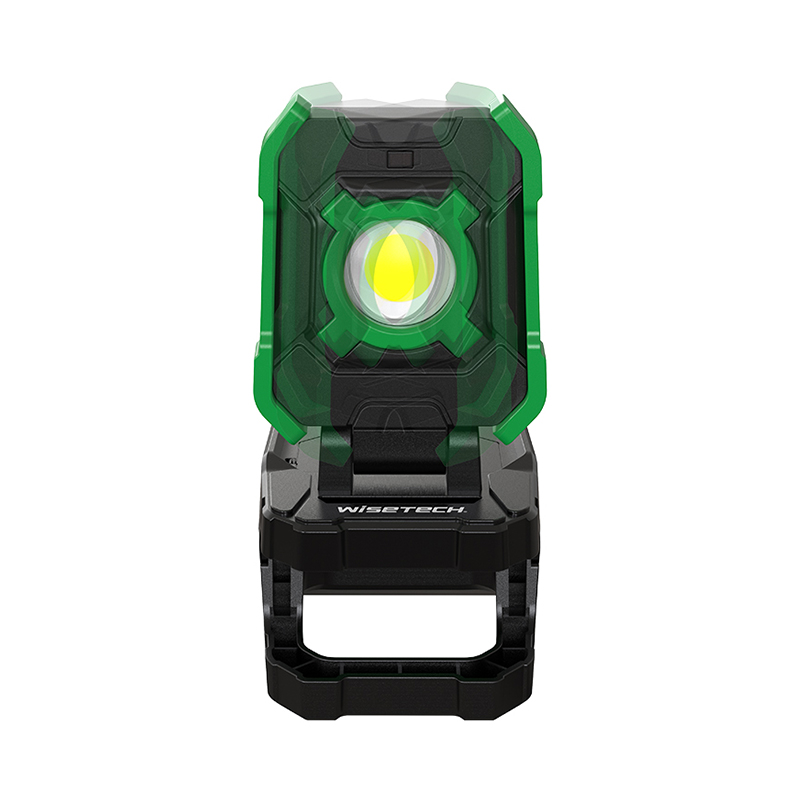
Corded lights still hold specific advantages in certain scenarios. Static, multi-day projects require continuous illumination. AC units excel when infinite runtime is absolutely mandatory. You plug them in and leave them running continuously. They serve exceptionally well for permanent indoor construction phases. Paint booths and drywall taping often rely on these constant power sources.
However, most modern job sites remain highly dynamic. Crews move rapidly from room to room. The shift to rechargeable DC models solves major mobility issues. Battery-powered units adapt instantly to changing environments. You do not need to drag heavy generators across uneven ground. This flexibility accelerates project timelines significantly.
Risk-averse buyers often choose hybrid solutions. Some premium models operate on battery or direct AC power. They feature built-in pass-through charging capabilities. You can run the light while simultaneously charging the internal battery. This offers a seamless transitional step. It bridges the gap between old infrastructure and new technology.
Feature Focus | Corded AC Lighting | Rechargeable DC Lighting |
|---|---|---|
Mobility | Highly restricted by cord length and outlet proximity. | Fully unrestricted. Easy to transport across sites. |
Runtime | Infinite runtime as long as grid power remains active. | Limited by battery capacity. Requires regular charging. |
Safety Profile | High risk of trips and potential electrical shocks. | Zero trip hazards. Completely safe in wet conditions. |
Setup Speed | Slow. Requires routing cables safely across the floor. | Instant deployment. Just place the unit and turn it on. |
Peak lumen claims often mislead buyers completely. A high lumen rating does not guarantee good visibility. You must evaluate usable Lux on the work surface instead. Optical lens design matters immensely for clear vision. Proper lenses prevent blinding hot spots in the center. They distribute illumination evenly across the entire workspace. This uniform beam improves safety and reduces eye strain.
Tasks requiring color accuracy demand high CRI ratings. You should look for a Color Rendering Index above 85. Neutral color temperatures between 4000K and 5000K work best. Electricians need this clarity to distinguish similarly colored wires. Automotive detailers rely on it to spot tiny paint defects. Poor color rendering leads to costly professional mistakes.
Low-quality dimming systems cause severe eye fatigue over time. They use cheap Pulse Width Modulation (PWM) technology. This creates dangerous strobe effects around moving parts. Strobe lighting makes rotating machinery appear completely stationary. Lathes, drill presses, and cooling fans become invisible hazards. High-quality circuitry eliminates this dangerous flicker entirely.
Heat destroys LED efficiency rapidly. Proper thermal management prevents performance throttling during extended use. Aluminum heat sinks dissipate damaging temperatures effectively. An internal Battery Management System (BMS) is equally crucial.
It protects the battery cells against deep discharge.
It prevents dangerous thermal runaway during charging.
It balances voltage across individual lithium cells.
It prolongs the overall lifespan of the power unit.
Choosing the correct shape dictates your daily operational efficiency. A Rechargeable Clamp Light offers incredible versatility for confined spaces. Mechanics attach them directly under heavy vehicle hoods. Plumbers secure them to exposed overhead pipes. These units provide brilliant hands-free, multidirectional illumination. You can position the beam exactly where you need it most. They grip firmly onto joists and standard lumber.
Magnetic bases serve different operational needs entirely. Heavy machinery maintenance requires strong magnetic adhesion. Technicians snap these lights onto steel electrical panels easily. Articulating heads allow precise beam adjustments in tight corners. HVAC professionals rely on them inside cramped ductwork. The strong magnets ensure the unit never falls mid-task.
Construction sites require robust area lighting solutions. Tripod and tower systems replace old halogen stands completely. Modern towers feature durable telescoping mechanisms for varying heights. They include weighted bases for superior uneven terrain stability. Wind-resistance ensures they stay upright during sudden severe storms. You can light up an entire foundation pour effortlessly.
Lithium-ion batteries have strict physical limitations. You must set realistic expectations for chemical degradation. Most units handle 500 to 1000 full charge cycles. After this point, capacity often drops to 80%. Factoring this lifespan into your procurement prevents future surprises. Routine maintenance extends this usable window significantly.
Freezing temperatures severely impact battery chemistry. Cold weather temporarily reduces your available runtime. You must mitigate this on winter job sites. Keep spare batteries inside warm vehicles before deploying them. Never attempt charging lithium units in sub-zero environments. This practice causes permanent internal damage to the cells. It induces dangerous lithium plating inside the battery.
Site-wide deployment creates new logistical challenges for project managers. Managing multiple charging stations requires careful initial planning. You must allocate secure areas for these power banks. Portable units also face very high theft risks. Engraving tools and implementing strict check-out systems deter casual theft. Proper inventory tracking protects your lighting investments.
Choosing a battery platform requires strategic long-term thinking. Universal ecosystems offer immense convenience for large crews. You can share batteries between power drills and lights. However, proprietary integrated batteries often offer better waterproofing seals. They also feature optimized form factors for tight spaces. You must weigh interoperability against dedicated performance.
Professional environments demand strict durability ratings. Consumer-grade plastic shatters quickly on industrial sites. You need an Ingress Protection rating of IP65 or higher. This guarantees total resistance against dust and low-pressure water jets. Impact resistance is equally important for daily drops. Ensure every unit carries an IK07+ rating to survive harsh impacts.
We recommend a structured rollout process for new equipment. Run a focused pilot test before committing to site-wide procurement. This prevents costly purchasing errors.
Select a small team of active field technicians.
Deploy a trial batch of various unit styles.
Gather feedback on runtime and real-world durability.
Rechargeable units evolved far past simple backup tools. They now serve as primary assets for dynamic work teams. Untethered agility transforms how crews approach complex daily tasks. Eliminating extension cords removes significant safety hazards from the floor. Your team will experience fewer delays and better mobility.
Careful attention to exact specifications ensures a solid investment. You must verify BMS quality, CRI levels, and IP ratings closely. This diligence separates consumer toys from true industrial-grade equipment. Make the switch to untethered power today. Upgrade your fleet to improve site safety and boost daily productivity simultaneously.
A: High-end models utilize constant-current circuitry to maintain consistent brightness. They deliver steady illumination until the battery completely depletes. Cheaper alternatives rely on simple voltage-drop dimming. These budget models gradually dim as the battery loses charge. You should always verify the circuitry type before purchasing industrial lighting.
A: It depends entirely on the optical lens design. Area lights use flood optics to disperse wide beams. Task lights use spot optics for focused intensity. Premium models feature hybrid diffusers. These diffusers allow you to switch between focused task lighting and broad area illumination easily.
A: Lithium-ion batteries perform best between 32°F and 104°F. Freezing temperatures temporarily reduce your available runtime. However, charging a cold battery causes severe permanent damage. It induces lithium plating inside the cells. You must always warm batteries to room temperature before placing them on a charger.


