


Views: 0 Author: Site Editor Publish Time: 2026-08-27 Origin: Site


Industrial maintenance hinges on speed and strict safety standards to keep facilities running smoothly. Every minute of equipment downtime directly impacts profitability. Yet, maintenance teams often treat task lighting as a mere afterthought. Traditional AC corded lights introduce dangerous tripping hazards across the shop floor. They require constant proximity to power outlets and unnecessarily inflate setup times for routine work orders. Technicians waste valuable moments managing cables instead of diagnosing mechanical issues.
Transitioning to modern DC Work Lights eliminates cumbersome cord management entirely. When these units integrate seamlessly into your existing cordless tool ecosystems, they enforce safety compliance instantly. Ditching tethered cables tangibly reduces mean time to repair (MTTR) across all shifts. You empower technicians to focus entirely on precision repairs. A modernized lighting strategy transforms a basic utility into a measurable operational advantage.
Faster Setup & Teardown: Eliminating extension cords saves an estimated 10–15 minutes per maintenance task, compounding into significant labor savings.
Enhanced Safety Compliance: Low-voltage DC operation and cordless design directly mitigate OSHA-cited electrical and trip hazards in wet or confined industrial spaces.
Platform Standardization: A unified tool battery work light system leverages existing battery inventories, reducing overall capital expenditure.
Predictable TCO: While upfront costs for battery ecosystems can be higher, lower maintenance, reduced cable replacement, and faster task completion drive a positive long-term ROI.
Maintenance teams lose substantial time before actual repairs even begin. Sourcing a reliable power outlet in a massive facility often takes several minutes. Technicians must then unspool long extension cords across the floor. They carefully route these cables around heavy machinery and pedestrian walkways. Finally, they tape down or cover the cables to prevent accidents. This entire process burns approximately 10 to 15 minutes per task. Over a week, this wasted setup and teardown time compounds into hours of lost productivity.
High-voltage AC lighting introduces serious liabilities in harsh industrial environments. Relying on 120V or 240V fixtures creates distinct dangers. Facility managers constantly battle these common risks:
Trip Hazards: Extension cords snaking across walkways frequently violate OSHA standards.
Electrical Shock: Using AC halogens in damp areas or near chemical spills increases electrocution risks.
Heat Burns: Traditional halogen bulbs run incredibly hot, risking severe burns upon accidental contact.
Fire Risks: High-heat fixtures placed too close to combustible industrial solvents can ignite fires.
Common Mistake: Relying on cheap residential-grade extension cords in industrial zones often leads to frayed wiring and eventual OSHA citations.
Tethered lighting severely limits how well technicians maneuver. Confined spaces demand flexibility. When working inside massive injection molding machines, HVAC ducts, or elevated catwalks, cords easily snag. Technicians often settle for suboptimal illumination simply because the cord will not reach further. Poor lighting directly slows down diagnostic times. Precision tasks suffer when workers cannot position the light source exactly where they need it.
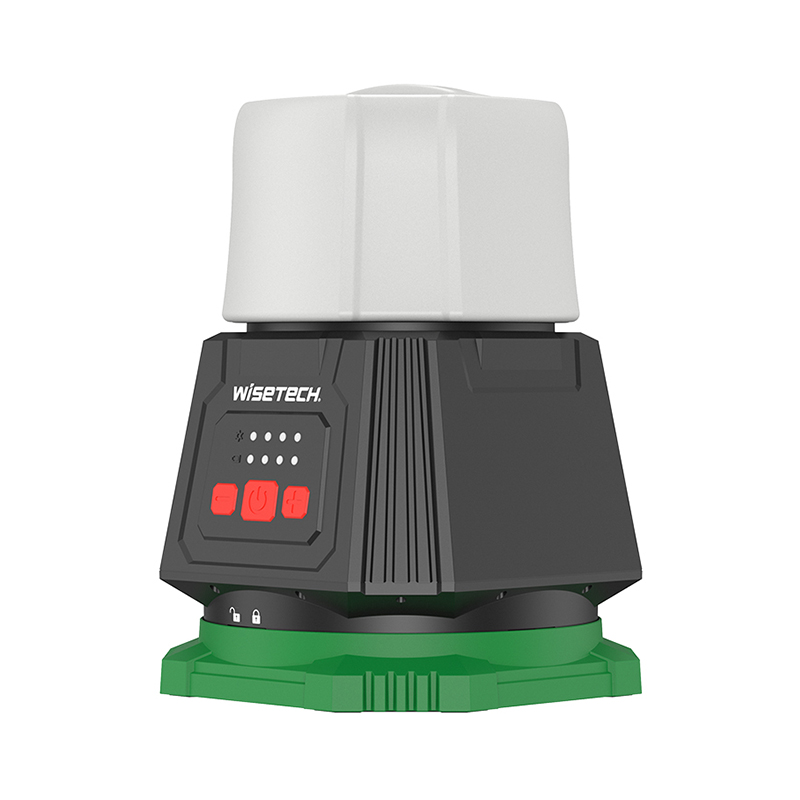
Portable lighting completely changes how crews tackle emergency breakdowns. Technicians grab a charged unit, walk to the problem area, and illuminate the workspace instantly. They skip the tedious cord routing process. This rapid deployment directly shrinks Mean Time to Repair (MTTR). Faster repairs mean production lines resume operation sooner. In high-stakes manufacturing, shaving ten minutes off a repair cycle saves thousands of dollars.
Facilities occasionally face power failures or require main-breaker servicing. AC-powered task lighting becomes useless during these events. Self-powered lighting provides a critical operational advantage. Technicians maintain perfect visibility throughout the outage. This uninterrupted workflow involves specific benefits:
Crews safely execute main-breaker lock-out/tag-out (LOTO) procedures.
Diagnostic tests continue smoothly without waiting for backup generators to stabilize.
Teams navigate dark facility corridors safely to access remote breaker panels.
Emergency repairs conclude faster because visibility remains consistent.
Proper illumination directly reduces human error rates. Modern battery-powered LEDs offer high Color Rendering Index (CRI) ratings. High CRI lighting mimics natural daylight accurately. Technicians easily distinguish between a dark blue wire and a black wire in a crowded control panel. Glare reduction lenses prevent eye strain during long shifts. Better ergonomics keep workers alert and significantly decrease costly re-wiring mistakes.
Standardizing your facility on a single battery platform offers immense logistical advantages. Most industrial teams already utilize 18V or 20V cordless drills and impact drivers. Integrating a Tool Battery Work Light into this existing network is highly efficient. Your lighting now shares the exact same power source as your grinders and band saws. You eliminate the chaos of mismatched batteries entirely.
Managing disparate charging equipment wastes valuable storage space and budget. Standardizing reduces the need to purchase separate proprietary chargers. You no longer track specialized power supplies just for lighting. This consolidation simplifies inventory management for the procurement team. Tool cribs remain organized. Technicians always know exactly which battery fits their gear.
Scaling a unified lighting solution across multiple shifts becomes effortless. You simply set up a central battery charging hub in the maintenance shop. Workers grab a fresh battery at the start of their shift. When a battery depletes, they swap it out in seconds. You scale illumination capacity by purchasing bare tool lights and relying on your existing battery pool.
Ecosystem Management Comparison
Feature | Mixed Brand Ecosystem | Unified Battery Ecosystem |
|---|---|---|
Charger Clutter | High (Multiple proprietary docks) | Low (Single standardized charging bay) |
Deployment Speed | Slow (Hunting for specific batteries) | Fast (Universal battery swapping) |
Procurement Cost | High (Buying batteries for every tool type) | Low (Buying bare tools only) |
Maintenance Overhead | Complex tracking required | Simplified central tracking |
Procurement managers often hesitate at the upfront cost of high-lumen battery lighting. Premium cordless ecosystems definitely cost more initially than cheap AC halogen drops. However, evaluating long-term operational expenditure (Opex) reveals a different story. AC lights consume more energy, require frequent bulb replacements, and demand constant cord maintenance. Battery-powered LEDs consume less energy and require virtually zero daily maintenance.
Industrial environments destroy fragile equipment quickly. Heavy-duty, IP-rated cordless lights survive drops, water exposure, and heavy impacts. Conversely, standard AC fixtures crack easily. Extension cords frequently fray, requiring constant replacement to meet safety codes. The long lifespan of a ruggedized cordless unit heavily offsets its initial purchase price. You stop buying replacement cords every few months.
The true return on investment stems from reclaimed labor hours. Consider a facility where ten technicians each save 15 minutes per shift by avoiding cord management. That equals 2.5 hours of reclaimed labor daily. Multiply those hours by the average technician wage rate. You quickly realize the equipment pays for itself within just a few months. Time saved on setup translates directly to more preventative maintenance work completed.
Best Practice: Track your MTTR on specific recurring tasks before and after implementing cordless lighting to build a hard data case for future procurement.
"Battery anxiety" presents a real hurdle during transition. If a facility lacks a strict charging protocol, cordless lights become a hindrance. A technician arriving at a critical breakdown with a dead battery loses valuable time. Facilities must establish clear checkout and charging rules. Designate specific personnel to ensure all batteries hit the charging bay at shift change. Proper logistics completely eliminate battery-related downtime.
High-output settings drain batteries rapidly. Technicians often run lights at maximum brightness unnecessarily. You must transparently address runtime trade-offs. Teach crews to balance required lux levels against acceptable runtimes. Dialing a light down to 50% brightness often extends the runtime by several hours while still providing adequate illumination. Regulated LED models help by maintaining constant brightness until the battery fully depletes.
High-quality, tool-battery-compatible lights are highly desirable items. They frequently go missing in large facilities. Shrinkage impacts your return on investment. You must implement strong mitigation strategies immediately. Engrave company logos deeply into the plastic housings. Utilize Bluetooth asset tracking tags on high-value units. Enforce a strict tool crib checkout system where technicians surrender an ID badge until the light returns.
Battery-powered lighting solutions represent far more than a simple equipment upgrade. They act as powerful workflow optimization tools for your entire maintenance division. While permanent AC lighting remains perfectly suited for fixed high-bay illumination, task-level maintenance absolutely demands agility. Cordless solutions deliver that required flexibility safely.
You can start optimizing your facility today by taking decisive action. Audit your current task-lighting setups to identify safety hazards. Evaluate your existing cordless tool platforms to find compatible lighting options. Finally, pilot a unified lighting system with a single maintenance crew. Measure their time savings and feedback. You will likely find the productivity gains justify a complete facility-wide rollout.
A: Yes. Modern high-output LEDs combined with 18V or 20V battery platforms easily match or exceed traditional AC halogen lumen output. They provide brilliant, wide-area illumination without generating dangerous surface heat, making them significantly safer for confined industrial environments.
A: Runtimes generally range from 2 to 10 hours. This depends entirely on the battery's amp-hour (Ah) capacity and your selected brightness setting. A high-capacity 8.0Ah battery running on a medium brightness setting easily lasts an entire maintenance shift.
A: Standard models cannot. You must clarify the difference between standard units and intrinsically safe models. For explosive atmospheres, you absolutely need ATEX-certified or intrinsically safe lighting specifically rated to prevent electrical sparks from igniting flammable gases.
A: Unregulated lights slowly dim as the battery voltage drops over time. Premium regulated models maintain a constant, steady brightness level until the battery is completely depleted, at which point the light simply shuts off to protect the battery cells.


