


Views: 0 Author: Site Editor Publish Time: 2026-08-24 Origin: Site


Recent advancements in battery-powered site lighting have certainly transformed mobility on modern job sites. Many contractors initially embraced cordless units for their sheer portability. However, the reality of high-demand, multi-shift job sites tells a very different story today. Constant power draw and massive lumen requirements quickly expose the severe limitations of cordless solutions. Batteries drain incredibly fast in cold weather environments. Charging stations require constant monitoring and dedicated labor. Mid-shift light degradation drastically slows down critical construction tasks. You need reliable, uninterrupted illumination to keep crews safe and consistently productive. This is exactly where corded power proves its unmatched value. For heavy commercial, industrial, and extensive residential builds, tethered lighting remains the absolute standard. We will explore why these robust fixtures guarantee continuous operation and highly scalable illumination. You will learn how to properly evaluate output, manage implementation risks, and seamlessly select the right fixtures for your fleet.
Zero-Downtime Illumination: AC lighting eliminates battery management logistics and mid-shift lumen degradation.
Scalable Site Coverage: Daisy-chain capabilities allow site managers to illuminate massive footprints from a single 120V circuit or generator.
Predictable Performance: AC range work lights deliver consistent, maximum lumen output regardless of environmental temperatures or prolonged runtime.
Site managers often underestimate the hidden logistical burdens associated with temporary lighting. Managing a fleet of battery-powered fixtures introduces cascading labor inefficiencies. Workers must pause critical tasks to locate fresh batteries, swap out dead units, and place depleted cells onto charging bays. You might lose fifteen to twenty minutes per worker per shift just managing power supplies. Across a sprawling commercial site, these brief interruptions compound into hundreds of lost labor hours over a project lifecycle. Equipment shrinkage presents another major hurdle. Compact batteries are highly susceptible to job site theft. You constantly find yourself replacing missing power cells just to keep your existing light fixtures operational.
Voltage drop creates a secondary, yet equally problematic, issue. Direct current (DC) battery systems suffer from inherent power curves. When a battery discharges, its voltage drops. Most cordless lights mitigate this by gradually dimming the LED output to preserve remaining runtime. A light rated for 5,000 lumens might only deliver that peak intensity for the first thirty minutes. After two hours, it might output half its original brightness. This degradation severely impacts site visibility. AC-powered fixtures solve this completely. They provide a fixed, continuous flow of electricity. You receive one hundred percent of the rated lumen output from the moment you flip the switch until the end of the shift.
Certain heavy-duty applications absolutely cannot tolerate task interruption or fading visibility. You must maintain intense, consistent illumination to ensure safety and precision. Consider the following high-demand scenarios:
Winter Construction: Freezing temperatures severely throttle lithium-ion battery performance, sometimes cutting runtime in half. Corded lights ignore extreme cold.
Continuous Concrete Pouring: Large slab pours often extend late into the evening. Workers need flawless visibility to monitor curing and level surfaces accurately.
Tunneling and Underground Infrastructure: These sites lack natural ambient light entirely. Absolute continuous illumination is non-negotiable for basic life safety.
24/7 Turnaround Projects: Industrial plant shutdowns require round-the-clock maintenance. Crews work in continuous shifts, demanding lighting that never needs a charging break.
Task interruption in these environments poses severe safety risks. Shadows hide trip hazards, masking potentially fatal drop-offs. When you eliminate the variable of battery life, you drastically reduce site hazards and maintain operational momentum.
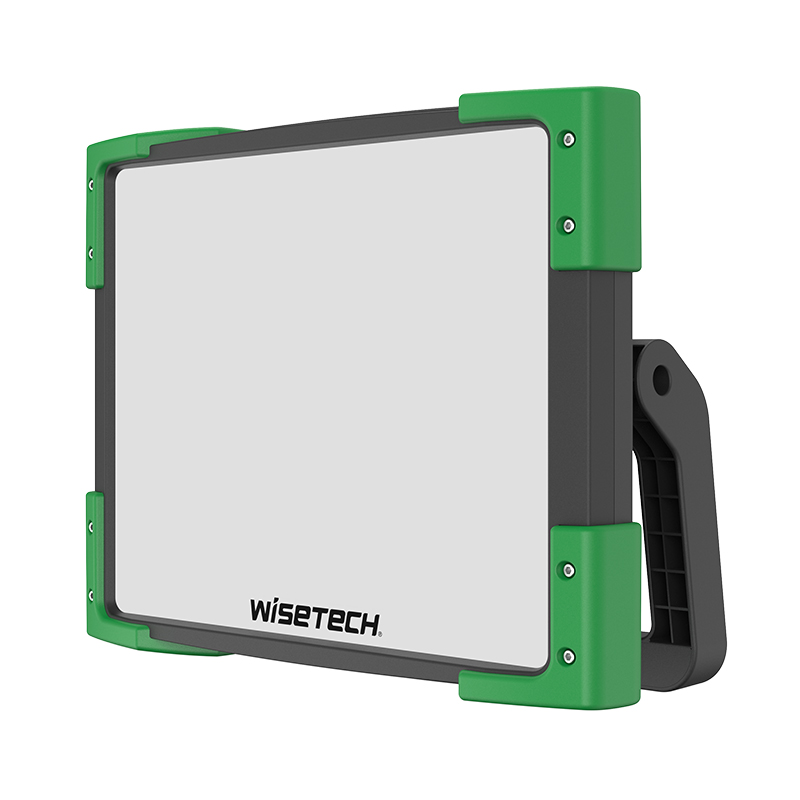
When you evaluate raw output, corded fixtures easily dominate the upper tiers of site lighting. Cordless models typically max out around 4,000 to 6,000 lumens because higher outputs would drain standard batteries in minutes. Tethered lights face no such restrictions. You can easily deploy fixtures pushing 10,000, 20,000, or even 30,000 lumens. This sheer volume of light allows you to illuminate massive areas using fewer individual units. You achieve a vastly superior lumen-to-watt efficiency. This makes a profound difference when lighting large warehouses, airplane hangars, or expansive outdoor staging yards.
Contractors rely on a cohesive ecosystem of fixtures to address varying site conditions. A premium AC Range Work Light provides specific form factors designed for distinct phases of construction. Floor stands offer low-angle illumination perfect for drywall finishing and flooring inspections. Heavy-duty tripods elevate light sources to reduce glare and eliminate blinding hot spots. Overhead string lights provide broad, ambient coverage down long corridors. High-bay temporary fixtures illuminate massive vertical volumes in structural steel environments. By integrating these different profiles, you establish a uniform, shadow-free environment.
Common AC Light Form Factors and Applications
Form Factor | Primary Application | Key Advantage |
|---|---|---|
Floor Stand / Low Boy | Flooring, trim work, under-cabinet routing | Highlights surface imperfections and floor levelness |
Tripod Mount | General framing, painting, electrical rough-in | Elevates light source to reduce worker eye glare |
Overhead String Lights | Hallways, stairwells, tunnel pathways | Provides continuous ambient navigation lighting |
High-Bay Temporaries | Warehouse construction, structural steel | Illuminates massive square footage from above |
Daisy-chaining remains one of the most powerful operational advantages of tethered site lighting. Modern LED units draw exceptionally low wattage compared to legacy halogen lamps. You can link multiple units end-to-end using integrated utility receptacles. A standard 15-amp site circuit running at 120 volts supports a maximum continuous load of 1,440 watts (following the 80% safety rule). If each high-output LED fixture draws 100 watts, you can safely string 14 consecutive lights together. This allows a site manager to illuminate an entire high-rise floor from a single power drop. You drastically reduce the need for messy extension cord webs.
Thermal management is another critical performance metric. High-output LED diodes generate significant heat. If this heat is not dissipated, the diodes degrade rapidly. Cordless lights struggle here because they must house temperature-sensitive lithium-ion batteries inside the same enclosure. Excess heat damages the batteries. Tethered lights do not face this internal conflict. Manufacturers can optimize the entire die-cast aluminum housing as a dedicated heat sink. The fixtures run cooler, allowing the diodes to operate at maximum efficiency for tens of thousands of hours without failure.
Despite their undeniable performance benefits, tethered lights introduce specific safety challenges. Cord management represents the primary drawback. Trailing extension cords create severe trip hazards, especially in high-traffic corridors. Site managers must proactively mitigate these risks. You should elevate cables using overhead stringing hooks or temporary scaffolding brackets whenever possible. When cords must cross walking paths, you must utilize high-visibility cable covers or low-profile cord ramps. Rely on heavy-gauge, highly visible extension cords featuring bright yellow or orange jackets. This ensures workers easily spot power lines among scattered building materials.
Site compliance requires strict adherence to federal safety regulations. OSHA mandates specific protocols for temporary power distribution. Every corded light must utilize grounded three-prong plugs. You must plug these fixtures into GFCI (Ground-Fault Circuit Interrupter) protected receptacles. A GFCI instantly cuts power if it detects a current leak, preventing fatal electrical shocks in damp environments. Furthermore, you must only use ruggedized power cords bearing SJTW or SOOW ratings. These industrial designations indicate the cable jacket resists oil, water, UV degradation, and severe abrasion. Using indoor-rated cords on an active construction site invites immediate compliance fines and severe safety hazards.
Weather and environmental ingress represent another implementation hurdle. Construction sites are inherently dirty, wet, and dusty. A standard indoor light fixture will fail rapidly when exposed to concrete dust or driving rain. You must verify the Ingress Protection (IP) ratings of your temporary lighting fleet. Ensure fixtures carry an IP65 rating at minimum. IP65 guarantees the housing completely blocks dust intrusion and withstands low-pressure water jets from any direction. For extreme environments, seek IP67 ratings, which allow temporary submersion in water. These robust seals ensure internal LED drivers and wiring connections remain perfectly dry during heavy storms or pressure washing operations.
Many remote sites lack grid power, forcing crews to rely on portable generators. You must understand generator load realities before plugging in sensitive LED arrays. Unlike old halogen bulbs, LED drivers contain complex electronic components. These components require clean, stable electricity. Conventional open-frame generators often produce "dirty" power characterized by High Total Harmonic Distortion (THD). This voltage fluctuation causes LEDs to flicker severely and permanently damages the internal drivers. You should run LED site lighting exclusively off inverter generators. Inverter generators produce a pure sine wave, ensuring your fixtures perform flawlessly without internal electronic degradation.
Selecting the right fixtures requires a methodical approach. Not all temporary lighting delivers the durability required for heavy industry. You must evaluate technical specifications against the brutal realities of your specific job sites. Follow these detailed steps to specify high-quality AC Work Lights for your construction fleet.
Calculate Output Requirements: Do not guess how much light you need. Use standardized metrics. OSHA recommends minimum illumination intensities. General construction areas need roughly 5 to 10 foot-candles. Detailed task work, like drywall finishing or precise electrical routing, demands 30 to 50 foot-candles. Translate these requirements into total lumens based on the square footage of your typical working zones.
Evaluate Durability Metrics: Look for strict impact resistance ratings. An IK07 or IK08 rating indicates the fixture can survive heavy, direct blows from dropped tools or scaffolding pipes. Demand die-cast aluminum housings instead of cheap plastics. Examine the lens material. You want heavy-duty polycarbonate lenses, not glass. Polycarbonate resists shattering when knocked over, keeping your crews safe from hazardous glass shards.
Assess Mounting and Portability: A light is only useful if crews can position it effectively. Evaluate the deployment mechanisms. Look for fixtures featuring integrated magnetic bases for instant attachment to steel I-beams. Check for fold-out scaffolding hooks. If you use tripods, demand quick-release brackets that allow workers to detach the light head in seconds without using tools.
Analyze the Power Interface: Inspect the power cords permanently attached to the fixture. They should be thick, flexible, and heavily insulated. Check if the unit includes an integrated daisy-chain receptacle on the back of the housing. Ensure this built-in outlet features a waterproof, spring-loaded cover to keep dust out when not in use.
Execute Next-Step Actions: Never buy a massive fleet of lights blindly. Run a small-scale pilot test. Purchase three to five units of a specific model. Deploy them in a challenging site sector, such as a damp basement or a dusty concrete cutting zone. Gather direct feedback from your foremen regarding glare, ease of setup, and overall durability. Once the fixtures pass this field test, you can confidently execute a fleet-wide procurement order.
Battery-powered lighting undoubtedly holds a place on the modern job site. For quick inspections, punch-list walk-throughs, or navigating highly confined spaces, cordless units offer brilliant agility. However, foundational site visibility relies entirely on consistent, tethered power. Heavy commercial, industrial, and extensive residential projects demand illumination that never quits. When you eliminate the logistical friction of battery swapping and mid-shift dimming, you unlock higher daily productivity.
Investing in high-quality, corded work lights proves to be a highly strategic operational decision. You guarantee continuous site safety and eliminate frustrating power interruptions. Your foremen spend less time managing battery stations and more time supervising actual construction progress. Take a moment to audit your current temporary lighting setup. Look at how many hours your team loses to power logistics. Contact a commercial lighting supplier for a comprehensive site assessment, and upgrade your fleet to reliable, continuous power.
A: It depends on the total wattage of the lights and your circuit capacity. A standard 15-amp, 120-volt circuit safely supports 1,440 continuous watts. If your LED lights draw 100 watts each, you can safely link up to 14 units together. Always check the manufacturer's specified maximum linking limit printed on the fixture.
A: Yes, provided they possess the correct Ingress Protection ratings. You must select fixtures rated at least IP65, which blocks dust and low-pressure water jets. Additionally, always plug these lights into GFCI-protected receptacles to prevent electrical shocks in damp environments.
A: Yes, but you must ensure the generator produces clean power. Standard generators often have high Total Harmonic Distortion (THD), which can cause LEDs to flicker and damage their drivers. It is highly recommended to use an inverter generator, which produces a clean, pure sine wave.
A: COB (Chip-on-Board) LEDs pack multiple diodes tightly together, creating a highly intense, dense, and uniform beam ideal for spotlighting. SMD (Surface-Mounted Device) LEDs space diodes apart, generating a wider, more diffused floodlight pattern perfect for illuminating broad work areas without heavy glare.
A: Modern LED work lights drastically reduce temporary power requirements. They draw up to 80% less wattage than legacy halogen fixtures while delivering superior brightness. This low-draw nature frees up vital circuit capacity for heavy power tools, compressors, and vital site machinery.


