


Views: 0 Author: Site Editor Publish Time: 2026-03-03 Origin: Site


Poor lighting reduces output and increases errors. In large plants, visibility drives precision. An AC Work Lighting Lumens Guide helps solve this issue. Large-Scale AC Work Lighting must balance brightness and coverage. In this article, you will learn how to optimize Industrial AC Work Lighting Solutions and choose correct lumens with reliable products from WISETECH.
Brightness directly influences working speed and accuracy. In low-light conditions, workers hesitate before handling materials or operating equipment. This hesitation increases cycle time and reduces throughput. High Lumen AC Work Lights improve clarity across work surfaces and machinery panels. As a result, teams complete tasks faster and with fewer errors.
In manufacturing environments, improved visibility enhances alignment accuracy and surface inspection reliability. In warehouses, it reduces picking errors and improves scanning efficiency. Over months of operation, optimized lumen levels contribute to consistent productivity growth.
Industrial safety audits often identify lighting gaps as risk factors. Poor illumination increases the chance of missteps, incorrect tool use, and loading errors. AC Work Lighting for Industrial Facilities must meet minimum illumination thresholds to comply with workplace standards.
Correct lumen planning reduces glare and shadow contrast, both of which can distort depth perception. Even illumination improves spatial awareness and supports safer forklift navigation, ladder use, and overhead work.
Note: Lighting uniformity is as important as brightness. Uneven distribution can create hidden hazards even in high-lumen environments.
Lighting mistakes lead to retrofits. Retrofits interrupt workflow. A proactive Factory AC Work Lighting Design eliminates the need for temporary fixes. When lumen calculations are accurate from the beginning, facilities avoid repeated adjustments and unplanned maintenance.
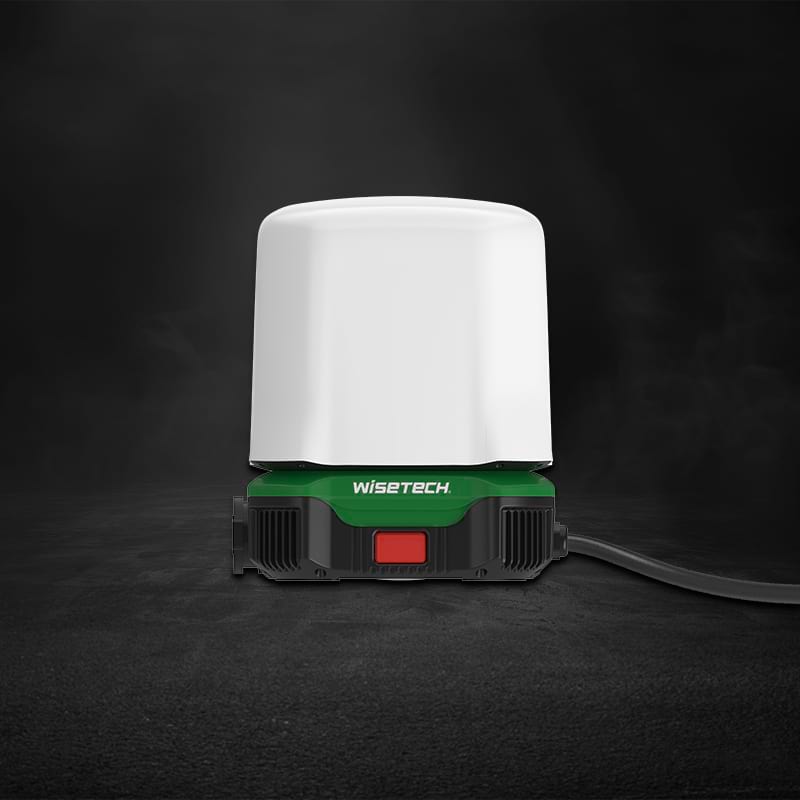
Watts measure energy consumption. Lumens measure visible output. In Industrial Lighting Design, visible output determines functional performance. Modern LED AC Work Lighting produces higher lumens per watt than traditional halogen systems. This efficiency allows facilities to increase brightness without escalating energy costs.
It also lowers heat emission. Reduced heat improves worker comfort and extends component lifespan.
Every zone has unique requirements. Storage areas differ from inspection zones. A general planning reference appears below.
Industrial Area | Recommended Lumens per Sq Ft | Primary Objective |
Bulk Storage | 30–40 | Safe movement |
General Production | 50–60 | Balanced workflow |
Precision Assembly | 60–75 | Detail accuracy |
Inspection & QC | 75–100 | Surface evaluation |
These benchmarks support Choosing Lumens For Industrial Lighting based on operational function rather than guesswork.
High output alone is insufficient. Distribution determines usability. 360° LED Work Light systems provide full spatial coverage. Frosted diffusers soften brightness while maintaining intensity. This combination improves clarity during close-range tasks.
For example, certain AC Work Light Series models use die-cast aluminum housings and impact-resistant PC covers to maintain consistent light diffusion under demanding jobsite conditions. Their wide-angle design reduces shadow zones in temporary maintenance areas.
Start with square footage. Multiply length by width. A 200 ft by 150 ft facility equals 30,000 sq ft. This number forms the baseline for lumen planning.
If the facility requires 50 lumens per sq ft:
30,000 × 50 = 1,500,000 lumens.
This defines the core requirement for the Large-Scale AC Work Lighting Setup.
High ceilings reduce ground-level intensity. High Bay AC Lighting compensates through focused beam angles and higher output. Mounting position significantly affects effective brightness.
Skylights reduce artificial lighting demand. In partially daylit facilities, managers often decrease calculated lumens by 10 to 20 percent without compromising performance.
General lighting cannot satisfy precision tasks. Inspection benches may require localized Portable Flood Light support. AC-powered units eliminate battery downtime and maintain stable output during extended shifts.
Tip: Separate general illumination from task lighting in calculations to avoid unnecessary overdesign.
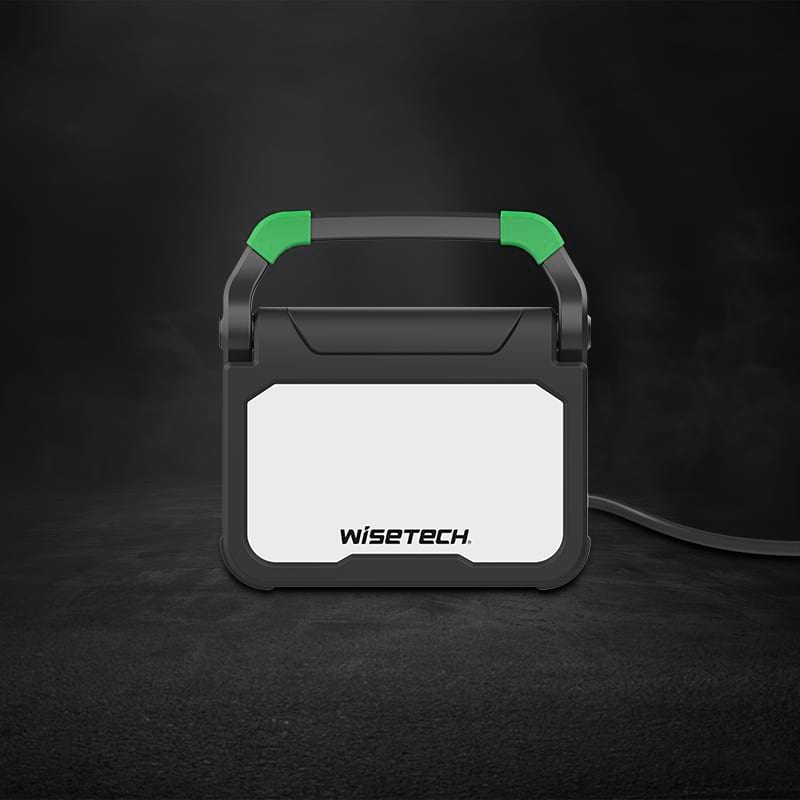
Moderate brightness ensures safe navigation and label reading. Excessive intensity may increase glare on reflective packaging surfaces.
Assembly lines require stable, flicker-free illumination. Workers rely on consistent brightness for alignment and measurement. Industrial AC Work Lighting Solutions designed for continuous AC power avoid battery interruptions during long production cycles.
Inspection demands maximum clarity. Surface flaws become visible only under sufficient brightness. High-output Commercial Work Lights improve defect detection rates and reduce rework.
Maintenance teams need flexible positioning. AC-powered 360° flood lights with integrated sockets simplify jobsite setup. Some professional-grade models integrate cascade power outlets, allowing tools to connect directly through the lighting unit. This reduces cable clutter and improves workspace organization.
Open industrial floors require consistent and durable lighting. Heavy-duty AC work lights built with aluminum housings and reinforced PC lenses maintain output under dust and impact exposure. IP54 and IK08 ratings support long-term reliability in construction and maintenance environments.
Uniform coverage improves productivity by eliminating repositioning delays. AC Work Light Series products designed for 360° rotation offer multi-angle flexibility. Their adjustable brackets support hanging, tripod mounting, or magnetic attachment depending on task demand.
Compliance builds trust. Many professional AC-powered work lights meet CE, RoHS, and related European standards. For B2B buyers, certification demonstrates quality control and supply chain stability. It also reduces import and liability risks.
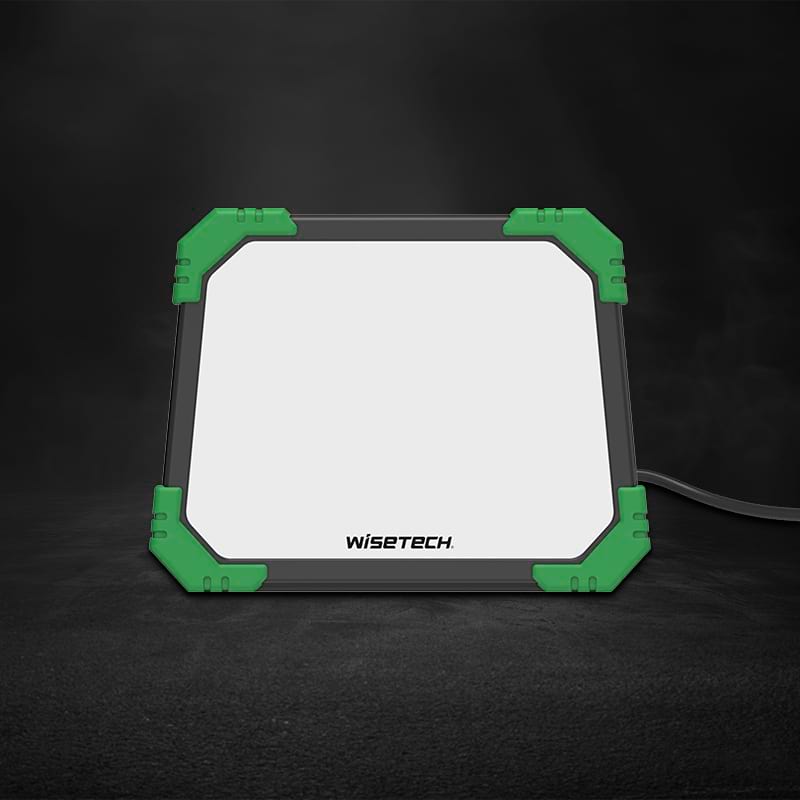
Feature | High Bay AC Lighting | Portable Flood Light |
Installation | Fixed overhead | Mobile |
Coverage | Wide permanent | Targeted temporary |
Flexibility | Limited | High |
Best Use | Large warehouses | Maintenance & repair |
Both options often coexist in Industrial Lighting Design strategies.
LED systems offer better lumen efficiency and longer lifespan. Halogen generates more heat and consumes more energy. Over time, LED upgrades reduce both operational and maintenance expenses.
Permanent lighting ensures baseline coverage. Mobile units increase adaptability. Combining both enhances scalability and operational resilience.
Higher lumens per watt reduce electricity bills. Efficient LED AC Work Lighting lowers operating expenses across large facilities. When multiplied over thousands of hours, savings become significant.
LED fixtures may operate up to 50,000 hours. Durable aluminum housings improve thermal management. Better heat dissipation extends component life and reduces replacement frequency.
Initial costs may appear higher. However, improved productivity, lower energy use, and reduced maintenance shorten payback periods.
Cost Factor | Traditional Lighting | LED AC Work Lighting |
Energy Use | High | Low |
Heat Output | High | Low |
Lifespan | Short | Long |
Maintenance Frequency | Frequent | Reduced |
Excess lumens can cause glare. Glare reduces visual comfort and may increase fatigue. Balanced distribution ensures usable brightness.
Uniform illumination does not satisfy inspection or fine assembly zones. Failing to differentiate zones results in either overlighting or underperformance.
Industrial spaces evolve. Lighting systems must allow flexibility. Modular AC-powered fixtures simplify scaling and reconfiguration.
Begin with measurement. Compare current output against recommended benchmarks. Identify dark spots and energy inefficiencies.
Upgrade zone by zone. This approach limits production disruption and spreads investment over time.
Occupancy sensors reduce unnecessary usage in low-traffic areas. Dimming systems maintain correct lumen levels while conserving energy.
Tip: Combine High Bay AC Lighting in main areas with portable AC Work Lights for targeted support to maximize both efficiency and flexibility.
Optimizing industrial productivity starts with correct lumen planning. Large-Scale AC Work Lighting must match task needs and safety goals. A clear AC Work Lighting Lumens Guide turns lighting into a performance driver. Durable Industrial AC Work Lighting Solutions improve accuracy and ROI. WISETECH products deliver stable brightness, heavy-duty protection, and reliable value for demanding job sites.
A: An AC Work Lighting Lumens Guide explains how to calculate correct brightness for Large-Scale AC Work Lighting based on area size, ceiling height, and task intensity.
A: Start with lumens per square foot, then adjust for High Bay AC Lighting, inspection zones, and 360° LED Work Light coverage needs.
A: High Lumen AC Work Lights improve visibility, reduce picking errors, and support safer forklift movement in large industrial spaces.
A: Yes. LED AC Work Lighting offers higher lumen efficiency, longer lifespan, and lower maintenance costs than traditional halogen options.


