


Views: 0 Author: Site Editor Publish Time: 2026-08-05 Origin: Site


The usefulness of a hand lamp depends on where it can be placed. Brightness is important, but a powerful light that must be held continuously or balanced on an unstable surface can slow the job and create glare. In real maintenance work, the user often needs the lamp to stay in a precise position while both hands handle tools, components, or measuring equipment.
Magnetic bases and rotating hooks solve this positioning problem in different ways. Magnets use nearby steel surfaces as temporary mounting points, while hooks allow the lamp to hang from structures that may not be magnetic. When these features are combined with a rotating or foldable body, professional Hand Lamps become adjustable task-lighting systems rather than simple handheld lights.
Technicians rarely work in an open, unobstructed space. The target may be behind a panel, under a hood, between pipes, beneath a vehicle, or inside a machine frame. The ideal lighting position is often above or beside the user's shoulder, but there may be no flat surface at that point. A mounting feature allows the available structure to become part of the lighting setup.
Once aimed, the beam should remain stable while the user changes tools or moves around the work area. A lamp that slips or swings interrupts the job and can change how a crack, leak, or alignment mark appears.
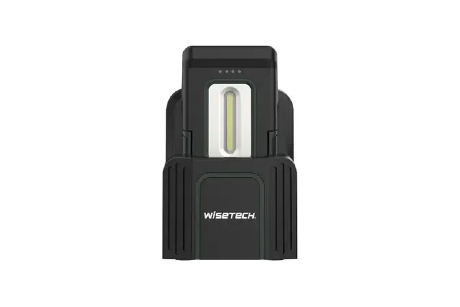 | 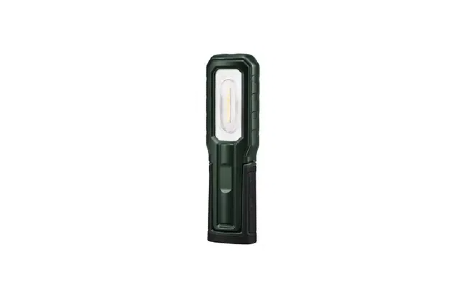 | 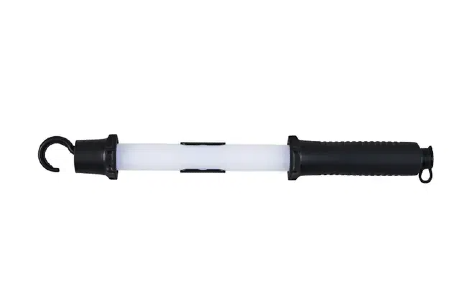 |
Steel is present throughout many workshops: tool cabinets, machine frames, vehicle body structures, workbenches, shelves, lifts, and service carts. A magnetic base turns these surfaces into quick mounting points. The user can attach the lamp without clamps, screws, or adhesive and remove it immediately when the task changes.
This speed matters during diagnosis. A technician can place the light on one side of a machine, inspect a component, then move it to another position in seconds. There is no need to relocate a floor stand or find a level place for the lamp. The mounting method follows the work rather than forcing the work to follow the lighting.
A magnet in the base is useful when the lamp needs to stand outward from a horizontal or vertical surface. A rear magnet places the body closer to the mounting surface and may be better inside a cabinet or against a flat panel. Designs with both positions give the user more control over distance, beam direction, and clearance.
The location of the magnet also affects stability. The lamp's center of gravity should remain close enough to the attachment point that normal movement does not pull it away. A heavy lamp with a small magnet may slide on a vertical surface, while a well-balanced design can hold its angle more reliably.
Not every useful surface is ferromagnetic. Aluminum structures, plastic housings, wood framing, hoses, cables, and many coated components will not support a magnet. A hook allows the lamp to hang from an edge, pipe, handle, bracket, hood, shelf, or suitable cable support. This makes the light usable in a wider range of service environments.
A rotating hook is more versatile than a fixed hook because the lamp body and the hanging point do not need to face the same direction. The user can suspend the lamp from the only available support and then turn the hook or lamp to direct the beam toward the task.
When a lamp is placed low on a bench, tools and hands may block the beam. Hanging it above the work reduces these shadows and can produce a more natural viewing angle. Under a vehicle hood, for example, a hook can hold the lamp near the top of the engine bay while the broad light falls across the components below.
Overhead placement also keeps the lamp away from spilled fluids, metal chips, and parts being moved across the bench. The user gains more working space, although the hook and support point must be secure enough to prevent the lamp from falling.
A magnet or hook only determines where the lamp is supported. The hinge, bracket, or rotating body determines where the light goes. These mechanisms work together. A strong magnet with no useful angle adjustment may hold the lamp securely but still direct the beam away from the component.
Some brackets rotate through defined positions rather than moving freely. Indexed positions make it easier to set the lamp at a repeatable angle and help resist gradual movement caused by vibration or the lamp's own weight. A smooth hinge can provide finer adjustment, but it must have enough friction to hold the selected position over time.
Reflective metal, painted panels, glass, and wet surfaces can produce bright reflections. By changing both the mounting orientation and the lamp angle, the user can move the reflection away from the eyes while keeping the target illuminated. This is particularly important when inspecting surface finish, fluid leaks, or labels behind transparent covers.
During engine work, a hook can suspend the lamp from the hood while a magnet can attach it to a steel support or service cart. In a wheel well, the lamp may be mounted to a lift arm or nearby body structure. Underbody inspection often requires repeated repositioning as the technician moves along the vehicle, so quick magnetic attachment saves time.
The ability to rotate the light is just as important as attachment. A broad main beam can illuminate the assembly, while a smaller top light can examine a connector, fastener recess, or fluid line. The technician can change the lamp's role without leaving the work area to find another light.
Industrial equipment provides many steel mounting points, but the most convenient point may not face the service area. A rotating bracket allows the lamp to attach to a frame and project light around a guard or into a recessed mechanism. Hooks can be used when access panels, cable trays, or structural edges provide a better overhead position.
During preventive maintenance, the same lamp may be used to inspect lubrication points, bearings, belts, sensors, and electrical connections. Multiple mounting methods let the technician adapt as the inspection route moves from exterior components to enclosed sections.
Cabinets and mechanical rooms often contain a mixture of steel, aluminum, plastic, and insulated surfaces. A rear magnet may hold the lamp against a steel enclosure, while a hook can suspend it from a pipe or bracket when the cabinet door is nonmagnetic. The light can remain outside the immediate hand space, reducing clutter around terminals and fasteners.
Hands-free lighting can improve visibility, but magnets and hooks must be used correctly. A lamp should never be placed where it can interfere with rotating machinery, fall into an open mechanism, obstruct a control, or create a trip hazard through its charging cable. The user should confirm that the equipment is isolated and safe before placing any accessory inside a service zone.
Paint, dust, oil, rust, curved panels, and thin sheet metal can reduce holding performance. A magnet that feels strong on a clean horizontal surface may slide on a contaminated vertical one. The user should test the attachment gently before releasing the lamp and avoid positioning it directly above people or delicate components.
A hook should sit fully around the support rather than rest on a narrow edge. If the lamp rotates, swings, or is bumped, the support should still retain it. Folding hooks should lock or maintain sufficient resistance during use. For overhead work, a secondary retention method may be appropriate when the consequences of a fall are significant.
Buyers should test the lamp on vertical and overhead steel surfaces, not only on a flat demonstration plate. Check whether the magnet is protected against scratching, whether the hook fits common rails and pipes, and whether the hinge holds its angle after repeated movement. Rotation range matters, but long-term resistance and balance matter more.
A compact lamp is easier to place in narrow spaces, while a larger body can support a wider light surface and higher-capacity battery. The design should balance output, runtime, weight, and mounting stability. Adjustable brightness is useful because lower output can reduce glare and extend operating time during close work.
For distributors and tool brands, magnetic bases and rotating hooks are not decorative additions. They determine whether the lamp solves a genuine workflow problem. Product evaluation should therefore include real placement tests in workshops, vehicles, cabinets, and service environments. A design that performs well in a catalog image may behave differently on curved, painted, dusty, or confined surfaces.
Magnetic bases and rotating hooks improve hand lamp usability because they separate the light from the user's hands and give the beam a stable point of reference. Magnets provide fast attachment to workshop steel, hooks extend use to nonmagnetic supports, and rotating joints direct the light without rebuilding the setup. Together, they reduce interruptions, control shadows, and make close-range work more efficient.
For professional lighting brands and overseas buyers developing application-focused products, XIAMEN WISETECH LIGHTING offers mobile work-light manufacturing and development capabilities, including rechargeable hand lamps with magnetic mounting, rotating supports, hooks, multiple light sources, and charging options. Product configurations can be assessed around the actual workshop environment, desired runtime, positioning needs, and market-specific customization.


