


Views: 0 Author: Site Editor Publish Time: 2026-08-25 Origin: Site


High lumen output is often the default metric for sourcing job site lighting. However, raw brightness masking poor electrical design creates secondary hazards. Cheaply manufactured units often produce high-frequency flicker. This invisible, rapid fluctuation in light output stems from poor AC-to-DC conversion. It triggers tension headaches and creates severe safety risks around moving machinery.
This guide breaks down the essential engineering behind flicker-free lighting. You will understand the occupational safety implications of stroboscopic effects in industrial environments. Furthermore, we outline the exact technical criteria necessary to evaluate these fixtures. You will learn how to shortlist reliable site lighting effectively. Proper evaluation means looking past peak brightness claims to verify constant-current driver architecture. Ultimately, making the right choice ensures site safety and protects long-term worker health.
Low-quality LED drivers fail to smooth alternating current (AC) ripple, resulting in invisible flicker that accelerates visual fatigue and causes headaches.
In industrial environments, optical flicker creates the stroboscopic effect, a critical safety hazard that can make moving machinery appear stationary.
Evaluating lighting requires looking past peak lumen claims to verify constant-current driver architecture and IEEE 1789 compliance.
Selecting the right form factor—such as choosing a 360 LED work light for ambient room illumination versus a directional light for task work—depends entirely on the site's spatial requirements and power grid stability.
Substandard lighting impacts far more than mere visibility. When job sites deploy cheap fixtures, they introduce systemic risks directly affecting both safety and daily operations. The most dangerous consequence is entirely optical. Proper illumination requires steady, uninterrupted output.
The stroboscopic effect represents a severe hazard in any industrial environment. This optical illusion occurs when a light source flickers at a specific frequency. If this frequency aligns closely to the rotational speed of nearby moving machinery, the object appears entirely static.
Consider a heavy-duty drill or a circular saw operating under cheap LEDs. The alternating current causes the light to pulse rapidly. If the pulse matches the RPM of the spinning blade, your brain receives isolated snapshots of the blade in the exact same position. To the naked eye, the dangerous tool looks turned off. Workers can accidentally touch active machinery. Mitigating this risk requires fixtures engineered to eliminate ripple current entirely.
Prolonged exposure to low-frequency flicker significantly degrades worker health over a standard shift. Your conscious mind might not register the rapid pulsing. However, your retina certainly does. The human eye constantly attempts to adjust to the rapidly changing light levels.
This constant neurological adjustment exacts a heavy toll. Common physiological impacts include:
Severe eye strain and blurred vision during precision tasks.
Tension headaches and debilitating migraines.
General lethargy and reduced spatial awareness.
Decreased focus, leading to increased accidental injury rates.
Common Mistake: Many site managers assume eye strain comes purely from glare or excessive brightness. Often, invisible high-frequency flicker acts as the primary culprit. Removing this flicker immediately boosts ambient comfort and shift productivity.
Modern construction relies heavily on visual documentation. Site managers use smartphone cameras, drones, and time-lapse equipment to record progress. Cheap LEDs severely disrupt this process. The camera sensor captures the invisible pulsing as aggressive dark bands scrolling across the screen.
This banding ruins inspection photos and progress videos. If an inspector needs clear visual proof of a completed weld or a concrete pour, strobing footage causes frustrating delays. High-quality lighting guarantees clear, professional documentation at any frame rate.
Flicker Frequency Danger Zones Chart
Flicker Frequency (Hz) | Perceptibility | Primary Hazards |
|---|---|---|
Under 100 Hz | Highly Visible | Immediate distraction, severe stroboscopic risks. |
100 Hz – 160 Hz | Invisible to Naked Eye | Headaches, eye strain, banding on standard cameras. |
160 Hz – 3000 Hz | Invisible (High Frequency) | Neurological fatigue, disruption in slow-motion video. |
Above 3000 Hz | Flicker-Free Zone | None. Meets stringent IEEE 1789 safety standards. |
To solve the flicker problem, we must understand basic electrical engineering. Power supplied by municipal grids or site generators behaves very differently than what an LED diode requires. Bridging this gap dictates the quality of the final illumination.
Municipal power grids deliver alternating current. This electricity travels in a sine wave, effectively dropping to zero volts dozens of times per second (typically 50 or 60 Hz depending on your region).
LEDs, conversely, run strictly on direct current. They require a steady, uninterrupted flow of electricity to emit a constant beam of light. If you pass alternating current directly into an LED, the diode will turn on and off continuously as the voltage rises and falls. Electronic intervention remains absolutely essential.
The LED driver acts as the translator between the messy AC supply and the delicate DC diode. The quality of this component determines everything.
Bare-minimum direct-drive circuits provide almost no filtering. They simply rectify the power, passing the jagged AC ripple directly to the diodes. This creates severe, aggressive pulsing. Manufacturers use these cheap circuits to reduce manufacturing expenses.
High-quality constant-current drivers perform complex electrical smoothing. They flatten the electrical wave. They store energy during the peak of the sine wave and release it during the dip. This ensures the LED receives a perfectly flat line of direct current. The resulting light becomes incredibly steady and safe.
The Institute of Electrical and Electronics Engineers (IEEE) published the 1789 standard to combat lighting hazards. This framework provides verifiable benchmarks for mitigating health risks from LED flicker.
It establishes safe modulation limits based on frequency. When evaluating fixtures, looking for IEEE 1789 compliance removes the guesswork. It guarantees the manufacturer invested in premium driver architecture capable of protecting human health.
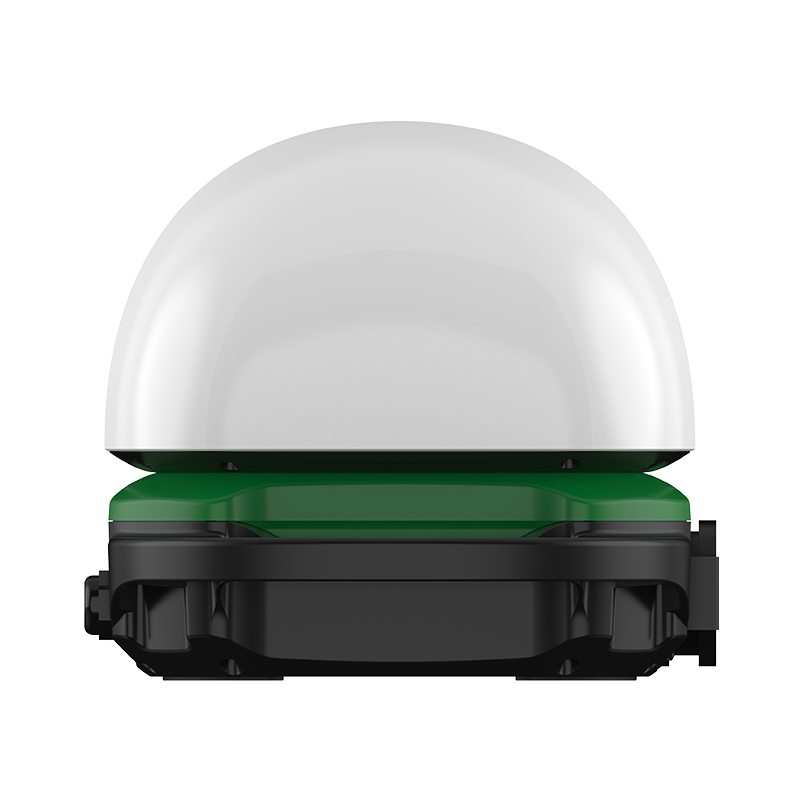
Evaluating job site illumination requires analyzing multiple technical layers. Do not let impressive peak lumen numbers blind you to inferior underlying hardware. Professional fixtures must deliver stability, durability, and practical utility in harsh environments.
Robust driver components do much more than eliminate pulsing. They actively protect the diodes from rapid degradation. Heat is the natural enemy of any LED. Cheap direct-drive circuits generate excessive internal heat because they lack proper voltage regulation. This bakes the internal components.
Overheating accelerates lumen depreciation. A cheap fixture might blast 10,000 lumens on day one. A month later, thermal damage drops that output to 6,000 lumens. Verified drivers maintain optimal operating temperatures. They keep the light output consistent across the entire lifespan of the device. Consequently, replacing burned-out units happens far less often.
Stable municipal power rarely exists on new construction sites. Crews often rely on portable generators. Generators produce notoriously "dirty" power. They suffer from sudden voltage sags when heavy machinery kicks on. They also experience minor frequency shifts as fuel loads vary.
Substandard fixtures crash under these conditions. They dim sharply, flicker aggressively, or short out entirely. High-tier AC Work Lights feature sophisticated input regulation. The constant-current driver acts as an electrical shock absorber. It takes the wildly fluctuating generator input and continues feeding a perfectly stable output to the diodes. This tolerance prevents dangerous sudden blackouts during critical tasks.
Lighting distribution matters just as much as electrical stability. Selecting the correct form factor depends entirely on your spatial requirements.
Directional Site Lights:
These units focus all their output into a tight, intense beam. They excel at high-intensity tasks. Automotive repair, drywall finishing, and detailed inspection work demand directional lighting. You can aim the head precisely where you need maximum foot-candles. However, they create very harsh shadows behind objects.
360-Degree Lighting:
Multi-trade work zones require a different approach. A 360 LED Work Light is best for central room placement. It diffuses light evenly in all directions. This omnidirectional spread eliminates deep shadows in corners. More importantly, it prevents temporary blindness when workers accidentally walk past the fixture. It serves as the ultimate ambient solution for open-plan framing or large-scale concrete finishing.
Direct-Drive vs. Constant-Current Architecture Comparison
Feature | Direct-Drive Circuit (Low-Tier) | Constant-Current Driver (Professional) |
|---|---|---|
Output Stability | Poor; highly susceptible to pulsing. | Excellent; perfectly smooth DC output. |
Heat Generation | High; shortens diode lifespan significantly. | Low; thermally regulated for longevity. |
Generator Tolerance | Fails frequently under dirty power. | Maintains steady output during voltage sags. |
Safety Compliance | Rarely meets IEEE 1789 guidelines. | Fully compliant with anti-flicker standards. |
The industrial lighting market remains flooded with misleading marketing. Identifying true professional equipment requires a skeptical eye. Buyers must actively verify manufacturer claims against hard engineering realities.
Many contractors rely on their phone cameras to test fixtures. They point the lens, turn on slow-motion video, and look for scrolling dark bands. If the screen looks clear, they assume the unit is safe.
This method has critical limitations. A slow-motion camera easily detects low-frequency ripples (under 120Hz). However, it completely fails to register high-frequency ripples. A light might pulse at 500Hz. The phone camera cannot see it, but the human nervous system still feels it. Relying entirely on a smartphone test often results in procuring units that still cause severe neurological fatigue. Always demand certified testing data.
Using these fixtures on temporary dimming circuits introduces massive compatibility risks. Incompatible dimmers represent a primary cause of induced flicker.
Standard phase-cut dimmers work by physically chopping pieces off the AC sine wave. If the fixture's internal driver does not explicitly support this chopping action, the electronics panic. The result is aggressive strobing or a loud audible hum. Before plugging any site illumination into a temporary dimming board, you must verify rigorous compatibility specifications.
Best Practice: Always test one unit on your specific site dimmer setup before executing a bulk purchase order.
Marketing departments love peak lumen numbers. They push cheaply made 10,000-lumen fixtures to unsuspecting buyers. However, a highly-rated but cheap 10,000-lumen unit often proves to be a terrible investment compared to a verified 7,000-lumen flicker-free unit.
Follow this framework for skeptical evaluation:
Check the heat sink weight: True constant-current drivers and proper thermal management require physical metal. Extremely lightweight fixtures usually hide cheap direct-drive electronics.
Demand lumen maintenance data: Ask how many lumens the unit produces after 5,000 hours of continuous operation. Cheap units drop by 40%.
Verify safety certifications: Look for IEEE 1789 or equivalent electrical testing marks. Unverified units rarely pass strict occupational standards.
Evaluate glare control: 10,000 raw lumens blasted through a cheap clear plastic lens creates blinding glare. A well-engineered 7,000-lumen unit utilizes frosted optics to deliver comfortable, usable light.
Sourcing dependable job site illumination requires moving beyond simple brightness metrics. The invisible dangers of high-frequency pulsing present serious occupational safety hazards. Stroboscopic illusions around moving machinery can cause devastating accidents. Furthermore, prolonged exposure to poor electrical smoothing guarantees eye strain and headaches for your crew.
Treating these critical tools as disposable expenses introduces unnecessary risk. Shortlisting logic must prioritize verified constant-current drivers. Evaluate your spatial needs carefully to choose the appropriate beam distribution, whether you require intense directional lighting or smooth omnidirectional coverage. By demanding IEEE 1789 compliance and robust generator tolerance, you ensure site safety. You protect worker health over long shifts and drastically reduce the operational headaches associated with premature hardware failure.
A: No. While all LEDs run on direct current and require conversion from AC power, units equipped with high-tier constant-current drivers successfully smooth the ripple current, resulting in zero perceivable or measurable flicker.
A: The most accessible field test is pointing a smartphone camera at the light using the slow-motion video setting. If you see dark bands scrolling across the screen, the light has a significant low-frequency flicker. For commercial compliance, a specialized flicker meter is required.
A: It depends on the application. A 360-degree light is superior for general area illumination because it prevents harsh shadows and temporary blindness when workers walk past it. Directional lights are necessary for precision tasks requiring intense, focused foot-candles.
A: Yes. Generators often produce "dirty power" with minor voltage drops and frequency shifts. Cheap AC work lights will flicker under these conditions, whereas professionally graded lights with robust drivers will regulate the input and maintain a steady output.


