


Views: 0 Author: Site Editor Publish Time: 2026-03-10 Origin: Site


Poor light ruins good design. Hotspots and glare reduce comfort and clarity. Many focus on lumens, not spread. How Frosted Diffusers Improve Uniform Lighting changes that. This Professional Guide to Frosted Diffusers explains Uniform Lighting Design with Frosted Diffusers for LED systems. Discover reliable solutions, including advanced lighting products from WISETECH.
Uniform lighting means consistent luminance across a surface. It reduces contrast variation and visual fatigue. In workspaces, uneven light causes eye strain and productivity loss. In industrial maintenance zones or construction sites, inconsistent light may even increase safety risks. Uniform Lighting Design aims to balance brightness and diffusion. Frosted diffusers for glare reduction scatter direct beams into controlled angles. They reduce peak intensity while maintaining functional visibility. This balance improves comfort and accuracy. For example, professional Portable LED Work Lights used on construction sites often integrate diffusion systems to avoid sharp beam concentration while maintaining high lumen output, a principle widely applied in industrial lighting solutions.
Tip: When designing commercial ceilings or job site lighting, calculate both illuminance level and uniformity ratio before selecting diffuser type.
How Frosted Diffusers Improve Uniform Lighting depends on micro-surface structure. Frosted materials contain irregular textures or embedded scattering particles. When light enters the diffuser, it refracts and redirects multiple times. This reduces central beam intensity and expands distribution angle. The result is softer, even illumination. Frosted diffusers for LED light panels prevent diode spotting. Without diffusion, individual LEDs create visible bright points. With proper diffusion angle, they merge into a continuous luminous surface. This improves aesthetic quality and perceived brightness consistency. In professional-grade Portable Work Lights and Mobile Flood Lights, advanced optical diffusion is paired with high lumen output to ensure both intensity and visual comfort in harsh jobsite environments.
Light behaves as both wave and particle. When it encounters a rough surface, part of it transmits, part reflects, and part scatters. Diffusion strength depends on material thickness, refractive index, and surface texture. Ground glass diffusers use sandblasted surfaces to scatter light broadly. Opal diffusing glass embeds particles to achieve near Lambertian output. Holographic diffusers use engineered microstructures to control angular distribution precisely. These variations directly affect uniform lighting outcomes. In industrial lighting design, especially in High Lumen Work Light applications, diffusion must be engineered carefully to avoid energy waste while preserving beam stability.
High diffusion often reduces transmission. Opal diffusers may transmit 30–40 percent of visible light. Ground glass averages 40–50 percent. Holographic diffusers can exceed 85 percent transmission. Designers must balance brightness efficiency and uniform spread. Over-diffusion may reduce system efficiency. Under-diffusion increases glare. Best Frosted Diffusers for Even Light Distribution optimize both factors. In Industrial Lighting Solutions, especially those built for European-standard compliance, achieving this balance ensures that lumen output remains high without compromising user comfort.
Diffusion angle defines how widely light spreads. A 10° diffuser focuses light. A 60° diffuser spreads light broadly. Batwing and elliptical profiles shape distribution strategically. For general lighting, 20°–60° angles are common. For short-distance homogenization, 60°–80° may work better. Selecting angle aligns illumination with spatial layout. In professional mobile flood lighting systems, 100° beam angles are often used to provide wide site coverage while maintaining even brightness distribution.
ecommended Diffusion Angles by Application
Application | Typical Diffusion Angle | Purpose |
Glare Reduction | 5°–15° | Minimize direct brightness |
General Lighting | 20°–60° | Even area coverage |
Short Distance Mixing | 60°–80° | Smooth LED blending |
Display Panels | 60° or elliptical | Uniform visual output |
Ground glass diffusers scatter light through abrasive surface texture. Grit size controls diffusion intensity. Higher grit creates smoother, softer output. They are cost-effective and suitable for general-purpose uniform lighting design. However, rough surfaces may collect dust and affect performance over time. In rugged industrial work light applications, protective housings and sealed optical chambers are often used to preserve diffusion consistency.
Opal glass contains embedded scattering particles. It produces near Lambertian light distribution. This makes it ideal for wide illumination at short distances. However, transmission loss is higher compared to engineered options. Designers use it when diffusion priority outweighs efficiency concerns. In architectural lighting and decorative installations, opal diffusion provides visually pleasing ambient effects.
Frosted diffusers for LED light panels are often acrylic. Acrylic offers lightweight durability and stable transmission. It resists shattering and supports modular ceiling systems. It blends LED sources into seamless luminous panels. In commercial lighting, installing frosted diffusers for commercial lighting ceilings improves both comfort and energy distribution. Many Industrial Work Light Manufacturers integrate impact-resistant ABS and PC materials to enhance durability in demanding environments.
Engineered diffusers use micro-optical structures to control beam patterns. They deliver precise circular, square, or batwing outputs. Transmission efficiency exceeds traditional volume diffusers. They suit applications demanding controlled angular spectrum and high uniformity. In advanced professional lighting products, engineered optics are often combined with aluminum heat dissipation systems to maintain consistent performance under extended operation.
Optical Comparison of Common Diffusers
Diffuser Type | Transmission | Diffusion Control | Typical Use |
Ground Glass | 40–50% | Moderate | General lighting |
Opal Glass | 30–40% | High | Wide ambient light |
Holographic | >85% | Precise | Imaging, LED panels |
Plastic Acrylic | 47–87% | Balanced | Commercial ceilings |
Frosted diffusers in architectural lighting reduce harsh façade contrast. They highlight building features without creating sharp glare lines. Uniform lighting design with frosted diffusers improves visual rhythm and material perception. Exterior installations benefit from even distribution that enhances structure depth.
Offices and retail stores require glare reduction lighting. Anti-glare frosted diffusers minimize reflection on screens and polished floors. This improves employee comfort and product clarity. Balanced diffusion also reduces need for excess fixtures. In industrial and warehouse settings, Portable Floodlights equipped with frosted optics help maintain safety while delivering high lumen performance.
In museums, diffusers protect artwork from direct intensity. They reduce reflections on glass frames. Controlled diffusion ensures color fidelity and visual clarity. Uniform lighting design prevents bright spots that distract viewers.
In landscape design, frosted diffusers soften pathway lights. They reduce glare while preserving safety. Wide-angle diffusion blends artificial and natural elements smoothly. For temporary site lighting, Rechargeable Site Lights often combine wide beam diffusion with IP-rated enclosures to ensure durability in outdoor conditions.
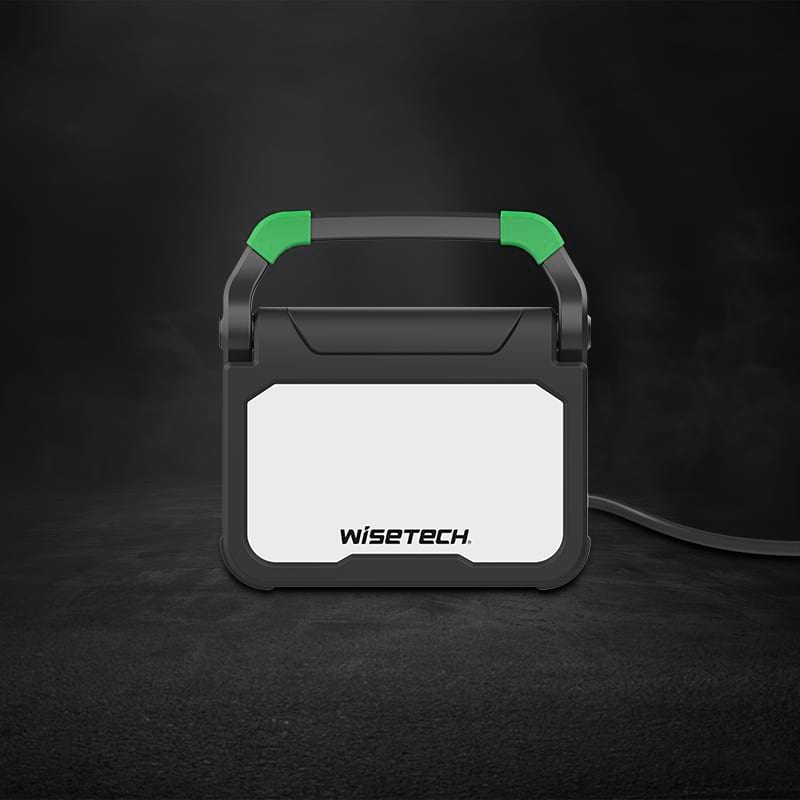
Different fixtures require different diffuser thickness and angle. LED panels demand high transmission and even spread. Floodlights may require moderate diffusion with directional control. For example, a 45W 4500 lumen frosted flood light ECO with a 100° beam angle demonstrates balanced output and glare control in compact industrial applications .
Improper alignment causes uneven light zones. Installers must ensure flat mounting and correct orientation of microstructured surfaces. Beam shaping diffusers often require specific incident angles for optimal output. Professional-grade Industrial Work Lights typically integrate adjustable brackets to optimize beam direction and uniform coverage.
Dust reduces transmission. Acrylic diffusers need periodic cleaning. Glass options resist scratches but require careful handling. Maintenance planning extends optical consistency and lifespan. High IP-rated lighting products reduce internal contamination and preserve diffusion quality over time.
Note: Always confirm IP and IK ratings when installing diffused lighting in industrial or construction environments.
Clear covers transmit direct beams. They maximize brightness but create glare. Frosted diffusers for glare reduction scatter light to enhance comfort. Clear covers suit focused tasks. Frosted options suit ambient and commercial applications. The choice depends on whether efficiency or uniformity is priority. In professional Portable Work Light applications, frosted optics are often preferred because they improve usability during long working hours.
LED arrays create point-source intensity. Frosted diffusers for LED light panels merge multiple diodes into continuous surfaces. This reduces visual noise and improves perceived brightness. In linear systems, diffusers eliminate visible LED dots. In industrial systems, durable materials withstand heat and vibration. High-quality European-standard lighting products emphasize both optical efficiency and structural durability to support demanding professional users.
Key Technical Specifications
Specification | Importance | Impact |
Transmission % | Determines brightness efficiency | Higher % reduces energy waste |
Diffusion Angle | Controls light spread | Affects uniformity ratio |
Material Type | Impacts durability | Influences lifespan and stability |
Surface Texture | Defines scatter level | Controls glare reduction |
Transmission percentage influences system efficiency. Diffusion angle shapes spatial coverage. Material durability ensures long-term stability. Wavelength compatibility may matter in specialized optical systems. Selecting correct parameters ensures optimal uniform lighting design. In professional lighting equipment designed for construction and industrial use, durability standards, impact resistance, and stable lumen output remain equally important alongside diffusion performance.
Uniform lighting needs science, not guesswork. A Professional Guide to Frosted Diffusers explains how diffusion controls brightness and improves comfort. By balancing transmission and angle, designers gain efficiency and clarity. Frosted solutions for LED panels and industrial lighting stay essential. WISETECH products add durability and stable high-lumen performance for demanding professional use.
A: Frosted Diffusers scatter light to reduce glare and improve even distribution in Uniform Lighting Design with Frosted Diffusers.
A: Frosted Diffusers for LED Light Panels blend visible diodes, control diffusion angles, and create smoother illumination.
A: Frosted Diffusers for Glare Reduction soften harsh beams, improve comfort, and support professional lighting performance.
A: Engineered diffusers offer higher transmission and precise beam shaping compared to traditional ground glass options.


