Views: 0 Author: Site Editor Publish Time: 2026-08-24 Origin: Site


Buyers searching for the "brightest" light often fall into a numbers trap. They over-index on raw lumen counts while completely ignoring heat generation, battery drain, and usable beam patterns. A staggering lumen figure printed on a box does not automatically guarantee better visibility on the job site. The most effective High Lumen LED Work Light is rarely just a flood of blinding brightness. Instead, it operates as a carefully engineered tool. It must balance maximum output with color accuracy, steady runtime, and environmental durability. If you simply buy the highest number available, you might battle harsh shadows or face dead batteries midway through a critical task. This guide provides a skeptical, decision-focused framework for evaluating extreme-output lighting. We will help you assess these heavy-duty tools based on actual job site realities rather than just marketing specifications. You will learn how to match beam spreads, select appropriate power sources, and verify durability ratings.
Most consumers buy lighting based purely on lumens. This metric measures the total volume of visible light emitted by a source. However, lumens tell you nothing about how that light travels. You must also understand lux and candela to make an informed choice.
Lux measures light intensity over a specific area. Candela measures the peak intensity of the beam in a specific direction. This explains why a 5,000-lumen floodlight often feels "dimmer" at ten feet than a tightly focused 2,000-lumen spotlight. The floodlight scatters its output over a wide area. The spotlight concentrates every available photon into a narrow cone.
When selecting a Work Light, you must match the beam spread to your workspace volume. Wide, open construction sites need high-lumen flood beams. Conversely, navigating a drop ceiling requires a lower-lumen spot beam to push light deep into the cavity.
Brightness perception also depends heavily on color temperature. Standard job site lighting typically ranges between 5000K and 6000K. This range mimics natural daylight. It keeps workers alert and maximizes the perceived brightness of the workspace.
However, sheer brightness often takes a back seat to color accuracy. We measure this using the Color Rendering Index (CRI). A standard bulb might have a CRI of 70. This makes colors look washed out or distorted. Automotive detailers, painters, and electricians require a high CRI of 85 or above.
Electricians must distinguish a dark blue wire from a black wire in a dim breaker box. Automotive detailers need to spot subtle paint defects. In these scenarios, a hyper-bright 65-CRI light creates dangerous blind spots. A slightly dimmer 95-CRI light delivers the exact visual clarity they need.
Excessive brightness introduces a serious operational hazard: glare. High-lumen output in confined spaces bounces aggressively off reflective surfaces. If you place a 10,000-lumen lamp directly under a stainless steel range hood or inside a small HVAC crawlspace, the resulting glare will temporarily blind you.
You cannot effectively work when your pupils constantly constrict to fight off harsh reflections. A properly engineered light uses frosted polycarbonate lenses or multi-diode arrays to diffuse the beam. This softens shadows and protects your eyes during up-close tasks.
Achieving extreme brightness requires massive amounts of energy. The power source you choose ultimately dictates how long you can sustain peak performance. We divide these options into three distinct categories.
If you want sustained, blinding brightness, you must plug into the wall. Corded models easily push 10,000 to 20,000 lumens all day long. They do not suffer from voltage sag. Their output remains entirely consistent from the first minute of your shift to the last.
The downsides are obvious. Thick extension cords create significant trip hazards on busy sites. Furthermore, new residential builds or remote locations often lack active power outlets. You become entirely reliant on noisy, gas-guzzling generators.
Cordless lighting offers unmatched freedom. You can carry it anywhere. Many models integrate seamlessly into existing 18V or 20V power tool platforms. You simply snap in a battery you already own.
However, you must face a strict reality check regarding battery physics. Many manufacturers advertise an extreme "turbo" mode. They fail to mention that this mode drains batteries aggressively. Most high-lumen cordless models only sustain peak brightness for 15 to 30 minutes. After that, internal thermal throttling kicks in. The light automatically steps down its output to prevent the battery cells from overheating or depleting completely.
Hybrid models represent the most logical investment. These units accept both standard power tool batteries and basic AC extension cords. You can run them cordless for quick, isolated tasks. When you need prolonged maximum output, you plug them into the grid.
This dual-power capability removes the stress of battery anxiety. It ensures your workspace remains safely illuminated regardless of the power situation on site.
Power Source Comparison Summary
| Power Source | Maximum Output Sustainability | Primary Advantage | Major Drawback |
|---|---|---|---|
| Corded (AC) | Continuous at maximum lumens | Uninterrupted, consistent lighting | Trip hazards; requires live grid |
| Cordless (Battery) | Short bursts (15-30 mins at peak) | Total portability; quick setup | Thermal throttling; rapid drain |
| Hybrid (AC/DC) | Continuous on AC; short on battery | Ultimate site flexibility | Often heavier and more expensive |
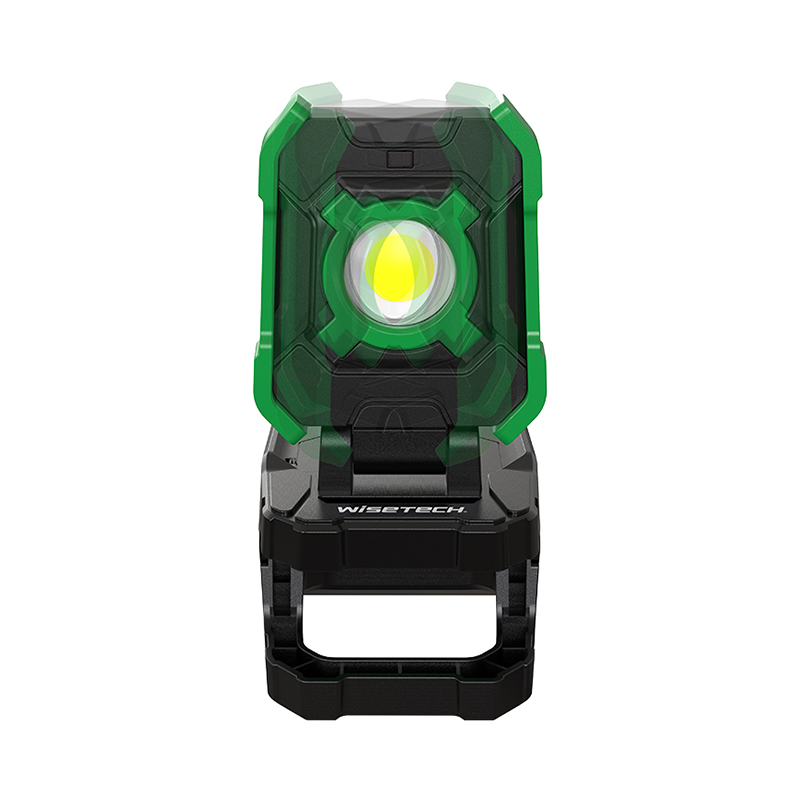
Extreme LED brightness generates an enormous amount of heat. If a manufacturer fails to dissipate this heat, the diodes will degrade rapidly. Their color temperature will shift, and they will eventually burn out.
Always look for heavy-duty aluminum heat sinks located directly behind the LED array. Premium models use thick metal fins to pull heat away from the electronics. If an advertised 10,000-lumen light features a completely enclosed, lightweight plastic back, you should avoid it. It will either melt or aggressively step down its brightness within minutes.
A light is useless if you cannot position it properly. Consider your primary tasks before selecting a form factor.
Job sites destroy fragile equipment. You must check the official protection ratings before purchasing.
Require a minimum of IP54 for basic indoor or garage use. This rating handles moderate dust and splashing water. For outdoor construction sites, demand an IP65 rating or higher. This ensures the unit survives heavy rainstorms and extreme dust environments.
Equally important is the IK rating, which measures impact resistance. Look for IK07 or higher. An IK07 rating means the housing and lens can survive a blunt force impact of two joules. This translates roughly to surviving a direct drop off a standard scaffold without shattering the lens or cracking the battery track.
When you need to illuminate a bare-stud room or an overnight paving job, you need maximum flood coverage.
Working inside a dense engine bay requires strategic illumination, not blinding raw power.
Automotive detailing operates on a completely different set of rules. Raw brightness can actually hide subtle flaws in a clear coat.
The market is flooded with cheap, white-label imports promising absurd numbers like "100,000 lumens" in a handheld package. You must learn to spot these obvious lies.
Modern commercial LED chips max out around 150 to 200 lumens per watt. A true 100,000-lumen output would require over 500 watts of raw power. It would also demand a massive cooling fan and a heat sink the size of a car battery. If a lightweight, plastic lamp claims to output tens of thousands of lumens, the manufacturer is outright lying. Ground your expectations in the physical limitations of current LED technology.
Never invest heavily in a primary daily-use tool equipped with a built-in, non-replaceable battery. Commercial work demands constant charging cycles. Over time, lithium-ion cells inevitably degrade.
Once an integrated battery dies, the entire tool becomes electronic waste. Always opt for units that utilize removable battery packs. If the cells degrade after two years of harsh winter framing, you simply recycle the pack and slide a fresh one onto the tool.
A premium High Lumen LED Work Light must feature adjustable brightness settings. Models locked into a single extreme-output mode drain batteries relentlessly. They also severely limit your versatility.
You need Low, Medium, and High settings. You might use the High setting to initially survey a dark basement. However, once you sit down to wire an outlet, you should step the output down to Low. This prevents glare blindness against the wall and extends your battery life for the remainder of the shift.
Finding the perfect high-output lighting solution requires practical shortlisting logic. Base your final purchase decision on three foundational questions. First, determine your primary power source—do you have grid access, or do you rely strictly on battery platforms? Second, define your workspace size to choose between spot or flood beam patterns. Finally, decide if your trade requires precise color accuracy or just raw, functional visibility.
Before jumping into a completely new ecosystem, audit your existing tool arsenal. Check if a bare-tool hybrid light from your current battery platform meets your required lumen and durability standards. Purchasing a reliable, well-engineered lamp will radically improve your job site safety, efficiency, and comfort for years to come.
A: For close-up tasks like plumbing or engine work, a 2,000-lumen light provides exceptional brightness without causing harsh glare. For illuminating a full room, large garage, or outdoor construction site, you should look for fixtures producing 5,000 lumens or more.
A: Yes. While LEDs run much cooler than old halogen bulbs, extreme high-lumen output still generates significant thermal energy. Premium models use thick aluminum heat sinks to draw this heat away from the diodes, keeping the exterior safe to touch.
A: Absolutely. Using extreme lumen outputs in tight, confined spaces causes dangerous glare. Light bouncing off reflective surfaces like metal ducts or white walls will temporarily blind you, leading to eye strain and reduced workplace safety.
A: It depends on your environment. Floodlights disperse a wide, even beam perfect for ambient area lighting across a whole room. Spotlights concentrate the beam into a narrow cone, providing deep, directional visibility for inspecting tight cavities or distant objects.