


Upgrading your commercial lighting system is no longer just about keeping the lights on. Today, deploying an advanced LED Flood Light represents a highly strategic facility decision. High-intensity, broad-beamed artificial light serves as the critical backbone of site safety.
Legacy lighting solutions drain immense energy and require constant maintenance. Facility managers constantly battle poor visibility, safety liabilities, and skyrocketing electricity bills. Outdated fixtures fail unpredictably and cast uneven shadows across operational zones. Finding reliable fixtures capable of solving these exact bottlenecks remains absolutely critical for organizational efficiency.
This guide completely bypasses basic industry definitions. We will explore exactly how contractors, business owners, and site managers must evaluate and specify these high-intensity optical systems. You will learn actionable strategies to select the perfect fixture for your industrial space. We cover vital technical topics ranging from NEMA distributions to structural wind load ratings.
Definition to Outcome: LED flood lights deliver broad-spectrum illumination that reduces energy consumption by up to 70% compared to legacy metal halide or halogen fixtures.
Evaluation Metrics: Procurement decisions should be based on efficacy (lumens per watt), NEMA beam spread classifications, and precise optical control, not just raw wattage.
Compliance & Reliability: Shortlisting requires verifying IP ratings for weather resistance, IK ratings for impact durability, and DLC/UL listings for utility rebate eligibility.
Installation Reality: True project costs must factor in mounting hardware compatibility (slip-fitter, trunnion, knuckle) and existing infrastructure limitations.
A commercial Flood Light operates fundamentally differently from outdated grid systems. Traditional high-intensity discharge (HID) lamps cast light outward in 360 degrees. This chaotic distribution creates massive optical waste inside the fixture housing. Metal reflectors must physically bounce trapped light back outward. Unfortunately, they lose significant brightness and energy during the reflection process. Conversely, modern LEDs utilize small semiconductor diodes. They emit pure light directionally right from the source. You send illumination exactly where you need it. You avoid bulky reflectors trapping heat and degrading optical clarity.
This structural shift directly solves painful operational bottlenecks. Older halogen or metal halide fixtures generate intense, dangerous heat. They also suffer rapid lumen depreciation over a remarkably short lifespan. Your maintenance teams waste hours replacing burnt-out bulbs while balancing on dangerous aerial lifts. Switching to LED entirely eliminates these frequent labor costs. It stabilizes long-term performance over tens of thousands of operating hours. You permanently escape the endless cycle of replacing fragile bulbs and failing internal ballasts.
How do we define a truly successful commercial upgrade? You should achieve perfectly uniform foot-candles across your entire target space. A proper lighting installation minimizes dangerous glare for drivers, pedestrians, or warehouse workers. It thoroughly eliminates isolated dark zones where expensive accidents commonly happen. Security teams rely heavily on this uniform visual coverage. Predictable visibility prevents nighttime collisions. It actively deters unauthorized access across your perimeter property. The sharp visual contrast keeps security camera systems capturing highly detailed nocturnal footage.
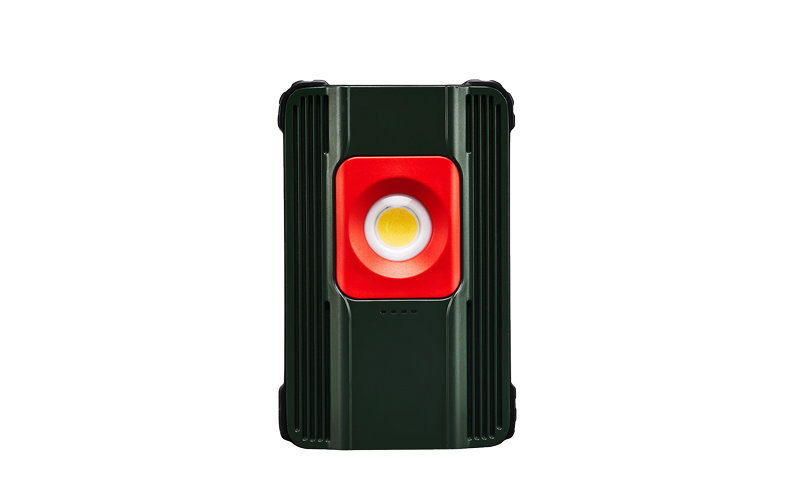
The physical environment directly dictates your required form factor. You cannot simply force a single mounting style into every commercial application. Structural architecture defines exactly how you secure each fixture to the host building or concrete pole. Choosing the wrong mount inevitably introduces severe physical safety risks.
Slip Fitter Mounts: You will use these primarily for round light poles. They feature an adjustable mechanical hinge. This specific joint allows precise angle adjustments directly in the field. Electrical contractors heavily favor slip fitters for large parking lots, roadway lighting, and street perimeters. They slide easily over standard tenon brackets.
Trunnion / U-Bracket Mounts: These robust mounts are ideal for flat surfaces, building walls, or stadium ceilings. They utilize a sturdy U-shaped metal bracket bolted securely to a solid flat base. They provide truly exceptional physical stability. You absolutely need this rigidity for heavy, high-lumen industrial fixtures facing high storm winds.
Knuckle Mounts: You typically attach these directly to lighter, lower-wattage fixtures. Installers use knuckle mounts for ground-level corporate signage, subtle landscape facades, or small building entrances. They feature a simple threaded base. You can thread them directly into standard weatherproof junction boxes very quickly.
Beyond physical mounting, we must clearly differentiate application-specific designs. Wide-area illumination always demands broad optical dispersion. You deploy these vast layouts for long security perimeters, busy shipping yards, and expansive industrial campuses. The primary operational goal is maximum footprint coverage. You want to push bright light far outward.
Directional spotlighting serves a vastly different operational purpose. You use highly narrow beams exclusively for architectural highlights, stone monuments, or tall facade grazing. This approach requires intense optical control from the external diode lenses. Precision completely prevents unwanted light spill into neighboring residential properties. It highlights specific building textures beautifully without washing out the entire corporate structure in blinding, uncontrolled glare.
Buyers frequently fixate on input wattage when purchasing new fixtures. This remains a common and highly expensive mistake. You must actively shift your focus toward actual light delivery. Efficacy fundamentally measures how efficiently a specific fixture converts electrical power into visible light. We express this critical metric as lumens per watt (lm/W). Modern commercial installations absolutely demand a strict baseline of at least 130 lumens per watt. High efficacy directly dictates operational efficiency and permanent energy reduction. A 150 lm/W fixture saves substantially more daily energy than a 110 lm/W alternative.
Beam angles determine precise light distribution. The commercial lighting industry standardizes these specific optical spreads using NEMA classifications. Choosing the exact right NEMA type prevents wasteful light spillage entirely. It ensures targeted illumination exactly where your daily operations require it. Broad NEMA classifications push light outward horizontally. Narrow classifications shoot concentrated light forward.
Table 1: NEMA Beam Spread Classifications and Applications
NEMA Type | Beam Angle Range | Typical Commercial Application |
|---|---|---|
Type 3 | 46° to 70° | Building facades, focused security zones, architectural grazing |
Type 4 | 71° to 100° | Signage illumination, mid-range yard lighting, sports courts |
Type 5 | 101° to 130° | Standard parking lots, wide security perimeters, loading docks |
Type 6 | 131° to 160° | Expansive industrial campuses, rail yards, massive stadium lighting |
Next, you must carefully evaluate Color Temperature (CCT) alongside the Color Rendering Index (CRI). Standard commercial security lighting typically utilizes 4000K to 5000K color temperatures. This crisp, white optical range mimics natural daylight beautifully. It actively enhances visual contrast for night-shift employees. It also noticeably sharpens digital camera surveillance footage.
You do not always need extremely high CRI. A standard CRI of 70 works perfectly for basic security lines, parking lots, and general industrial spaces. However, specific retail environments demand much higher visual fidelity. Auto dealerships and exterior retail merchandise displays require a strict CRI above 80. High CRI ensures highly accurate color representation for valuable inventory. It dramatically improves the nocturnal customer shopping experience.
Commercial exterior environments are incredibly brutal. Fixtures regularly face extreme seasonal weather, intense sand storms, and potential physical impacts. Superior environmental durability clearly separates professional-grade hardware from cheap consumer equivalents. You must install fixtures deliberately built to survive.
You must independently verify specific Ingress Protection (IP) ratings. A strict baseline requirement of IP65 or IP66 is entirely necessary for outdoor viability. This rigorous standard guarantees the rugged external housing blocks microscopic dust particles. It also survives heavy, pressurized water jets from extreme seasonal rainstorms. If any microscopic moisture breaches the optical seal, the internal electronics will short-circuit and fail quickly.
Impact resistance remains equally critical for long-term physical survival. The IK rating scale accurately measures raw mechanical durability. Public outdoor spaces and rough industrial facilities strictly require IK08 ratings or higher. High IK ratings provide vital vandalism resistance against thrown rocks or objects. They also reliably survive accidental blunt impacts from large maintenance equipment or reversing trucks.
Regulatory compliance heavily drives project financial viability. Always look for a DLC (DesignLights Consortium) certification or standard UL electrical listing. These critical certifications prove rigorous independent laboratory testing. Utility companies specifically require them before approving lucrative local energy rebates. Skipping DLC-listed fixtures frequently leaves thousands of operational dollars on the table. Uncertified units may also directly violate your mandatory commercial liability insurance policies.
Finally, you must seriously consider Dark Sky Compliance. Local municipal zoning laws increasingly restrict dangerous night sky light pollution. Uncontrolled glare heavily angers local residential neighbors. It also creates dangerously blinding driving conditions for passing motorists. Dark Sky compliance effectively mitigates these growing legal risks. You should evaluate the Backlight, Uplight, and Glare (BUG) ratings carefully. Lower BUG scores keep your intense illumination tightly focused downward. They prevent wasted upward light from permanently polluting the night sky.
Commercial retrofit projects inherently carry hidden physical risks. You cannot simply attach modern, heavy fixtures to aging property infrastructure. An old parking lot pole might severely lack sufficient internal structural integrity. Hidden rust corrosion weakens internal steel over several decades. Every new fixture introduces a specific Effective Projected Area (EPA). The EPA rating calculates potential mechanical wind resistance profiles. High wind loads exert immense leverage on aging vertical pole structures. You must mathematically verify existing poles can securely handle the new EPA load. Ignoring this requirement risks catastrophic structural collapse during severe wind storms.
Electrical infrastructure also heavily dictates your specific hardware procurement choices. Never blindly assume standard utility grid voltages. Most standard commercial grids reliably operate between 120V and 277V. However, heavy industrial sites and large municipal facilities often utilize 347V to 480V electrical systems. Installing standard LED drivers directly on high-voltage lines will instantly destroy the new sensitive equipment. You must verify the exact line voltage before placing large component orders.
Modern commercial retrofits should seamlessly incorporate intelligent network control systems. You should evaluate smart hardware compatibility early in the initial planning process. Simple dusk-to-dawn photocells seamlessly automate daily system operations. They reliably turn lights on exactly at sunset. Exterior motion detectors actively dim light outputs during low-traffic overnight periods. Advanced setups integrate directly into complex centralized smart building networks. These networked controls require specific, advanced dimmable drivers. Verify standard 0-10V dimming capabilities before finalizing any massive commercial purchase order.
Finalizing a massive corporate procurement order requires strict discipline. Emotional or rushed purchasing leads to dark exterior shadows and wasted capital budgets. You should rely on exact engineering logic instead.
Photometric Analysis: Never buy commercial lighting based on visual guesswork. You should formally demand a professional photometric lighting layout from your chosen vendor. This advanced digital simulation mathematically maps exact foot-candle uniformity across your specific physical site plan. It clearly visualizes how different selected beam angles interact. It guarantees your optics will effectively eliminate dangerous hidden shadows. It proves the proposed lighting design actually works before physical installation begins.
Warranty & Manufacturer Pedigree: The modern lighting market is frequently flooded with highly unreliable overseas pop-up vendors. You must aggressively vet the physical manufacturer. Disqualify any supplier offering less than a robust, no-questions-asked 5-year warranty. Furthermore, boldly demand certified L70 lumen maintenance data. This highly specific technical metric legally proves the internal diode will reliably retain 70 percent of its initial optical brightness over the claimed lifespan. True corporate pedigree ensures the company remains operational if you ever need warranty replacements down the long road.
An advanced LED Flood Light is not just a particularly bright bulb. It remains a highly engineered optical system. Maximizing its commercial value requires careful matching of NEMA beam angles to your exact spatial requirements. You must purposefully select appropriate mounting architectures. You also need verified environmental durability ratings specifically tailored to your brutal commercial applications. You simply cannot cut technical corners on ingress protection or impact ratings.
We strongly recommend taking a highly methodical, data-driven approach to procurement. Stop randomly guessing about input wattage and raw lumen counts. Request a comprehensive commercial lighting audit from a certified engineering professional today. Submit your existing facility site plans to secure a highly accurate professional photometric layout. Contact a dedicated lighting specialist to build a customized, fully compliant quote. By following these rigorous evaluation metrics, your next massive lighting upgrade will deliver exceptional perimeter security, perfect nighttime visibility, and truly unmatched hardware reliability.
A: You can typically replace a 1000W metal halide fixture with a 300W to 400W LED unit. High-efficacy LEDs deliver vastly superior directional output. They completely eliminate the optical bounce losses common in older HID lamps. This replacement ratio provides equivalent or better ground illumination while drastically reducing site energy consumption.
A: The primary difference lies in the optical beam spread. Spotlights use highly focused, narrow beam angles typically under 45 degrees. We use them to highlight specific architectural details or distant objects. Flood lights utilize wider NEMA beam spreads. They effectively wash large, broad areas like parking lots or industrial yards with uniform illumination.
A: No. LED technology offers true instant-on capabilities. Legacy HID lamps often require 10 to 15 minutes to reach full optical brightness after striking. LEDs strike immediately at 100 percent output. This instant illumination provides a massive security advantage during sudden power interruptions or emergency lockdown situations.
A: Commercial LED fixtures generally last between 50,000 and 100,000 hours. The industry measures this using the rigorous L70 lifespan standard. An L70 rating of 100,000 hours legally means the fixture will still produce 70 percent of its initial brightness after 100,000 hours of continuous daily operation.

