


Views: 0 Author: Site Editor Publish Time: 2026-08-29 Origin: Site


Navigating the outdoor lighting aisle often feels incredibly frustrating. Homeowners frequently struggle to choose the right fixture for their properties. They rely on outdated wattage metrics or exaggerated marketing claims. Buying a unit based purely on these flawed numbers usually leads to highly disappointing results. You might end up with inadequate security coverage. This leaves dangerous dark corners around your yard. Alternatively, you might buy excessive brightness. This causes severe nuisance glare for your neighbors. It completely ruins your property's nighttime aesthetic.
Fortunately, we can fix this common issue by using proper measurements. We will establish a clear framework for evaluating exact brightness requirements. You will discover how mounting height directly influences your choices. We will explore how coverage area and specific use cases dictate proper outputs. You will learn to balance gentle ambient illumination alongside powerful security deterrence. Proper planning ensures you buy the perfect hardware every single time.
A "standard" residential flood light typically ranges from 700 to 1,500 lumens for general use, and 1,500 to 3,000 lumens for enhanced security.
Commercial or large-scale driveway applications generally require 3,000 to 5,000+ lumens.
Higher lumens do not guarantee better visibility; mounting height and beam angle are critical for preventing blind spots and camera glare.
For temporary, high-intensity task lighting, an LED work light is often a more effective solution than permanently over-sizing a residential fixture.
Many buyers assume higher brightness always equals better performance. They frequently overpay for fixtures they do not truly need. We can categorize outdoor lighting into three distinct baseline tiers. This categorization helps you align brightness levels to actual daily usage. You must match the power output to your specific environmental goals.
You do not need blinding brightness for a relaxing patio space. Ambient fixtures fall perfectly into this moderate category. They are best for patios, entryways, and small backyard seating areas. You achieve safe navigation around steps and walkways easily. They cast a soft, welcoming glow across the ground. You avoid disrupting neighbors living nearby. They also prevent washing out the beautiful night sky. A 1,000-lumen output provides excellent visibility for unlocking your front door. It keeps the atmosphere peaceful and relaxed.
Security applications demand a much more robust approach. We recommend this mid-tier range for active property deterrence. These units are best for two-car driveways, dark side-alleys, and primary security zones. They deliver sufficient brightness to trigger clear motion-activated alerts. Your night-vision cameras will easily capture important facial details. A standard residential Flood Light installed here stops trespassers immediately. It startles unwanted guests effectively. However, it still avoids turning your front yard into an annoying sports arena.
Some properties require massive illumination power to function safely. You should reserve these extreme outputs for substantial properties. They are best for commercial parking lots, large rural properties, and deep backyards. They deliver broad-spectrum visibility over incredibly long distances. High-lumen fixtures push illumination far across open fields or wide asphalt spaces. Homeowners rarely need this much power for a simple suburban driveway. Installing commercial units in dense neighborhoods usually triggers immediate noise complaints from neighbors.
Understanding specific zones ensures you never buy inadequate fixtures. You must match the light output to your exact physical space. Guessing leads to dark spots or excessive glare.
Lighting professionals do not guess when installing illumination systems. They use a highly standard formula. You calculate the target foot-candles multiplied by the total square footage. A foot-candle represents the light intensity falling on one square foot. Residential security generally requires about 2 to 3 foot-candles.
Follow these exact steps to calculate your requirements:
Measure your target area length in feet.
Measure your target area width in feet.
Multiply the length and width to find your total square footage.
Determine your desired foot-candle target for the space (e.g., 2 for driveways).
Multiply the square footage by your foot-candle target to find total lumens needed.
If you have a 600-square-foot driveway, you multiply 600 by 2. This calculation reveals you need roughly 1,200 total lumens. It removes all guesswork from your purchasing process. You buy exactly what the space demands.
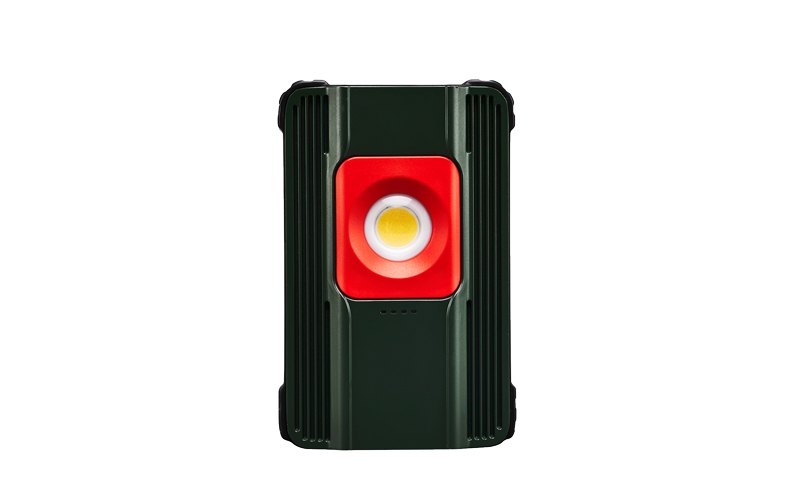
You must differentiate between passive deterrence and active use. Motion-activated fixtures provide excellent passive deterrence. They turn on suddenly to scare away intruders. Active use involves performing specific jobs outside at night. Contextual comparison matters immensely here. If you need 5,000+ lumens to repair a vehicle in your driveway, you face a dilemma. Permanently mounting a commercial-grade fixture to your residential facade creates permanent glare. It annoys your neighbors every single night. Instead, a portable LED Work Light offers a much better localized solution. It provides intense brightness exactly where you need it temporarily. You can then rely on a standard unit for your everyday passive security needs.
How you distribute the light matters just as much as total output. Single-head units focus all energy into one specific direction. They often create deep, dangerous shadows behind cars or trees. Splitting the total output across adjustable dual heads solves this problem completely. You can point one head toward the driveway entrance. You can angle the second head toward the side gate. This strategy eliminates deep shadows entirely. It improves overall property safety by blanketing the area evenly.
Placement entirely dictates how bright your fixture actually looks. Even the strongest unit performs poorly if mounted incorrectly. You must respect fundamental physics when installing these devices.
Physics plays a massive role in outdoor visibility. The inverse-square law dictates how light travels through empty space. Light intensity drops exponentially as it moves further from the source. A 2,000-lumen unit mounted at 8 feet appears drastically different than the same unit mounted at 20 feet. At 8 feet, the ground receives concentrated, intense illumination. At 20 feet, the light spreads out significantly. The ground directly underneath will look surprisingly dim. You must compensate by choosing stronger units for higher eaves. You cannot cheat this physical law.
You must choose carefully between narrow spot beams and wide flood beams. Narrow beams concentrate power into a tight circle. They highlight specific architectural features or distant gates perfectly. Wide beam angles spread illumination across broad expanses. Wide beam angles require higher total lumens overall. They need more power to maintain the same perceived brightness on the ground. A wide angle disperses energy very quickly across the yard.
You should correlate your output brackets to ideal installation heights. If you place a weak fixture too high, it becomes completely useless. If you place a strong fixture too low, it blinds everyone walking past.
Table 1: Correlating Lumen Output to Ideal Mounting Heights
Lumen Output Tier | Primary Application | Ideal Mounting Height | Expected Ground Visibility |
|---|---|---|---|
700 - 1,500 | Patios & Walkways | 8 to 10 Feet | Soft, ambient pooling for safe walking. |
1,500 - 3,000 | Driveways & Side Yards | 10 to 14 Feet | Strong, crisp visibility for cameras. |
3,000 - 5,000+ | Commercial Lots & Fields | 15 to 20+ Feet | Broad coverage over long distances. |
Poorly planned installations create more problems than they solve. Excessive brightness often introduces unexpected security vulnerabilities. You must anticipate these common pitfalls before climbing the ladder.
Homeowners frequently place high-lumen fixtures directly next to security cameras. This placement causes immediate sensor blinding. Night-vision cameras use infrared sensors to detect movement in the dark. When a brilliant light suddenly activates nearby, the camera lens attempts to compensate. The sudden intense glare ruins the camera contrast completely. The lens stops capturing background details. This adjustment plunges the rest of the yard into total darkness on the video feed. You will only record a glowing white orb instead of capturing an intruder's face. You must maintain significant physical distance between cameras and bright units. Point them in parallel directions to avoid direct lens flares.
You do not own the night sky around your neighborhood. Light trespass happens when your illumination crosses property lines. It shines directly into your neighbor's bedroom window. Navigating local zoning ordinances is absolutely essential. HOA restrictions often strictly regulate excessive brightness in suburban communities. They frequently issue fines for fixtures lacking proper shields. Always direct your beams downward toward the ground. You must keep the illumination strictly within your property borders to maintain neighborhood harmony.
More brightness does not automatically mean better security. Excessively bright lights can actually decrease property security significantly. They create deep, harsh shadows around the yard edges. Human eyes struggle to adjust between blinding hot spots and pitch-black corners. Intruders can hide easily inside these artificially created shadows. A balanced layout provides uniform coverage across the entire space. Uniform coverage eliminates hiding spots entirely. It allows your eyes to scan the yard comfortably.
You now understand the theoretical framework for your lighting layout. We must apply this knowledge to actual hardware selection. Follow a structured approach to narrow down your final choices.
You can completely mitigate the risk of buying the wrong brightness. Prioritize fixtures featuring adjustable outputs or smart app controls. Smart units let you dial the intensity up or down via your smartphone. You can set them to 1,000 lumens for evening family gatherings. You can increase them to 3,000 lumens before going to bed. This incredible flexibility guarantees perfect results every single time. It adapts to your changing daily needs.
Brightness alone does not determine visual clarity. You must pair your chosen output with the correct color temperature. The Kelvin scale measures this light color perfectly. The wrong color makes your yard look strange.
Consider these standard Kelvin applications:
Use 3000K (warm white) for gentle ambient applications. It feels highly welcoming.
Use 4000K (neutral white) for general yard navigation. It provides crisp visibility without feeling sterile.
Use 5000K (daylight) strictly for active security deterrence. It feels stark and alerts the senses instantly.
Pairing high outputs with a 5000K temperature creates a highly intimidating environment for trespassers. It mimics bright daylight perfectly.
Your available power source dictates your maximum potential brightness. You must choose between hardwired, solar, or battery setups. Solar options generally cap out at lower thresholds. They struggle to maintain high outputs throughout long winter nights. Hardwiring is explicitly required for reliable 2,000+ lumen output. If you want serious security deterrence, you need a stable electrical connection. Battery units work well for temporary pathways but fail for primary driveways.
Let us review our evaluation framework before you finalize any purchases. We want to ensure you make the best possible decision for your home.
Match your total lumens directly to your specific square footage using the foot-candle formula.
Adjust your chosen output based on your planned mounting height to compensate for the inverse-square law.
Respect local nuisance constraints by controlling light trespass and eliminating glare.
Map out specific zones on your property before buying fixtures to prevent overlapping shadows.
You can achieve perfect nighttime visibility without annoying your neighbors. Take time to measure your driveway or patio first. Calculate the required foot-candles accurately. Choose wisely between active work lighting or passive deterrence. Follow these exact steps to secure your home effectively and beautifully.
A: Yes. For a standard residential lot, it will likely cause heavy glare. Neighbors will complain quickly. You should only use this intensity on a large rural property. You must mount it very high, usually above 15 feet. Otherwise, it ruins the nighttime aesthetic completely.
A: Shopping by wattage is completely irrelevant today. Generally, an LED unit draws between 18 to 25 watts to produce 2,000 lumens. Older incandescent bulbs required over 100 watts for the same output. You must always check the lumen rating on the box to guarantee actual brightness.
A: While possible, we do not recommend it. Outdoor fixtures cast harsh, concentrated beams. This causes severe blinding glare inside confined spaces. A dedicated LED work light featuring a diffuse lens is heavily preferred indoors. It softens the output and protects your eyes during detailed tasks.
A: Yes, absolutely. Higher Kelvin ratings appear starker and brighter to the human eye. A 5000K daylight bulb looks much more intense than a warmer 3000K bulb. They can have identical lumen outputs, but the cooler blue tones trigger a stronger visual response. Choose wisely based on your desired mood.

