


Views: 0 Author: Site Editor Publish Time: 2026-08-27 Origin: Site


Guessing lumen output for outdoor lighting often results in two costly extremes. You might suffer inadequate security visibility. Alternatively, you might install blinding fixtures. Excessive glare creates light pollution. It also frustrates your neighbors quickly.
The reality is quite straightforward. The correct lumen count is never an arbitrary guess. It operates as a calculated metric. You base this number on exact square footage. You also factor in mounting height and the specific intended use case. Different environments require vastly different illumination levels to function properly.
Our primary goal today is simple. We will provide a standardized, evidence-based framework. You can use it to calculate the exact light output needed for your specific outdoor application. Understanding these calculations streamlines your final purchasing decision. It removes guesswork from the equation. You will learn to evaluate area sizes, mounting constraints, and practical beam angles effectively.
Application Dictates Output: Standard landscape lighting requires 50-300 lumens, whereas residential security flood lights demand 700-3,000 lumens.
Height Alters Intensity: A fixture mounted at 20 feet requires significantly higher baseline lumens to achieve the same ground-level brightness as one mounted at 10 feet due to light dissipation.
Lumens ≠ Watts: Modern LED efficiency means purchasing decisions must be based entirely on lumen output and beam angle, not wattage.
Glare Mitigation: High-lumen fixtures require precise shielding and angling to comply with localized light trespass regulations (Dark Sky compliance).
Outdoor lighting serves multiple distinct purposes. Each purpose demands a specific intensity range. Understanding these baseline categories prevents improper installations. You avoid overpowering small spaces or under-illuminating large driveways.
Security lighting demands high visibility. You need sufficient output to illuminate deep shadows safely. A proper Flood Light in this range triggers high-definition security camera sensors effectively. It ensures lenses capture crisp footage. Too few lumens leave grainy artifacts on video. However, exceeding 3,000 lumens in a residential driveway often washes out the footage entirely. It creates bright hotspots on car windshields or concrete. Stick to this sweet spot for optimal home security.
Recreational outdoor areas require a different approach entirely. These spaces focus heavily on ambient visibility and basic safety. You want enough light to host guests or navigate stairs. Higher outputs in restricted spaces cause severe visual fatigue. A 3,000-lumen fixture over a small deck feels oppressive. It ruins the relaxed evening atmosphere. Keep your patio lighting subdued. You can use multiple lower-lumen fixtures to create an inviting, layered effect.
Commercial applications involve massive spaces. Warehouses, car dealerships, and perimeter fences require intense illumination. These zones require commercial-grade optics and robust heat sinks. You cannot simply buy a standard consumer light for a one-acre lot. This scale of lighting is best handled via a professional photometric plan. Lighting engineers map out beam spreads and overlapping zones. They prevent dangerous dark spots across large commercial footprints.
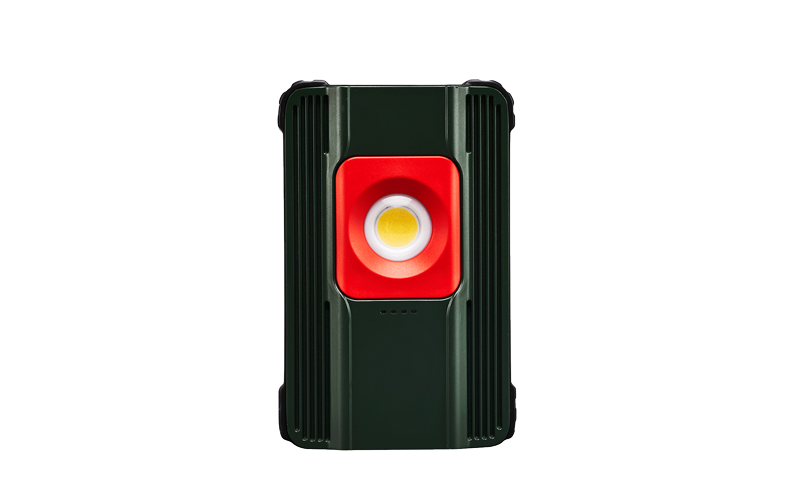
Sometimes you only need intense light occasionally. Home renovations, automotive repairs, and late-night construction require serious brightness. For these localized, intensive projects, an Outdoor LED Work Light is often a better alternative. You avoid permanently mounting high-lumen fixtures on your home. A portable unit provides directional, high-intensity light only when needed. You pack it away when the job ends. This keeps your home exterior looking clean and neighborhood-friendly.
You cannot buy the right fixture based on a hunch. Professional lighting relies on fundamental physics. You must measure the space and apply simple mathematics.
A foot-candle measures light intensity falling on a surface. One foot-candle equals one lumen per square foot. First, define your target area. Measure the length and width to find the square footage. Next, multiply this square footage by your required foot-candles.
Different tasks require different foot-candle levels. General safety navigation requires 1-2 foot-candles. Active task areas require 5 or more foot-candles. If you have a 400-square-foot driveway and need 2 foot-candles, you need roughly 800 useful lumens hitting the ground. You must buy a fixture emitting more than 800 raw lumens to account for optical loss.
Application Area | Recommended Foot-Candles | Estimated Target Ground Lumens (per 100 sq ft) |
|---|---|---|
Walkways & Paths | 1 - 2 | 100 - 200 |
Driveways | 2 - 3 | 200 - 300 |
Active Patios | 3 - 4 | 300 - 400 |
Detailed Task Work | 5 - 10 | 500 - 1000 |
Light loses intensity rapidly as it travels through the air. The inverse square law dictates this behavior. If you double the distance from the light source, the intensity drops to a quarter of its original strength. Mounting height drastically impacts your lumen requirements.
Under 10 feet: Standard lumen ratings apply quite directly to the target footprint. Dissipation remains minimal. A 1,000-lumen fixture provides strong local illumination.
10 to 20 feet: Lumen requirements multiply quickly. A 2,000-lumen light mounted at 20 feet delivers significantly lower lux at ground level. You might need 4,000 lumens to achieve the same brightness a lower fixture provides.
Lumens tell you the total volume of light. The beam angle tells you how the fixture distributes that volume. A narrow beam concentrates lower lumens into a bright, focused center spot. A wide beam requires much higher total lumens. A 120-degree fixture spreads light across a large surface area. You must increase the total lumen output to maintain consistent brightness across that wider span.
Selecting outdoor lighting involves more than just picking the highest lumen number. You must consider how the light feels, operates, and survives the elements. Several secondary dimensions define a successful installation.
Color temperature dictates the visual tone of the light. It alters the ambiance and practical utility of your space. Manufacturers measure this on the Kelvin scale.
3000K (Warm White): This tone is ideal for architectural and landscape integration. It feels welcoming. It mimics traditional incandescent bulbs perfectly. Use it near seating areas.
4000K - 5000K (Cool White/Daylight): This range serves as the industry standard for security and work applications. It maximizes visual contrast for human eyes. It also sharpens details for security camera lenses. Avoid using this tone for relaxed patio environments.
Constantly running high-output lights wastes electricity. Intelligent controls mitigate this issue. You primarily choose between motion-activated (PIR) and Dusk-to-Dawn (Photocell) sensors.
High-lumen fixtures should ideally utilize PIR sensors. Motion activation surprises intruders immediately. It also minimizes energy waste during quiet hours. Most importantly, motion sensors prevent neighbor complaints. Nobody wants a 3,000-lumen beam shining into their bedroom all night. Photocell sensors work best for low-lumen ambient lighting. They keep pathways gently illuminated from sunset to sunrise.
Outdoor fixtures face brutal environmental conditions. Rain, snow, and extreme temperatures destroy poorly built lights quickly. You must verify robust manufacturing standards before purchasing.
Look for verifiable IP65 or IP66 ratings. These ratings guarantee excellent weather and dust resistance. Furthermore, verify Dark Sky compliance features. Many municipalities restrict upward-facing light. Look for specialized hoods, baffles, or downward-angled designs. These physical features ensure upward light is minimized safely. They protect nocturnal ecosystems and keep stargazers happy.
More light does not equal better security. Pushing too many lumens into a small residential space introduces serious logistical and social problems. You must navigate several common pitfalls during installation.
Purchasing the highest-lumen fixture available often violates local HOA rules. It might even breach municipal light pollution ordinances. Light trespass occurs when your fixture illuminates a neighbor's property against their will. This creates instant friction. Plan for strict directional shielding. Point your fixtures down toward the ground at a 45-degree angle. Never aim them across property lines horizontally.
Homeowners often place ultra-bright fixtures directly next to their security cameras. This placement causes severe problems. Placing a 5,000-plus lumen light too close to a lens creates massive lens flare. It completely blinds the camera sensor. Night-vision infrared sensors become entirely useless. You must maintain spatial separation. Mount the light several feet away from the camera. Ensure the beam points slightly below the camera's horizontal field of view.
Modern LEDs are incredibly efficient. However, they still draw power. Retrofitting multiple high-lumen units onto a legacy residential circuit carries risk. You cannot assume old wiring handles new loads effortlessly. You must verify junction box weight limits first. Heavy cast-aluminum fixtures might tear old plastic boxes from the wall. Furthermore, verify your overall amperage capacity. Avoid overloading a single circuit, especially if it shares power with heavy appliances.
You now understand the variables. It is time to execute a structured purchasing plan. Follow this sequential logic to find the perfect fixture.
Step 1: Measure the exact area. Find the depth and width of the specific zone you need to illuminate. Calculate the square footage accurately. Do not guess the dimensions.
Step 2: Identify the mounting height constraint. Determine exactly where the fixture will sit. Will you mount it on a single-story eave? Or will it go on a two-story apex? Document this height measurement.
Step 3: Filter product options by calculated lumen requirement. Use the foot-candle formula and your height data. Filter your search down to a specific range, for example, 2000-2500 lumens. Ignore everything outside this bracket.
Step 4: Select the control type and verify ratings. Decide between a motion sensor or a manual switch. Read the technical specifications. Confirm the unit holds a proper IP65 or IP66 rating for weather defense.
Actionable Next Step: Finalize your personal specification sheet. Write down your required lumens, Kelvin tone, and IP rating. Consult with your selected manufacturer or a licensed electrical contractor. They will match the exact physical fixture to your calculated requirements perfectly.
Successful outdoor lighting is fundamentally a math equation, not guesswork. You evaluate square footage, account for mounting height, and adjust for your desired beam angle. Following these parameters prevents poor investments and disappointing results.
Right-sizing the lumen output ensures genuine safety for your property. It provides cameras with adequate light without causing blinding washout. Careful planning also preserves crucial neighborhood relations by eliminating offensive light trespass. Finally, installing the correct fixture maximizes the hardware's lifespan and efficiency.
Stop buying fixtures based entirely on the brightest box in the store. Take your measurements today. Browse specific lighting categories designed for your exact needs. Shop for 1000-2000 lumen security lights for your driveway. Alternatively, view high-output temporary job site lights for intensive backyard projects. Equip your property intelligently.
A: Yes. Excessive lumens create harsh shadows and cause severe glare. This glare blinds homeowners and disables security cameras. Over-illumination can also lead to serious legal or HOA disputes regarding light trespass into neighboring properties.
A: The conversion varies by LED efficiency, known as efficacy. Generally, a modern outdoor LED produces 100-130 lumens per watt. A 20-watt LED produces roughly the same light as a 150-watt traditional halogen bulb, outputting approximately 2,000 lumens.
A: Distance depends entirely on the fixture's beam angle and mounting height. A 120-degree wide fixture at 12 feet will effectively illuminate a 30-to-40-foot radius. A narrower spot beam will push those exact same lumens much further but cover less total width.
A: Multiple lower-lumen fixtures are almost always superior. They eliminate harsh, single-directional shadows across your yard. They provide smooth, overlapping coverage. Spacing out multiple units significantly reduces the blinding glare associated with a single massive light source.

