


Views: 0 Author: Site Editor Publish Time: 2026-09-06 Origin: Site


Many procurement teams still believe more lumens automatically equal better visibility. They often buy the brightest fixtures available on the market. This common misconception overlooks optical comfort entirely. The reality is quite different. Raw, unfiltered LED brightness creates disabling glare. This intense light compromises site safety. It reduces worker accuracy and causes severe eye strain during long shifts.
This guide serves as an evaluation framework. We created it for facility managers, safety officers, and contractors. You face an important choice. You must decide whether to invest in an Anti Glare Work Light over standard high-lumen alternatives. We will explore the technical mechanisms of glare reduction. We will also cover essential compliance considerations and objective purchasing criteria. You will learn exactly how to balance illumination and visual comfort effectively.
Safety & Compliance: High-glare environments increase accident rates and fail to meet modern workplace ergonomic standards (e.g., OSHA, ISO).
The UGR Metric: Unified Glare Rating (UGR) is the critical, quantifiable metric for shortlisting professional lighting; a UGR < 19 is the standard for visual comfort.
Yield vs. Comfort: True anti-glare design balances high lumen output with advanced optical diffusion without sacrificing structural durability.
You must understand the different types of visual impairment. Discomfort glare causes mild to severe eye strain. It brings on headaches and deep fatigue. Workers feel this acutely after hours on site. Disability glare is much worse. It causes temporary blindness. It drastically reduces visual contrast. You cannot see important details when disabled by light.
Harsh lighting directly impacts productivity. It causes severe focal fatigue. Technicians doing detail-oriented work struggle to maintain focus. IT and sysadmin personnel face massive issues. Screen reflections from overhead lights hide critical data. Error rates climb rapidly when eyes constantly readjust. Visual fatigue leads to costly rework.
Safety risks escalate in high-glare environments. Extreme contrast in industrial and construction settings hides imminent dangers. Momentary blinding can cause severe machinery accidents. Workers might easily miss obvious trip hazards. Heavy equipment operators need clear vision constantly. A poorly designed Work Light can temporarily blind them. Liability risks increase heavily when lighting fails routine safety audits.
Health compliance matters deeply for operational success. Industry ergonomic standards mandate strict glare reduction. Regulatory bodies like OSHA and ISO monitor workplace health closely. Long-shift workers suffer without proper lighting. Meeting these standards requires professional illumination strategies. You cannot ignore visual ergonomics. Ignoring these guidelines exposes companies to employee health complaints and potential fines.
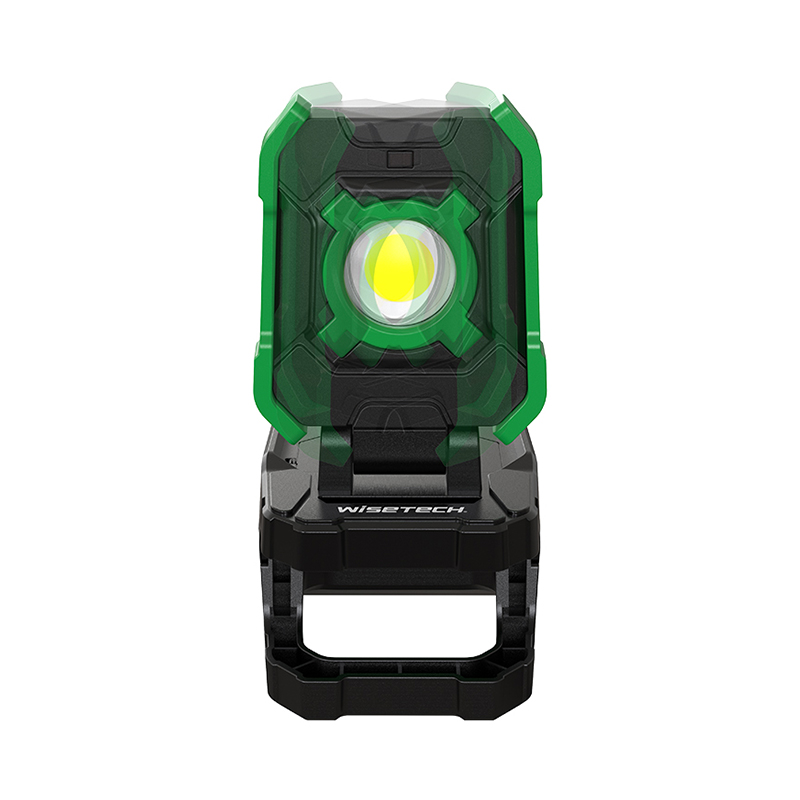
Many buyers evaluate fixtures solely on lumen output. This remains a highly flawed procurement strategy. You might assume brighter is always better. It is not. Focusing only on raw power ignores human physiology. Our eyes cannot process raw point-source intensity efficiently. Excessive brightness triggers squinting and pupil constriction.
We must balance directionality versus diffusion. Standard fixtures use raw, exposed LED diodes. These diodes output extremely high intensity. They also have a very small surface area. This combination aggressively pierces the eye. Engineered light dispersion solves this problem. It spreads the intensity across a much wider surface. This lowers the perceived harshness significantly.
The Unified Glare Rating (UGR) helps us measure this. UGR represents a highly critical metric. It evaluates the glare of a luminaire inside a specific spatial layout. It calculates the background luminance against the luminaire luminance. Lower numbers indicate much less glare. A high UGR indicates harsh, uncomfortable lighting. Professionals rely heavily on this exact metric.
Premium manufacturers share a very specific design goal. They want to resolve a major technical contradiction. They must deliver 5000+ lumens. However, they must also maintain a extremely low UGR. A premium Anti Glare Work Light achieves this rare balance. It maximizes usable light while strictly protecting the worker's vision.
Modern fixtures use sophisticated engineering to manage light output. Engineers rely on multiple physical and optical methods. Let us explore the primary technologies used today.
Optical Diffusers play a massive role in modern fixtures. Manufacturers use frosted, micro-prismatic, or honeycomb diffusers. These materials scatter incoming light evenly. They do this without severe lumen depreciation. Polycarbonate and acrylic plastics offer excellent durability. They survive harsh industrial environments easily.
Edge-Lit LED Panels represent another major architectural advancement. LEDs do not face the user directly here. Instead, they fire inward. They push light into a specialized light guide panel. This architecture creates a uniformly illuminated surface. The entire panel glows softly. It eliminates harsh point sources entirely.
Total Internal Reflection (TIR) Lenses offer incredible precision. Specialized lenses collimate the light beam perfectly. They direct it exactly where you need it. This prevents stray light from hitting the operator's eyes. TIR lenses trap and redirect beams highly efficiently. They maximize illumination on the actual work surface.
Recessed Diode Architecture relies on clever physical design. Engineers place the LEDs deep inside the housing. They add structural louvers. Sometimes they use specialized metal hoods. These physical elements act as a hard cutoff. They physically block the light from dangerous viewing angles. You only see the light from directly underneath.
Common Glare Reduction Technologies Comparison
Technology Type | Primary Mechanism | Best Application Scenario | Light Loss Factor |
|---|---|---|---|
Micro-Prismatic Diffusers | Refracts light through geometric patterns | General construction, large areas | 10-15% |
Edge-Lit Panels | Inward-firing LEDs into a light guide | Detail work, server rooms, inspections | 15-20% |
TIR Lenses | Collimates light into precise beams | Directional task lighting | 5-10% |
Recessed Louvers | Physical cutoff of viewing angles | High-bay installations, ceiling mounts | Varies greatly |
You need highly objective criteria when evaluating options. Do not rely on subjective marketing descriptions. Follow these precise evaluation steps carefully.
Verify UGR Claims: Do not trust marketing hype alone. Demand third-party photometric data. Request detailed IES files from the manufacturer. Verify their UGR claims independently using lighting software. Aim for <19 for fine detail work. Accept <22 for general industrial tasks.
Analyze Optical Efficiency Trade-offs: Evaluate the light loss factor carefully. Every anti-glare mechanism blocks some light. Good diffusers maintain 85-90% light transmission. Cheap plastics often drop below 70%. You lose too much brightness with poor materials. Evaluate the efficiency rating closely.
Assess Durability of Materials: Construction sites destroy fragile gear quickly. Anti-glare coatings and polycarbonate covers must handle severe abuse. Check the IK impact resistance ratings. Look for chemical exposure resistance. Ensure the plastic will not yellow under harsh UV light.
Check the Color Rendering Index (CRI): Glare reduction works best alongside high CRI. Look for CRI ratings above 80. Pair this with a 4000K-5000K color temperature. This combination ensures maximum visual clarity. It removes the stark harshness of pure white light.
Applying these criteria filters out inferior products. It ensures you invest in genuinely capable hardware. A proper Work Light must survive tough conditions while performing optimally.
Rolling out new lighting involves specific operational risks. We constantly see companies make the exact same mistakes. You can avoid them by planning ahead.
The "Cheap Frosted Plastic" trap catches many buyers. Budget brands take terrible shortcuts. They slap an opaque piece of plastic over cheap LEDs. This traps excessive heat inside the unit. It drastically reduces the LED lifespan. It also results in incredibly poor illumination. Avoid these budget options at all costs. They fail quickly in professional environments.
Misalignment of light types causes major operational headaches. You might need focused, adjustable spot lighting. However, a contractor installs wide-beam anti-glare floodlights. The diffusion spreads the light much too thin. You lose the intensity required for the specific task. Always match the beam angle strictly to the application.
Maintenance realities often surprise facility managers. Textured micro-prismatic lenses offer great optical comfort. However, they collect job site dust very quickly. Smooth glass stays cleaner much longer. You must account for this reality. Require specific Ingress Protection ratings. IP65 or higher allows for easy wash-downs. You can clean them quickly without causing electrical damage.
Procurement teams must follow a highly structured approach. Never buy a massive fleet of lights blindly. You need empirical data from your own environment.
Pilot testing is absolutely essential. Purchase a small sample batch first. Test them in highly specific environments. Try them in highly reflective automotive shops. Put them in cramped server rooms. Gather direct feedback from the technicians. Observe how the fixtures perform before approving full fleet deployment.
Establish strict vendor requirements. Create a clear list of non-negotiables. You need strong warranty terms. You must demand the availability of IES photometric data. Do not compromise on structural durability specs. If a vendor refuses to provide these details, walk away immediately. Trust only transparent manufacturers.
Frame the purchase correctly to stakeholders. Build a strong calculation model. Do not pitch this as a simple lighting upgrade. Present it as a critical investment in hazard reduction. Highlight the sustained worker output. Better lighting directly improves task accuracy. It keeps your workforce incredibly safe and efficient.
An Anti Glare Work Light is never a luxury feature. It remains a strict baseline requirement for safety. It ensures sustained productivity in any professional setting. You must prioritize visual comfort alongside raw output.
Always maintain a skeptical mindset during procurement. Look far past basic marketing claims. "Glare-free" is a highly popular buzzword. Demand quantifiable metrics instead. Verify the UGR. Check the transmission rates. Confirm the CRI rating.
Take immediate action today. Review your current site lighting audits. Identify areas where workers complain about eye strain. Request a detailed photometric analysis from a qualified supplier. Upgrade your illumination strategy to protect your team.
A: Yes, there is a minor transmission loss. It typically ranges from 10-15% on high-quality optics. However, the usable light actually increases. The human eye stops squinting. It no longer shuts down due to excessive point-source brightness. You see much better despite the slight lumen drop.
A: For fine-detail tasks, office settings, or server rooms, aim for a UGR < 19. For general industrial areas, warehouses, or large construction settings, a UGR < 22 is acceptable. Lower numbers always indicate better visual comfort.
A: We strongly advise against this for high-output industrial lighting. Aftermarket films trap severe heat. This degrades the LED lifespan quickly. The films often melt or discolor under professional thermal loads. Dedicated optical engineering is an absolute necessity.
A: Yes. All anti-glare lights utilize some form of diffusion or directional cutoff. However, not all diffused lights successfully eliminate glare. If the underlying LED is too powerful for the diffusion material's thickness, severe glare remains.

