


Views: 0 Author: Site Editor Publish Time: 2026-08-29 Origin: Site


Nighttime and low-visibility construction environments carry incredibly high stakes. Poor illumination easily causes severe site accidents. It leads to costly project delays and massive liability claims. Many contractors still view lighting as a simple temporary utility. They rarely consider it essential site infrastructure. However, professional illumination serves as a crucial risk-mitigation tool on active projects. Relying on cheap retail fixtures introduces dangerous shadows. They also cause frequent equipment failures during critical path tasks.
This comprehensive guide gives procurement teams an objective framework. You will learn how to evaluate better equipment properly. We will explain why investing in a professional Work Light matters for site safety. Consumer-grade alternatives simply cannot survive harsh outdoor conditions. You will discover key safety standards and durability metrics. We will also cover strategic deployment methods. These practical insights will keep your crews perfectly safe and highly productive.
Professional construction work lights mitigate legal and financial risks by ensuring adherence to strict OSHA illumination standards.
The upfront premium of industrial-grade lighting is offset by reduced maintenance, lower power consumption, and extreme durability (IP and IK ratings).
Site requirements dictate the lighting category: wide-area light towers for excavation, portable LEDs for task-specific trades, and string lights for corridors.
Proper evaluation requires assessing not just lumen output, but glare reduction, thermal management, and power source compatibility.
Poor visibility directly correlates with severe site accidents. Workers often navigate uneven terrain. They step over exposed rebar. They walk near open trenches. Poor illumination masks these exact hazards. Trip-and-fall accidents happen instantly in dim areas. Machinery operators face similar dangers. Excavators and forklifts have large blind spots. Shadows easily hide ground personnel. Collisions occur frequently when lighting fails. These safety hazards bring immense liability risks. They trigger immediate work stoppages. Insurance premiums skyrocket after any serious incident.
Shadows also create major productivity bottlenecks. Precision tasks require perfect visibility. Shadows slow down finishing trades immensely. Painters miss uneven wall textures. Electricians struggle inside dark rooms. They must identify specific wire colors. Poor color rendering distorts these colors. Red wires look brown in dim light. Workers waste valuable time double-checking their actions. This inefficiency destroys your project margins.
Many managers fall into the consumer-grade trap. They buy cheap retail lights. They hope to save their upfront budget. This strategy always fails in the long run. Retail housings shatter easily under impact. Flimsy stands collapse on uneven ground. Crews stop working to clean up broken glass. They lose hours waiting for replacement bulbs. These hidden replacement costs mount rapidly. Buying industrial-grade fixtures prevents these costly disruptions entirely.
Meeting legal illumination standards is non-negotiable. It protects your workforce from harm.
OSHA Standard 1926.56 establishes strict minimums. General construction areas require 5 foot-candles. Plant and shop areas require 10 foot-candles. First-aid stations demand at least 30 foot-candles. You must deliver this light precisely where crews work. Placing a bright lamp far away is insufficient. Inspectors measure the light reaching the specific task surface. We recommend using digital light meters daily. Check the illumination before the night shift begins.
High-intensity lighting often creates severe glare. Blinding glare is incredibly dangerous on site. Crane operators struggle to see ground signals. Truck drivers become temporarily blinded entering the gate. You must mitigate this risk completely. Professional fixtures incorporate diffused lenses. They spread the beam across a wider angle. Multi-directional panels illuminate an area evenly. They eliminate harsh directional shadows. This approach keeps everyone perfectly safe.
Construction sites are inherently wet environments. Rain creates large puddles. Excavations expose ground water. Damp conditions maximize electrocution risks. You must select grounded electrical equipment. Double-insulated designs provide an extra layer of protection. Always specify wet-location-rated fixtures. Ensure power cables feature heavy-duty jackets. Use Ground Fault Circuit Interrupter (GFCI) outlets universally. They cut power instantly upon detecting any fault.
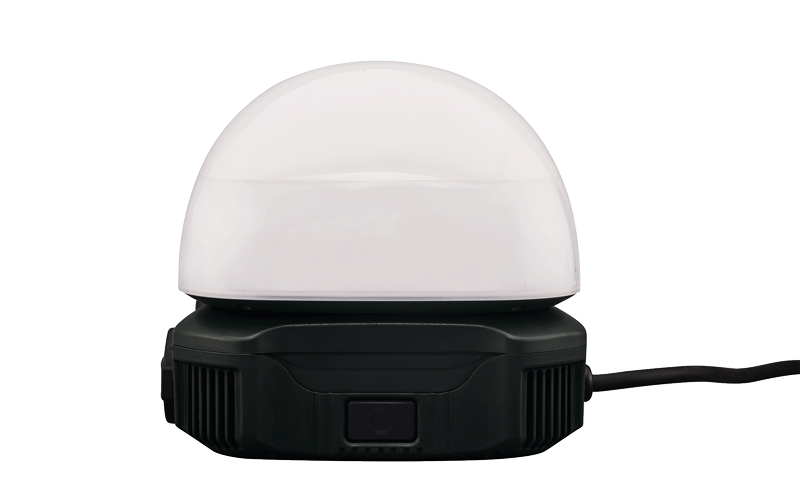
We frequently see contractors using standard garage lamps. They fail quickly in commercial environments. You must evaluate specialized criteria.
Ingress Protection (IP) ratings dictate weather resistance. The first digit measures solid particle defense. The second digit measures liquid protection. Outdoor sites generate heavy dust. You need an IP65 rating minimum. This ensures complete dust-tight performance. It also resists low-pressure water jets. Severe weather requires IP67 certification. This rating survives temporary submersion. Impact Protection (IK) measures physical toughness. The IK scale rates joules of impact energy. Sites experience dropped tools constantly. Falling debris damages weak plastics. You must look for IK08 ratings or higher. These housings survive brutal physical punishment.
Legacy halogen lamps generate extreme heat. The glass surface easily causes severe burns. They easily ignite nearby cardboard or plastic sheets. Professional LED technology solves this problem. High-quality LEDs produce minimal forward heat. Advanced aluminum heat sinks manage internal temperatures well. The fixture remains completely cool to the touch. This eliminates accidental burn risks. It completely removes a major fire hazard from enclosed spaces.
Retail packaging frequently exaggerates lumen output. Raw lumens measure total light leaving the diode. They do not measure usable light. Usable light means lux reaching the ground. Poor optics scatter raw lumens uselessly into the sky. Professional optics direct light exactly where needed. They maximize the lux over a specific footprint. Ignore flashy packaging claims. Request verified photometric testing data instead.
Table: Consumer vs. Professional Lighting Specifications
Feature | Consumer-Grade Light | Professional Work Light |
|---|---|---|
Durability Ratings | Often unrated or merely IP44 | IP65+ and IK08+ verified |
Thermal Output | Extremely high (Burn hazard) | Very low (Advanced heat sinks) |
Light Quality | High glare, poor distribution | Diffused lenses, high usable lux |
Power Cord Quality | Thin, easily severed | Heavy-duty, oil-resistant jackets |
Site requirements evolve continuously. You must match the fixture to the current task.
Massive excavations require immense illumination. Light towers deliver wide-area coverage. They secure the site perimeter overnight. Traditional units burn diesel fuel continuously. Modern sites increasingly adopt solar arrays. Battery banks provide silent overnight operation. When evaluating towers, examine wind-load stability. High winds tip over poorly designed masts. Evaluate the deployment footprint carefully. Narrow wheelbases save critical operational space.
Enclosed spaces require localized illumination. Drywall installers need agile light sources. Electricians move from room to room frequently. You need a dedicated Construction Work Light for these agile teams. Evaluate battery life consistency across temperature changes. Cold weather drains cheap batteries rapidly. Hybrid models accept AC power and battery packs. They offer maximum flexibility. Look for versatile mounting systems. Magnetic bases attach easily to steel beams. Tripods elevate the light safely above eye level.
Long corridors challenge traditional floodlights. Stairwells require consistent linear illumination. Temporary string lights solve this problem beautifully. They guide workers safely through dark tunnels. Review the daisy-chain limitations carefully. Do not exceed the maximum amperage rating. High-quality strings feature integrated drop protection. Strong cages protect individual bulbs from shattering. Consider the voltage drop over long cable runs. Excessive lengths cause dimming at the far end.
Strategic deployment maximizes your equipment investment. Poor planning creates entirely new site hazards.
Generators supply limited electrical capacity. Legacy lighting consumes massive amounts of power. Transitioning to LED technology changes everything. LEDs draw a fraction of the electricity. This frees up your generators immediately. You can power heavier machinery instead. Fuel consumption drops dramatically across the site. This simple switch improves your operational efficiency.
Proper positioning requires careful thought. You want to eliminate dangerous blind spots. However, you must avoid blinding nearby traffic. Angle perimeter lighting downward slightly. Use anti-glare shields near public roads. This prevents light pollution in residential neighborhoods. We recommend mapping placement zones during the planning phase. Update these locations as structures rise.
Cords create massive logistical headaches. Thick black cables blend into shadows. Workers trip over them constantly. You must route power cables carefully. Hang them safely above walkways using insulated hooks. Run them along ceiling tracks whenever possible. Use high-visibility cable ramps across vehicle paths. Battery-operated fleets eliminate cord hazards entirely. However, they require strict charging logistics. Designate a central charging station. Assign dedicated personnel to swap batteries daily.
Best Practices for Cable Management:
Elevate cables above walking paths using temporary hooks.
Use high-visibility yellow cable protectors on the ground.
Inspect all extension cords daily for fraying or damage.
Keep connection points elevated away from standing water.
Procurement demands a structured evaluation process. Use this framework for your next project.
Your lighting needs change as construction progresses. Match the equipment to your current phase. Groundwork requires towering mast lights. Exterior framing needs wide-area floodlighting. Interior fit-out demands portable task units. Build a flexible equipment fleet. Swap fixtures as the environment transforms.
Carefully vet your equipment supplier. Inspect their warranty terms closely. Ask for certified testing data. Reliable vendors provide official IP and IK lab reports. Never trust undocumented marketing claims. Ensure they stock replacement components locally. Waiting weeks for replacement lenses halts production.
Stop guessing about illumination levels. Contact a qualified vendor today. Ask them for a localized photometric plan. These digital simulations show exact light distribution. They highlight potential dark zones before construction begins. Encourage your safety team to audit the site. Measure current foot-candles against OSHA minimums regularly.
Professional illumination functions as a critical safety asset. It directly boosts overall workforce productivity. Never treat site lighting as a cheap commodity. Substandard fixtures cost you time and money.
Here are your next steps:
Prioritize verifiable durability over the lowest price.
Demand documented OSHA, IP, and IK compliance testing.
Standardize your fleet to simplify daily maintenance.
Transition to high-efficiency LED units immediately.
Promptly contact a lighting specialist. They can assess your unique site requirements. Download a technical spec sheet to compare top models. Secure the right equipment to keep your project safe, compliant, and fully on schedule.
A: Do not focus strictly on raw lumens. You must measure foot-candles reaching the actual work surface. OSHA requires 5 foot-candles for general construction areas. Precision tasks demand 30 foot-candles or more. Assess your specific work area size first. Then, select a fixture delivering the required foot-candles evenly across that space.
A: LED fixtures eliminate severe burn risks. They run incredibly cooler than dangerous halogens. LEDs also draw significantly less power. This reduces the heavy strain on your site generators. They lack fragile glass bulbs. They have no delicate filaments. This extreme vibration resistance makes them far more durable around heavy machinery.
A: We strongly recommend an IP65 rating as the baseline. This ensures the fixture is completely dust-tight and handles direct rain. For heavy weather conditions, upgrade to an IP67 rating. IP67 units survive temporary submersion in water. They protect internal components during severe site flooding or muddy excavations.
A: They serve entirely distinct roles. Portable battery lights provide agile illumination. They are perfect for short-term tasks in enclosed spaces. They eliminate trip hazards caused by long extension cords. However, wired site lighting remains necessary. You still need towers and wired masts for sustained, wide-area operations and perimeter security.

