


Views: 0 Author: Site Editor Publish Time: 2026-09-05 Origin: Site


Have you ever noticed how selecting the wrong lighting fixture results in wasted energy, compromised security, or washed-out architectural features? Many property owners mistakenly believe buying the brightest possible fixture will solve every visibility issue. However, a high lumen count does not guarantee effective lighting. The critical variable is how you direct and distribute light across your physical space.
If you ignore this basic principle, you risk creating hazardous blind spots, blinding glare, or costly neighbor disputes. You must understand how light behaves before investing in commercial or residential exterior illumination. This guide offers an objective, technical breakdown of these two distinct optical solutions. It will help buyers accurately match fixture specifications to strict site requirements.
You will learn how to navigate complex compliance standards, evaluate beam geometry, and select the right equipment. Ultimately, this knowledge ensures you achieve your desired visual outcomes efficiently and safely.
Beam Angle is the Differentiator: Spotlights use narrow beam spreads (typically under 45 degrees) for concentrated, long-distance reach; flood lights use wide beam spreads (up to 120 degrees) for broad area coverage.
Measurement Metrics: Evaluate spotlights using candela (peak intensity at a distance) and evaluate a flood light using total lumens (overall light output).
Application Rules: Use spotlights for targeted illumination (architectural accents, flags, specific objects) and flood lights for general visibility (driveways, parking lots, job sites).
Risk Mitigation: Incorrect selection leads to light trespass, glare, and potential code violations (e.g., Dark Sky ordinances).
To accurately specify exterior illumination, we must examine how light travels from the source to the target. The primary technical difference between fixture types boils down to beam geometry. Manufacturers engineer different optical lenses and reflectors to manipulate how light spreads. You must grasp these fundamental metrics to avoid under-lighting or over-lighting your site.
Lighting engineers define a beam spread mathematically. It represents the specific angle at which light intensity drops to exactly 50 percent of the center peak intensity. If you look at a photometric chart, you will see a cone of light exiting the fixture. The edges of this measurable cone dictate the beam angle.
The National Electrical Manufacturers Association (NEMA) classifies light distribution into specific numerical categories. These classifications guide professionals in matching fixtures to applications. NEMA types 1 through 3 indicate very narrow to narrow distributions. We classify these as spotlights. Conversely, NEMA types 4 through 7 indicate medium to very wide distributions. These fall strictly into the flood category. Recognizing these technical ratings helps you decode manufacturer specification sheets easily.
A common mistake involves using lumens to judge every fixture identically. Total lumens merely measure the overall volume of light output leaving the diodes. If you take a 1,000-lumen spotlight and a 1,000-lumen broad fixture, the spotlight will appear significantly brighter at a distant target point. This happens because the spotlight concentrates all 1,000 lumens into a tight, narrow corridor. To measure this concentrated intensity accurately, we use candela (Center Beam Candlepower). Candela tells you the peak intensity of light driven in a single direction.
Distance also drastically impacts perceived brightness. This phenomenon follows the Inverse Square Law. In simplified terms, if you double the distance between the light source and your target, the light intensity does not cut in half. It actually drops to one-quarter of its original brightness. Therefore, you must use candela to evaluate tight beams over long distances, and you must use lumens to measure broad, short-distance washes.
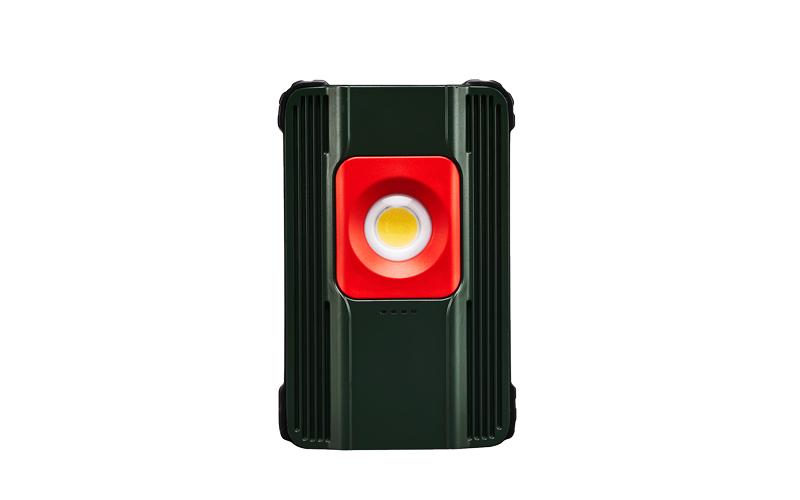
Broad area illumination focuses on safety, visibility, and uniformity. You deploy wide-angle fixtures when you need to cover significant square footage reliably. The overarching goal involves creating a safe environment where people and vehicles can navigate without encountering harsh shadows.
You achieve success here by producing uniform, broad illumination. A well-designed layout minimizes dark spots across a large physical footprint. You want a smooth transition from one illuminated zone to the next. High uniformity ensures the human eye does not struggle to adapt constantly between bright glares and pitch-black corners.
We see wide-beam applications excel in several distinct environments. Broad distribution serves essential functions in commercial, industrial, and high-activity zones.
Commercial and Industrial Zones: Facilities rely heavily on wide distribution for sprawling parking lots, loading docks, and warehouse exteriors. A single high-output Flood Light mounted on a tall pole can effectively blanket dozens of parking spaces.
Security Integration: Proper security requires strategic lighting. Pairing wide beams with motion sensors and CCTV cameras yields excellent results. A wide wash of light prevents camera blind spots and gives security personnel a clear, unshadowed view of the entire perimeter.
Task Lighting: Temporary job sites demand flexible illumination. Using a portable LED Work Light equipped with a broad beam allows crews to illuminate active construction zones or automotive repair bays safely. The wide angle prevents harsh shadows from obscuring dangerous tripping hazards or critical mechanical components.
Despite their versatility, wide-angle optics carry inherent limitations. They feature a much shorter effective throw distance compared to narrow beams. The light dissipates rapidly as it travels outward. Additionally, they carry a higher risk of light pollution. If improperly aimed or tilted too high, the wide spread will scatter light into the night sky or spill into neighboring windows.
Sometimes you do not want to blanket an entire area. Instead, you need to draw visual attention to a specific feature. Precision illumination requires a controlled, narrow beam that reaches its target without wasting energy on the surrounding environment.
You achieve success by highlighting specific focal points from a distance. The optical design must prevent light from spilling into unwanted adjacent areas. A successful installation creates high contrast, making the illuminated object stand out dramatically against the dark background.
Narrow optics provide immense value for specialized applications. They offer the punch and distance required to execute complex lighting designs.
Architectural and Landscape Accents: Designers use narrow beams for highlighting building facades, tall structural columns, or mature trees. Pushing light up the trunk of a large oak tree requires a tight beam to reach the upper canopy effectively.
Wayfinding and Signage: Businesses must illuminate commercial signs or entry monuments clearly. A focused beam ensures the lettering remains legible without blinding drivers on the adjacent roadway.
High-Mast Targeting: Industrial ports and sports arenas often mount fixtures at extreme heights. Reaching ground targets from 50 to 100 feet in the air requires tight optics. A wide beam would completely dissipate before it ever reached the ground.
Narrow distributions fail completely when applied to broad area safety. They create highly concentrated hot spots on the ground, surrounded by total darkness. This extreme contrast strains the eyes and creates dangerous blind spots. Furthermore, they can cause severe glare if you place them at eye level and aim them toward pedestrian walkways.
Choosing between wide and narrow optics represents just the first step. You must systematically evaluate the fixture's physical specifications against your site conditions. We recommend assessing four critical pillars before making a final purchasing decision.
You must map out your physical space. Develop a framework for calculating the required throw distance and the desired coverage diameter. The mounting height heavily dictates your optical choice. If you mount a fixture low to the ground, a wide angle covers a decent area nearby. If you mount that same wide-angle fixture at 40 feet, the light will spread out so much it becomes uselessly dim at ground level. Taller mounting heights generally require tighter beam angles to force the light downward effectively.
Modern commercial-grade LEDs offer massive efficiency advantages over legacy halogen or metal halide fixtures. You should evaluate energy efficiency by looking at lumens-per-watt (LPW). This metric tells you exactly how much light you get for every watt of electricity consumed. Upgrading to fixtures with high LPW ratings ensures maximum brightness while keeping immediate electrical draws low. Focus on the raw efficacy of the diode array and the quality of the internal driver.
Local zoning laws strictly govern exterior illumination. You must factor in these regulations to avoid steep fines or mandatory tear-downs. Light trespass regulations prevent you from spilling illumination across property lines into residential zones. Furthermore, many municipalities now enforce International Dark-Sky Association (IDA) compliance. These rules require fully shielded fixtures that emit zero light above the horizontal plane. Assess your need for physical shields, internal louvers, baffles, or specialized cut-off housings early in the design phase.
Exterior fixtures face relentless environmental abuse. You must establish a strict baseline requirement for durability. We measure this using Ingress Protection (IP) ratings. The first digit represents dust resistance, while the second digit represents water resistance. You must specify appropriate IP ratings for any equipment exposed to heavy rain, snow, or airborne dust.
Table: Baseline Ingress Protection (IP) Ratings for Exterior Use
IP Rating | Dust Protection Level | Water Protection Level | Recommended Application |
|---|---|---|---|
IP65 | Totally dust-tight | Protected against low-pressure water jets | Under eaves, protected building facades |
IP66 | Totally dust-tight | Protected against high-pressure water jets | Exposed parking lots, open landscaping |
IP67 | Totally dust-tight | Protected against temporary immersion | Ground-well lights, marine environments |
Even premium fixtures fail to deliver results if implemented poorly. We regularly observe facility managers making predictable installation errors. You can avoid costly rework by anticipating these common physical and operational risks.
Light trespass occurs when your illumination crosses property boundaries. Installing overly wide beams near property lines almost guarantees complaints. This creates both operational friction and serious legal risks. Aggrieved neighbors can petition local code enforcement to force you to remove or alter the fixtures. Always use cut-off shields or opt for narrower optics when mounting fixtures close to property edges.
More light does not equal better landscaping. Overlapping wide beams often ruin landscape aesthetics by entirely eliminating necessary shadows and visual contrast. Good architectural lighting relies on the interplay of light and shadow to create depth. If you blast a textured stone wall with broad illumination from all angles, the wall will appear flat and uninteresting. Use precision optics to graze surfaces and highlight textures properly.
LEDs do not project heat forward in their light beam, but the internal diodes generate significant thermal energy backward into the circuit board. Recognizing this physical reality is vital. High-output fixtures require massive, well-engineered heat sinking. You must evaluate the physical housing build quality. If the manufacturer uses thin, cheap aluminum fins, the internal temperature will soar. This excessive heat physically degrades the diodes, leading to rapid color shifting and premature fixture failure.
Modern lighting systems rarely operate on simple on/off switches. Facilities utilize complex automated controls. You must ensure your chosen fixtures integrate seamlessly with site-wide automation. Check driver specifications for 0-10V dimming capabilities. Verify they work with your existing photocells (dusk-to-dawn sensors) or smart security triggers. A mismatch in control protocols will cause flickering, strobe effects, or complete driver failure.
Selecting the optimal exterior fixture requires balancing technical specifications against environmental realities. To streamline your procurement process, follow a structured elimination approach.
Shortlist by Geometry: Base your initial fixture choice strictly on the required coverage area and the necessary throw distance. This quickly dictates whether you need narrow or wide optics.
Filter by Efficacy: Narrow the list down by evaluating lumen requirements and confirming high lumens-per-watt performance.
Audit the Site: Before finalizing the purchase order, measure physical site dimensions and confirm the exact pole or wall mounting heights.
Verify Compliance: Cross-check your final selection against local light pollution ordinances and dark-sky requirements to ensure legal compliance.
Specify the Housing: Confirm the fixture carries the correct IP rating and features robust heat dissipation for long-term reliability.
A: No. The internal lens geometrically determines the beam spread. A wide beam remains wide regardless of how close you mount it to the target. Moving it closer simply makes the hot spot intensely bright while still spilling unwanted light widely across the surrounding area. You cannot force a broad optical lens to act as a precision tool.
A: For a typical two-car residential driveway, you generally need a beam angle between 90 and 120 degrees. This wide distribution allows a single fixture mounted above a garage door to blanket the entire concrete surface evenly. It provides safety for walking and parking without creating harsh shadows.
A: Most portable work fixtures are engineered with broad distribution optics for area safety. They illuminate wide sections of a room or construction site so crews can operate freely. However, some advanced hybrid models exist that feature dual lenses, allowing users to switch between a wide area wash and a focused inspection beam.
A: You must mount the light source higher than the camera lens and aim the fixture downward. Never point a light directly into the camera's field of view. Ensure the camera physically sits behind or below the light fixture housing so the intense beam projects outward, brightly illuminating the subjects without blinding the delicate camera sensor.

