


Views: 0 Author: Site Editor Publish Time: 2026-08-25 Origin: Site


Buyers often feel frustrated when upgrading their outdoor illumination. The transition from traditional incandescent and halogen bulbs to LED technology caused significant confusion. Decades ago, finding the right brightness meant picking the highest wattage available. This shift rendered legacy rules of thumb completely obsolete.
Choosing the correct wattage is no longer about finding the biggest number on the retail box. Today, success requires calculating the precise lumen output needed for your specific square footage and visual task. A small residential patio demands a totally different approach than an active commercial loading dock. You must evaluate light distribution logically.
We designed this guide to eliminate the guesswork from your next lighting project. You will discover a transparent, formula-driven framework to calculate exact illumination needs. We will show you how to evaluate fixture quality objectively based on independent data. Finally, you will learn how to avoid costly over-illumination, blinding glare, and local zoning compliance issues.
Watts measure energy consumption, not brightness: Buying decisions must lead with total lumen requirements, followed by fixture efficacy (lumens-per-watt).
Context dictates intensity: A residential patio requires significantly lower foot-candles (and thus, lower wattage) than a commercial parking lot or an active industrial site.
Secondary specs matter: Beam angle, mounting height, and Color Temperature (CCT) dramatically impact how a flood light's wattage actually performs in the real world.
Risk mitigation: Over-buying wattage often leads to light trespass, blinding glare, and local zoning code violations.
Many buyers still walk into a hardware store asking for a 500-watt light. They rely heavily on legacy assumptions. Decades ago, high wattage guaranteed high brightness. Halogen bulbs functioned on a very predictable scale. You simply bought a bigger bulb for a bigger yard. LED technology breaks this direct relationship entirely. An LED does not generate light by burning a physical filament. It uses solid-state electronics to emit photons. Therefore, relying on old wattage habits leads to terrible purchasing mistakes. You will likely buy a fixture far too bright for your space.
You must evaluate efficacy as your true performance metric. Efficacy measures Lumens Per Watt (lm/W). Lumens dictate the actual brightness hitting your eyes. Watts merely measure the electricity consumed by the diode. Imagine two different LED fixtures sitting on a shelf. A high-quality 50W LED might produce 150 lumens per watt. It delivers 7,500 total lumens. A cheap 100W LED might only manage 70 lumens per watt. It delivers 7,000 total lumens. The cheaper model consumes twice the electricity. Yet, it produces less actual light. This discrepancy proves why evaluating wattage alone fails.
We advise buyers to demand certified photometric data before purchasing. Do not trust flashy marketing claims printed on retail packaging. Look for independent testing specifications. Request IES files for larger commercial projects. These specialized files map exactly how light leaves the diode. They prove the manufacturer's performance claims. By insisting on hard evidence, you protect your lighting investment and ensure optimal performance.
To avoid guesswork, you need a reliable process. We use a simple three-step framework. It ensures you buy the exact illumination required for your unique environment. You will never under-light or over-light your space again.
Step 1: Measure the Target Area
You cannot calculate lighting needs without knowing your physical boundaries. Start by measuring the length and width of the zone requiring illumination. Multiply these numbers to find your total square footage. Be highly precise during this phase. Guessing the size of a driveway or patio often leads to severe under-illumination. You must define the exact footprint. If your yard features an irregular shape, break it down. Measure it as several smaller rectangles. Add those square footages together. Accurate measurements form the foundation of proper lighting design.
Step 2: Identify the Foot-Candle Requirement
Professionals measure surface illuminance using foot-candles. One foot-candle equals one lumen of light distributed evenly across one square foot. Different spaces demand drastically different foot-candle targets based on safety requirements. We have outlined the baseline targets below to guide your planning.
Surface Illuminance Baseline Standards
Application Area | Environment Type | Target Foot-Candles |
|---|---|---|
Patios & Decks | Ambient/Residential | 1 – 5 |
Driveways & Walkways | Security/Residential | 5 – 10 |
Retail Parking Lots | Commercial/Security | 15 – 30 |
Loading Docks | Industrial/Task | 30+ |
Step 3: The Calculation Logic
Now, you apply a basic formula to these numbers. Multiply your total square footage by your target foot-candles. This simple calculation reveals your total lumen requirement.
Formula: Square Footage × Target Foot-Candles = Total Lumens.
Let us look at a practical example. Imagine you have a 500-square-foot residential driveway. You want 5 foot-candles of baseline security illumination. You multiply 500 by 5. You instantly know you need 2,500 total lumens. Finally, you determine the actual wattage. Divide your total lumens by the fixture's efficacy rating (lm/W). If you select a modern fixture offering 100 lm/W, you divide 2,500 by 100. You need exactly a 25W LED fixture. This straightforward math eliminates all guesswork.
Different environments require specialized approaches. A one-size-fits-all strategy guarantees poor results. We break down standard requirements by location to help you contextualize the data.
Homeowners usually need mild ambient light. A typical residential wattage ranges from 15W to 40W. This translates to roughly 1,500 to 4,500 lumens. Your primary goal is widespread illumination. You want to host evening dinners comfortably. You need to navigate outdoor stairs safely. However, you do not want to disturb your neighbors. Keep the wattage appropriately low. Focus on smooth, even coverage across the yard. Avoid ultra-bright fixtures causing harsh shadows on your lawn. Soft illumination always works best for residential relaxation zones.
Commercial zones face stricter safety standards and liability concerns. A typical wattage here ranges from 50W to 150W or higher. The lumen output jumps significantly, ranging between 6,000 and 20,000+ lumens. Storefronts and expansive parking lots need overlapping beam patterns. They require highly uniform distribution across large asphalt surfaces. Dark spots invite security risks and potential accidents. High-lumen fixtures ensure clear visibility for overnight security cameras. Consistent overlapping light eliminates dangerous shadows. Facility managers must prioritize uniformity over sheer maximum brightness.
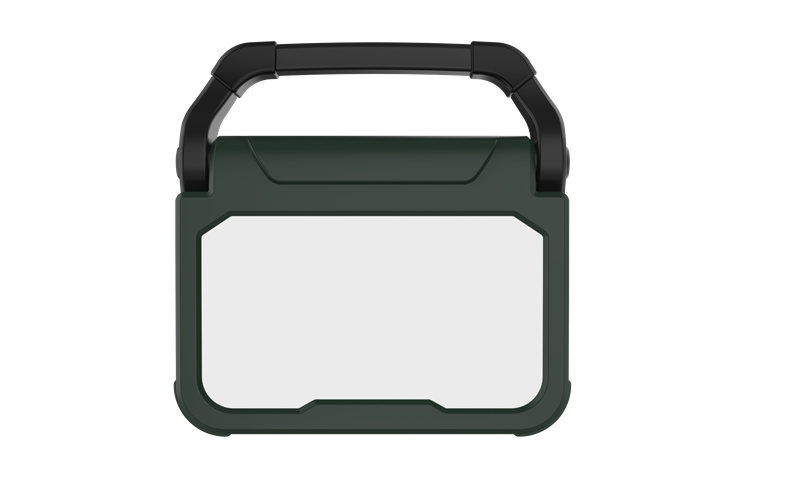
Industrial environments introduce entirely different operational challenges. You must clearly distinguish a permanent exterior fixture from an active LED Work Light. Standard fixtures remain permanently bolted to a brick wall. Work lights move constantly across active job sites. These rugged environments require temporary installation flexibility. The portable units face brutal conditions daily.
Extreme durability becomes a primary purchasing factor. Industrial users demand reinforced housings and shatterproof lenses. Furthermore, precision tasks demand excellent color clarity. Whether you are welding steel or inspecting electrical wiring, color accuracy matters immensely. You must demand a Color Rendering Index (CRI) above 80. High CRI ensures wires, warning labels, and construction materials appear true to life. Lower CRI ratings wash out colors, increasing the risk of workplace errors.
Wattage and lumens only tell half the story. Secondary technical specifications drastically alter real-world performance. You must evaluate these specific dimensions carefully before making a final decision.
Beam Angle vs. Mounting Height
Your mounting height changes everything about light distribution. A narrow beam angle acts like a focused spotlight. For instance, a 30-degree beam throws intense, concentrated light across long distances. It works perfectly for tall eaves, building peaks, or high poles. The light reaches the ground without scattering into the night sky. Conversely, a wide 120-degree beam spreads light aggressively outward. It covers a massive area but lacks penetrating power. If you mount a wide beam too high up, the light dissipates in the air. The ground remains unacceptably dark. You will suddenly need a much higher wattage just to maintain basic brightness at the outer edges. Always match your beam angle strictly to your installation height.
Color Temperature (CCT)
Color temperature dictates the mood and visual clarity of your space. We measure this metric in Kelvin (K). For residential warmth, stick strictly to 3000K. It produces a soft, welcoming glow ideal for patios. For security and industrial clarity, choose 4000K to 5000K. This range mimics crisp daylight. It keeps workers alert and dramatically improves security camera footage. Always avoid anything above 6000K. These extreme temperatures emit a harsh, glaring blue light. They cause severe eye fatigue and distort natural environmental colors.
Hardware & Compliance
Physical build quality determines survival in harsh weather. Moisture destroys sensitive electronics quickly. Ensure your Flood Light carries proper ingress protection. Look for IP65 or IP67 ratings. These numbers guarantee complete resistance to heavy rain and airborne dust. Additionally, verify DLC (DesignLights Consortium) certification if you operate a business. Commercial buyers often need this specific rating. Many utility companies require DLC certification before approving lucrative energy rebates. This certification also serves as an excellent independent benchmark for component quality and optical performance.
Many buyers incorrectly assume more light is always better. This dangerous misconception leads to severe implementation risks. You must balance your illumination precisely to avoid unintended consequences.
The Over-Buying Trap
Buying the highest available wattage is a deeply flawed strategy. Our eyes adapt naturally to the dark over several minutes. Blasting a confined space with excessive lumens destroys this vital night vision adaptation. It creates a blinding central hot-spot on your property. More importantly, it creates pitch-black shadows around the edges of the light pool. Intruders hide easily in these artificially created dark zones. A moderate, evenly distributed light source provides vastly superior security.
Light Trespass & Dark Sky Compliance
Poorly aimed, high-wattage fixtures cause severe light trespass. Your light spills directly into adjacent properties and bedroom windows. This spillage angers neighbors and frequently violates local zoning laws. Many modern municipalities strictly enforce Dark Sky compliance. They issue heavy fines to property owners polluting the night sky. You must select the precise wattage calculated for your footprint. Always aim the fixture sharply downward to contain the beam entirely within your property lines. Consider adding physical visors to block upward glare.
Thermal Management
LEDs run significantly cooler than old halogen bulbs. However, their internal diodes still generate substantial heat. High-wattage LEDs fail prematurely if the housing lacks adequate heat sinking. The internal components simply cook themselves over time. We highly recommend evaluating the physical weight of the fixture housing. Heavy, die-cast aluminum bodies dissipate heat highly effectively. They draw thermal energy away from the critical electronics. Avoid lightweight plastic housings for any high-wattage application, as they trap heat and guarantee early failure.
We strongly recommend a disciplined, math-based approach to outdoor illumination. You must abandon old wattage habits immediately. Focus entirely on objective measurements and verified performance data. Treating lighting as an exact science saves you money and prevents intense frustration.
Follow our shortlisting logic funnel to guarantee long-term success:
Calculate your exact square footage area physically.
Determine your total required lumens using target foot-candles.
Select your LED wattage based strictly on the manufacturer's efficacy rating.
Verify the beam angle and IP rating match your specific outdoor environment.
Your next steps are straightforward. Go outside and map your physical space accurately. Take precise measurements of driveways, patios, or commercial lots. Most importantly, consult the detailed manufacturer specification sheets before checking out. Do not rely on flashy retail box labels. A methodical evaluation ensures you purchase the perfect fixture every single time.
A: A traditional 500W halogen bulb produces roughly 5,000 to 7,000 lumens. To match this exact brightness, you need an LED fixture operating between 50W and 70W. The precise conversion depends entirely on the LED’s efficacy rating. Always check the total lumen output rather than guessing the wattage equivalent.
A: Yes, it is generally excessive. A 100W LED produces over 10,000 lumens. This intensity will cause severe, blinding glare in a standard backyard. It will also likely trigger light trespass complaints from neighbors. For residential spaces, we highly recommend staying between 20W and 30W for comfortable ambient illumination.
A: Yes. Light follows the inverse square law. As you mount a fixture higher, the light spreads wider but loses surface intensity rapidly. Higher mounts require significantly higher total lumens, and thus more watts, to deliver the same brightness to the ground. Alternatively, you must use a much tighter beam angle.

