


Choosing the wrong lighting solution can completely wreck your job site productivity. Oversized fixtures in tight spaces cause harsh, blinding glare. Undersized units leave dangerous, deep shadows across large construction zones. You also face unnecessary battery drain when you blast maximum brightness for small, localized tasks. In industrial and trade contexts, "size" no longer refers to the physical dimensions of the fixture. Instead, we measure it by lumen output, coverage angle, and form factor. A heavy, bulky unit does not automatically guarantee better illumination.
This guide provides a strict, application-based framework for selecting the perfect piece of equipment. We remove the guesswork entirely from your buying process. You will learn exactly how to match lumen tiers to specific jobs. We will show you how to evaluate structural durability and balance portability with sustained power. By the end, you will know how to properly scale your lighting to your exact workspace requirements.
Lumens dictate scale: 1,000–3,000 lumens is sufficient for tight tasks; 4,000–7,000 for standard rooms; 8,000+ for large, open sites.
Form factor impacts efficiency: A high-output portable work light on a tripod serves a different operational function than a compact floor light, even at identical lumen counts.
Over-sizing is a liability: Choosing excessive brightness in enclosed spaces causes eye fatigue and safety hazards due to intense glare.
Durability outranks aesthetics: IP (Ingress Protection) and IK (Impact Protection) ratings are mandatory evaluation criteria for professional-grade lights.
Many professionals still believe a physically massive lamp guarantees superior illumination. This outdated myth leads to frustrating and dangerous equipment purchases. Decades ago, bulky halogen bulbs needed massive casings just to handle the intense heat. You judged a lamp's power by how heavy it felt. Today, you must entirely abandon this visual bias.
Modern LED technology changes everything. It completely decouples physical bulk from raw output power. A slim, modern Work Light can easily outperform a massive older unit. When evaluating size, you must focus strictly on three metrics. Lumens measure the total light output. Lux measures the intensity per square meter. The beam angle determines how widely the light spreads across your surface.
If you ignore these metrics, you run a serious implementation risk. Buying a physically large, older-generation light often introduces immediate hazards to your site. Halogen and incandescent models produce far more heat than usable light. They turn small rooms into saunas. They also create severe fire risks if accidentally knocked over. You must shift your focus away from the measuring tape. Start sizing your gear based strictly on photometric data.
Lumen Output Application Matrix
Lumen Range | Primary Application | Ideal Beam Type | Workspace Environment |
|---|---|---|---|
1,000 – 3,000 | Detailed task work, inspections | Directional / Spot | Under-hood, cabinets, panels |
4,000 – 7,000 | Room illumination, painting | Wide Flood | Standard residential rooms |
8,000+ | Large site lighting, exterior builds | Omnidirectional / High Flood | Commercial sites, concrete pours |
Lumen output serves as your primary sizing tool. Choosing the right tier directly dictates your visual comfort and operational safety. We divide output into three strict categories.
This category rules the close-quarter workspace. It works best for under-hood automotive repairs. Plumbers use it extensively when working under dark sinks. Electricians rely on this tier while wiring tight breaker panels.
Your success criteria here revolve around control. You need minimized glare above all else. Bouncing 5,000 lumens off a shiny metal car engine will temporarily blind you. You want a highly directional beam to focus illumination exactly where your hands are working. The unit must remain incredibly lightweight. You will often need to mount it magnetically or hang it from a hook.
Step up to this tier when you move from localized tasks to full-room visibility. This range proves essential for interior painting. Drywall finishers need this output to spot surface imperfections. Residential carpenters use it to illuminate framing projects safely.
The success criteria shift dramatically here. You no longer want a focused spot beam. You need a broad flood beam angle. A wide spread effectively eliminates harsh, distracting shadows on walls and floors. This output tier usually requires adjustable positioning. You must be able to tilt and pivot the housing to bounce light off the ceiling. This creates a softer, ambient glow across the entire room.
This massive output tier handles the most demanding environments. It works best for heavy framing. Crews use it for exterior concrete pours performed after dusk. It provides comprehensive illumination for large, open-air workshops.
To succeed at this level, you need omnidirectional capabilities. You want light pushing out in a 360-degree radius. You must also utilize high mounting options. Mounting these units on telescoping towers or tall tripods mimics overhead lighting. It prevents workers from walking directly into an eye-level beam of intense brightness.
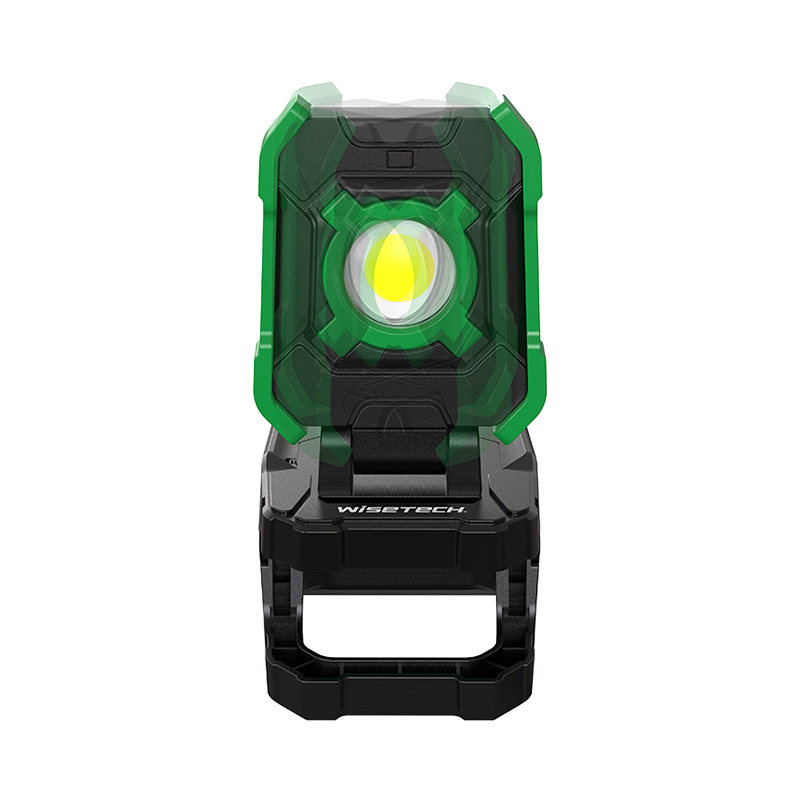
Once you nail down your lumens, you must size up the form factor. The way a unit receives power radically alters how you deploy it on a site. You must constantly balance agility against endurance.
Battery/Cordless: A cordless Portable Work Light delivers ultimate mobility. You can carry it anywhere. It removes trailing cables, providing an immediate OSHA compliance benefit by eliminating trip hazards. However, high lumen output drastically reduces run time. Pushing 5,000 lumens might drain a standard battery in an hour. You must ensure the unit fits your existing standardized battery ecosystem. Matching your existing 18V or 20V tool batteries keeps operations running smoothly.
Corded (110V/120V): Plug-in models trade mobility for pure endurance. They provide continuous, sustained output for multi-day site projects. Many corded models offer daisy-chaining capabilities. You can link several units together to light a long corridor. The main risk involves tethered operation. You absolutely require a generator or temporary site power to run them.
Mounting Styles: Handheld models and magnetic bases dominate tight spaces. Floor stands provide stable low-angle illumination. Telescoping tripods handle broad area coverage. Your chosen mount directly impacts how the light covers your workspace.
Sizing up a lighting solution requires a strict look at structural integrity. Professional gear must survive brutal job site conditions. Consumer-grade plastics simply will not survive a daily industrial beating.
You must check the IP Ratings (Ingress Protection) first. This standard dictates how well the housing blocks dust and moisture. Consider IP54 as your absolute baseline expectation. It provides basic dust and splash resistance. For outdoor, wet-weather use, you must upgrade to IP65 or higher. This ensures rain and thick mud will not short out the electrical components.
Next, evaluate IK Ratings (Impact Protection) and core materials. Look strictly for die-cast aluminum housings. Demand tough polycarbonate lenses over cheap glass or acrylic. Job site realities are harsh. Drops from tall ladders happen constantly. Loose tools regularly smash into equipment. A high IK rating ensures the internal LED chips survive violent impacts.
Finally, inspect the thermal management system. High-lumen LEDs require highly effective heat sinks. A properly sized housing pulls heat safely away from the diodes. It should never pose a contact burn hazard to your crew. Good thermal management also stops premature degradation. Overheating kills LED chips fast, dimming your output permanently over time.
You now understand the metrics. It is time to apply them to your purchasing decision. Follow this strict sequence to size your solution perfectly.
Audit the Primary Workspace: Start by measuring your average square footage. Identify what power availability usually looks like on your sites. A remote site demands battery power. A wired residential build allows for corded solutions.
Cap the Lumens: Actively avoid "over-lumenizing" tight spaces. Pushing 8,000 lumens into a small bathroom creates blinding glare. It causes massive eye strain. Match the output strictly to the room size using the decision matrix.
Check Ecosystem Compatibility: If opting for a cordless format, verify compatibility. Ensure the unit accepts your current fleet batteries. If it does not, you must budget for standalone heavy-duty lithium options.
Assess Multi-Functionality: Look aggressively for hybrid options. Many units offer both corded and battery capabilities. Dimmable settings remain crucial. A dimmable unit allows a single high-output light to scale down instantly for smaller, delicate tasks.
Selecting the right size lighting equipment requires a strict, metrics-based approach. You must balance task-appropriate lumens with structural durability and a smart power format. Relying on physical bulk alone will lead to poor purchases and job site hazards. Assess your workspace, cap your brightness to avoid dangerous glare, and demand robust ingress protection.
We advise buyers to prioritize multi-setting LED units. Adjustable outputs provide massive versatility. They allow you to shift seamlessly from an expansive framing job to a tight under-cabinet task using the exact same fixture.
Take action today by evaluating your current site needs. Browse professional collections and use strict filters. Sort your options by targeted lumen ranges, rigorous IP ratings, and compatible power ecosystems to find the exact match for your daily workflow.
A: No. Excessive lumens in a confined space create harsh glare, eye strain, and reflective blind spots. Lumens must scale with room size.
A: A portable work light in the 3,000 to 5,000 lumen range with dimmable settings is the most versatile starting point for mixed residential and garage tasks.
A: Generally, 5,000 lumens can adequately illuminate a 250–350 square foot area (like a standard two-car garage) for detailed work, depending on the beam angle.

