


Views: 0 Author: Site Editor Publish Time: 2026-08-27 Origin: Site


Inadequate lighting in technical environments introduces severe operational risks. Standard floodlights frequently create harsh shadows and blinding glare in confined spaces. They also cause massive color distortion. This distortion routinely leads to costly diagnostic errors, such as misidentifying complex wiring harnesses. We wrote this guide to provide technicians, mechanics, and facility managers with a solid, evidence-based framework. You will learn how to properly evaluate and select equipment engineered specifically for detailed repair and inspection tasks. We must establish one critical baseline assumption immediately. A high lumen count does not equal high utility in detailed environments. Optical quality and structural form factor matter significantly more than raw brightness. You need tools designed for accuracy, not just general illumination. We will explore exactly what specifications you must scrutinize before upgrading your workspace lighting.
Standard work lights fail in precision tasks due to harsh glare, poor color rendering, and rigid positioning.
A true precision work light prioritizes a high Color Rendering Index (CRI > 90) and neutral color temperatures (4000K–5000K) over maximum brightness.
Form factor and mounting versatility (rare-earth magnets, articulating arms) are critical for shadow reduction in confined spaces like engine bays or electrical panels.
Most standard lighting tools fail miserably during detailed mechanical or electrical repairs. They rely on outdated designs suited only for broad construction sites. You cannot treat precision diagnostics like a general drywall installation.
High-output, wide-angle floodlights bounce harshly off metallic surfaces. This aggressive reflection causes intense eye strain during long shifts. It also creates deep shadows that obscure fine details inside tight cavities. You simply cannot see the tiny fasteners or hairline cracks you need to fix. The human eye struggles to adjust to these extreme contrast ratios. When light blasts a reflective aluminum oil pan, your pupils constrict. This natural reflex actively reduces your ability to see into the darker recesses of the engine bay.
Many cheap LED chips feature a low Color Rendering Index (CRI). They wash out vibrant colors completely. This optical failure makes it incredibly difficult to differentiate between faded electrical wires. It also hides subtle fluid leaks. You might easily confuse green engine coolant with brown motor oil under a poor light. When selecting a Work Light, avoiding this distortion is vital. Poor color rendering leads directly to incorrect diagnoses, blown fuses, and wasted repair time.
Bulky lights lack secure mounting options. They cannot angle correctly into confined spaces. This design flaw forces you to hold the light awkwardly with one hand. You end up working with sub-optimal illumination while trying to operate heavy tools safely. A bulky unit without articulation slows down your entire workflow. You waste precious minutes constantly adjusting the beam angle instead of focusing on the actual repair task.
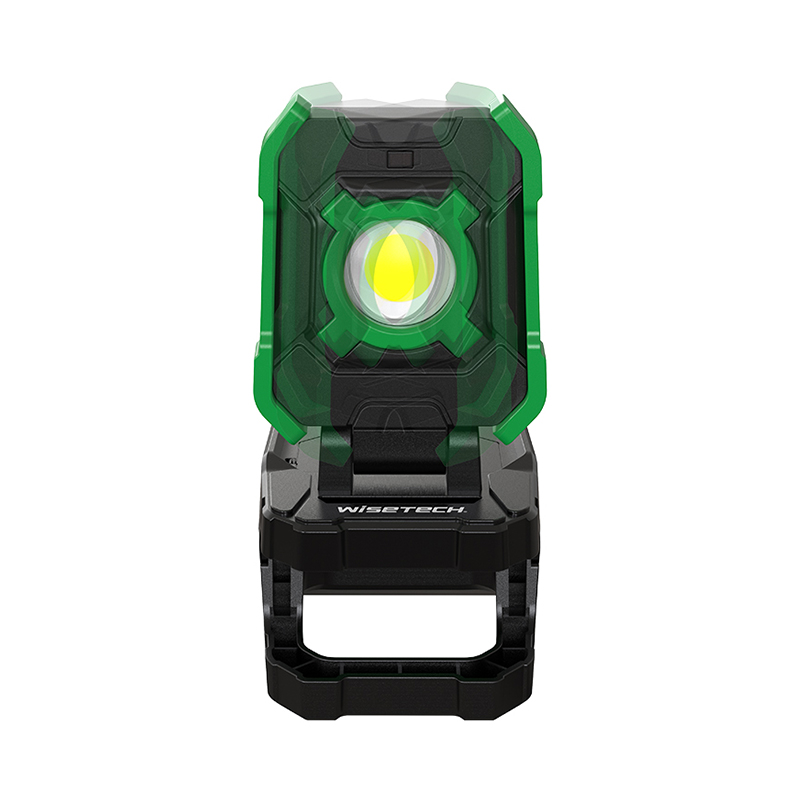
Evaluating modern lighting tools requires looking far beyond the marketing claims on the box. You must analyze the optical engineering, physical construction, and thermal management systems.
CRI (Color Rendering Index): You must establish CRI 90+ as your absolute baseline standard. A high CRI ensures colors appear exactly as they would under natural sunlight. Accurate color identification prevents catastrophic wiring mistakes in complex panels.
Color Temperature (Kelvin): We strongly recommend aiming for the 4000K–5000K range. You should avoid anything above 6000K entirely. High Kelvin ratings produce a harsh blue glare that scatters inside the eye, causing severe fatigue. Conversely, avoid anything below 3000K. These overly warm tones obscure contrast and make metallic surfaces look muddy.
Stepless Dimming vs. Fixed Outputs: You need adjustable lumen output to match the reflectivity of specific working surfaces. Stepless dimming allows you to dial in the exact brightness required. A fixed high-output setting will blind you when working inches away from a polished stainless steel surface.
Beam Distribution: Evaluate the critical difference between focused inspection beams and uniform arrays. Spot beams help you inspect deep shafts or pipes. Edge-to-edge uniform arrays, typically powered by COB (Chip-on-Board) LEDs, prevent multi-shadowing. COB technology spreads light evenly across a broad area, eliminating the harsh overlapping shadows caused by older multi-diode clusters.
Lighting Specification Benchmarks
Specification | Minimum Standard | Recommended Ideal | Why It Matters |
|---|---|---|---|
Color Rendering Index | CRI 80 | CRI 95+ | Prevents wire color misidentification. |
Color Temperature | 5000K | 4000K - 4500K | Reduces blue-light glare and eye strain. |
Dimming Capability | High/Low Settings | Stepless Dial | Adapts to varying surface reflectivity. |
Mounting Mechanisms: Assess the reliability of the integrated mounting systems. You want rare-earth magnetic bases, non-marring hooks, and heavy-duty clamping systems. These features keep the unit secure on uneven, greasy, or dirty surfaces. A weak magnet will send your light crashing into a cooling fan mid-repair.
Multi-Axis Rotation: We highlight the absolute need for 180° to 360° pivoting heads. Multi-axis rotation lets you direct light precisely where needed without moving the heavy base unit. You can stick the magnet to a frame rail and twist the head upwards into the chassis.
Profile Thickness: Pay close attention to the physical dimensions of the light head. Ultra-thin wand or blade designs help you access tight clearances easily. You need these slender profiles when working behind engine blocks, inside server chassis, or between dense HVAC coils.
Ingress Protection (IP Rating): Set IP54 as your minimum acceptable baseline. We highly recommend IP65 or higher for demanding environments. An IP65 rating protects the internal electronics against splashing cutting fluids, accidental water sprays, and heavy shop dust.
Impact Resistance (IK Rating): Look for an IK07 rating minimum. This specific metric ensures the unit survives standard drop heights of 1.5 to 2 meters directly onto concrete floors. Professional tools must withstand accidental kicks and falls from workbenches.
Material Degradation: We strongly warn against buying units made from cheap ABS plastics. These materials degrade quickly and become brittle when exposed to common shop chemicals. Brake cleaner, synthetic oils, and harsh solvents will turn cheap plastic lenses opaque, destroying the light output.
Realistic Runtime: Always differentiate between peak brightness runtime and continuous working runtime. Many brands advertise a ten-hour runtime, but they fail to mention this only applies to the dimmest setting. On maximum output, a poorly optimized battery might drain in thirty minutes.
Battery Ecosystems: Evaluate the power source carefully. Compare proprietary built-in lithium batteries against cross-compatible removable tool battery platforms. Removable batteries allow you to swap packs instantly and keep working through an eight-hour shift.
Thermal Throttling: Heat management is a hidden but critical issue. Poorly designed lights drop their lumen output significantly after just ten minutes. The internal circuitry throttles the power down to prevent the LEDs from melting. This sudden dimming negatively impacts your continuous repair work. Look for models featuring heavy aluminum heat sinks.
No single form factor solves every illumination problem. You must match the physical design of the tool to the specific constraints of your daily tasks.
Slim Inspection Lights / Penlights: These are best for localized, rapid diagnostics. They excel at maneuvering through dense wiring harnesses or inspecting deep spark plug wells. They slip easily into a chest pocket for immediate access.
Under-Hood / Articulating Bar Lights: These provide optimal broad, top-down illumination. They stretch across the entire width of a vehicle hood. They deliver shadowless light across wide workspaces, making them perfect for major engine tear-downs.
Pivoting Base / Folding Work Lights: This is the versatile middle-ground category. They sit stably on the floor for brake jobs or fold into tight V-shapes for HVAC panel work. An adjustable Precision Work Light provides excellent versatility by securely gripping onto nearby structures when floor space is unavailable.
Wearable / Headlamps: These remain essential for strictly hands-free, line-of-sight task lighting. They follow your gaze directly into dark corners. However, you must accept their limitations. They typically feature lower battery capacities and cannot provide wide-area flood illumination.
Even the best tools fail if used incorrectly. Technicians frequently encounter environmental and physical limitations that disrupt their workflow. You should watch out for these common implementation traps.
Cold Weather Battery Degradation: You must note that lithium-ion battery capacities drop significantly in freezing environments. If you operate in an unheated garage or perform outdoor winter repairs, expect shorter runtimes. Internal electrical resistance increases in the cold. Having a corded backup unit or keeping spare batteries in a warm pocket becomes necessary.
The "High Lumen" Trap: We must reiterate that outputting 3,000+ lumens in a two-foot confined space actively harms your vision. The intense glare causes immediate pupil constriction. This physiological reaction actively reduces your ability to see fine detail. More brightness does not equal better visibility up close.
Magnetic Base Failures: You must understand the limitations of magnets. Curved surfaces, aluminum panels, or heavily debris-coated steel will render standard magnetic bases useless. Dirt creates a physical air gap that drops magnetic pull force exponentially. Secondary mounting options like durable nylon hooks are vital for safe positioning.
Before purchasing new equipment for your shop, you need a systematic approach. Avoid buying based purely on promotional discounts or flashy packaging. Follow these concrete steps to select the right tool.
Audit Your Workspace: Document your most common physical constraints. Do you constantly fight tight clearances behind machinery? Does your work involve heavy fluid exposure? Do you frequently face specific color-matching needs during electrical diagnostics? Write these constraints down to filter out incompatible models immediately.
Determine the Duty Cycle: Decide how long the light will actually run each day. If you plan to use it for eight-hour continuous shifts, you must favor swappable tool batteries or pass-through charging capabilities. If you only need it for intermittent fifteen-minute inspections, a slimmer built-in battery will save weight and improve handling.
Evaluate the Warranty and Support: Assess the manufacturer’s replacement policy carefully. Lenses crack, and lithium batteries naturally degrade over a two-to-three-year lifecycle. A strong commercial warranty ensures your diagnostic tools remain operational without constant repurchase cycles. Check if the brand sells replacement lenses or individual battery packs.
A precision work light serves as a critical diagnostic tool, not just a simple bulb. Upgrading your shop illumination fundamentally changes how efficiently you operate. Investing in high CRI technology, proper heat dissipation, and versatile mounting systems translates directly to tangible benefits. You will experience fewer diagnostic errors, significantly reduced eye fatigue, and much faster repair times.
We encourage all buyers to look past top-line lumen claims immediately. Scrutinize the IP ratings, exact color temperature, and mechanical mounting strength before committing to a purchase. By matching the optical performance and physical form factor to your specific mechanical tasks, you protect your vision and elevate your professional output.
A: Between 200 and 500 lumens focused precisely is generally superior to 2,000 lumens of uncontrolled flood lighting. High lumens in tight spaces cause blinding glare and eye strain. Lower, adjustable outputs allow you to see fine details without causing pupil constriction.
A: High CRI ensures highly accurate color representation. This accuracy is critical for distinguishing between similar wire colors in complex harnesses. It also helps technicians diagnose fluid types accurately, such as telling the difference between engine oil and transmission fluid.
A: IP65 is the ideal standard. It offers complete protection against shop dust and defends the internal electronics against low-pressure liquid jets. This ensures the unit survives accidental splashes from coolant, water hoses, and mild cleaning solvents.
A: It heavily depends on the specific model. Some professional units support pass-through charging, allowing continuous use while plugged into an outlet. Others require proprietary docking stations and cannot operate while charging. Always verify this feature if you require extended, uninterrupted runtimes.

