


Views: 0 Author: Site Editor Publish Time: 2026-09-01 Origin: Site


Facilities managers face a persistent dilemma. You need reliable lighting for demanding environments. However, initial budgets often restrict your options. Standard LED lights revolutionized general illumination over the last decade. They offer bright output and excellent energy savings. Yet, deploying these basic fixtures in industrial applications introduces severe risks. You will likely face premature failure. Safety hazards also emerge unexpectedly. Hidden replacement cycles drain your operational resources fast.
This guide establishes a clear baseline. It helps you evaluate when standard LEDs suffice. It also highlights when an Industrial LED Work Light becomes a mandatory operational requirement. We will examine core evaluation dimensions. You will understand how structural build, thermal management, and safety compliance separate consumer-grade products from true industrial assets. By the end of this article, you will make confident, data-backed procurement decisions for your toughest environments.
Structural Integrity: Industrial work lights utilize heavy-duty housing and advanced IP/IK ratings to survive vibration, moisture, and impact, whereas regular LEDs rely on standard polycarbonate or thin aluminum.
Thermal Management: Purpose-built industrial lighting prevents rapid lumen depreciation in high-ambient-temperature environments through engineered heat sinks.
Total Cost of Ownership (TCO): Regular LEDs have lower initial costs, but industrial units deliver superior ROI through reduced maintenance, zero downtime, and longer lifecycle warranties.
Safety & Compliance: Industrial fixtures are often certified for hazardous or wet locations (e.g., OSHA compliance, Class/Div ratings), mitigating liability risks.
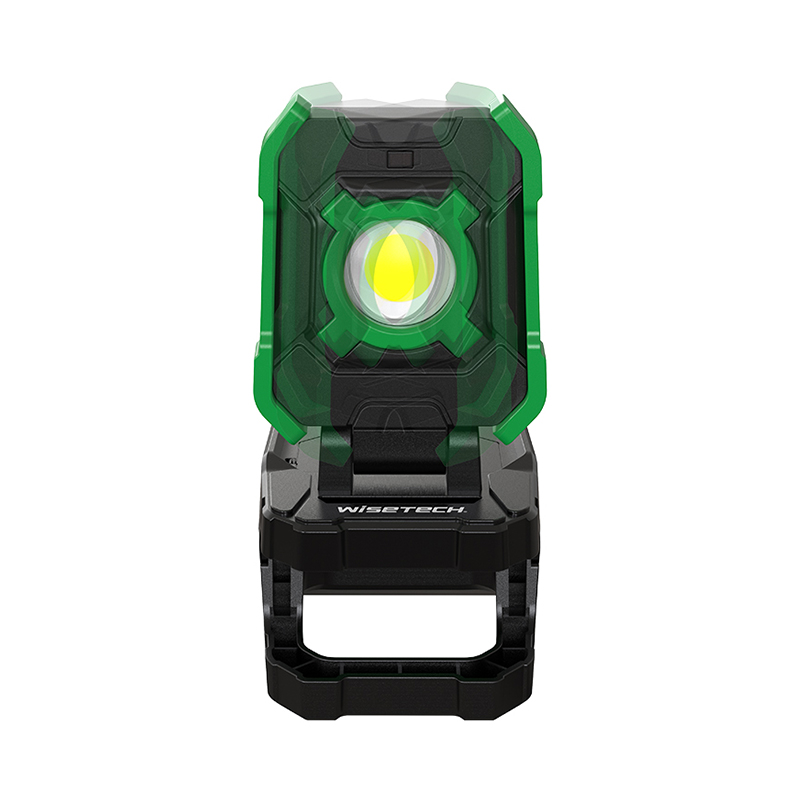
Industrial sites subject equipment to relentless stress. Heavy stamping machinery creates continuous, violent vibration. Facilities often expose fixtures to airborne chemicals, cutting fluids, and fine metal dust. Furthermore, industrial power grids remain notoriously unstable. High-draw equipment causes severe voltage fluctuations throughout the day. Extreme ambient temperatures add another layer of stress. A regular bulb placed near an industrial furnace or inside a cold storage facility will degrade rapidly under these harsh realities.
Purchasing standard LEDs for industrial use feels economical initially. The upfront price tags look attractive. However, this creates a false economy. Standard units lack the internal architecture to handle industrial stress. They fail quickly. Your maintenance crew then spends hours fetching scissor lifts to replace broken units. These frequent replacements drain labor resources. Production lines often halt during overhead maintenance. Ultimately, this cycle of failure consumes far more capital than buying the right fixture originally.
A reliable Work Light must meet specific, demanding criteria. It must deliver uninterrupted illumination across multiple shifts. You need absolute zero maintenance over its promised lifespan. Furthermore, environmental stress should never alter its optical performance. Whether covered in factory dust or exposed to machine vibrations, the light output must remain steady, bright, and predictable.
The outer shell of a fixture dictates its survival. Regular LEDs feature basic materials. They usually offer IP20 to IP44 ratings. These ratings work perfectly for dry, climate-controlled, dust-free rooms. However, they fail instantly when exposed to moisture or debris.
Industrial fixtures dominate in this category. They boast IP65 to IP69K ratings. An IP69K rating means the unit withstands high-pressure, high-temperature washdowns. Impact resistance also matters heavily. Industrial units achieve IK08 or higher ratings. Manufacturers build them using die-cast aluminum housings. They equip them with tempered glass or heavy-duty polycarbonate lenses. If a rogue forklift bumps a structural beam, an industrial fixture survives the shockwave.
Heat acts as the natural enemy of LED diodes. Regular LEDs rely on basic heat dissipation. They suffer thermal throttling quickly. When ambient temperatures rise, they experience rapid lumen depreciation. They reach their L70 lifespan (the point where light output drops to 70%) much sooner than expected.
Industrial fixtures solve this thermal crisis through advanced engineering. They feature heavy extruded or finned heat sinks. Engineers specifically design these sinks for extreme ambient temperatures. Many handle environments reaching 50°C (122°F) or higher. This robust thermal management protects the diode. It ensures consistent, brilliant light output over 50,000 to 100,000 hours of continuous operation.
The driver serves as the vulnerable heart of any LED system. Regular LEDs use standard commercial drivers. They remain highly susceptible to power surges. Dirty power destroys them effortlessly.
Industrial units pack serious electrical armor. They utilize potted drivers sealed in epoxy. This protects sensitive components from vibration and moisture. They also feature robust built-in surge protection. They easily absorb surges ranging from 4kV up to 10kV+. Additionally, industrial drivers accommodate high-voltage systems. They run natively on 277V or 480V lines common in heavy manufacturing spaces.
Table 1: Technical Specifications Comparison
Feature | Regular LED Light | Industrial LED Work Light |
|---|---|---|
IP Rating | IP20 - IP44 (Indoor/Dry) | IP65 - IP69K (Washdown/Dust-tight) |
IK Rating (Impact) | IK02 - IK04 (Low) | IK08+ (High impact resistance) |
Heat Sink Design | Basic thin aluminum or plastic | Die-cast finned aluminum |
Surge Protection | 1kV - 2kV | 4kV - 10kV+ |
Voltage Compatibility | 120V (Standard residential) | 120V - 480V (Universal industrial) |
Regular lights offer basic, uncontrolled illumination. They emit omnidirectional light. They lack precise beam control, scattering light aimlessly. Industrial fixtures leverage highly engineered optics. Manufacturers design specific beam angles for different environments. Narrow beams penetrate deep high-bay spaces effectively. Specialized asymmetric distributions push light exactly where workers need it. This reduces harsh glare and significantly improves worker safety.
Never trust raw lumen counts blindly. Spec sheets often mislead inexperienced buyers. Regular LEDs waste light in useless directions. Focus instead on delivered lumens. You need measurable foot-candles precisely at the work plane. Efficiency means putting light on the task, not the ceiling. Furthermore, precision manufacturing demands a higher Color Rendering Index (CRI). Workers must distinguish between similarly colored wires or inspect paint finishes accurately. Industrial optics ensure high CRI reaches the actual workstation.
Evaluate fixtures over a five-to-ten-year horizon. Regular LEDs force frequent operational downtime. You constantly pay technicians to replace them. True value stems from uninterrupted production. Industrial fixtures guarantee continuous operation. They eliminate replacement labor. They prevent costly work stoppages. Upfront purchase prices matter less than long-term reliability. A heavy-duty fixture pays for itself by simply staying out of your maintenance log.
Lighting affects workplace safety directly. OSHA enforces strict illumination standards for different work areas. Poor lighting leads directly to accidents, errors, and fatigue. Using uncertified, consumer-grade equipment creates massive legal risks. You face severe liabilities if failures cause worker injuries. Industrial units carry proper third-party certifications. They ensure you meet mandated foot-candle minimums legally and safely.
Certain facilities contain combustible dust, vapors, or gases. Standard LEDs never possess certifications for these areas. A simple spark from a failing commercial driver can trigger a catastrophic event. You must deploy intrinsically safe designs. Look for stringent explosion-proof ratings. Class I, Div 1/2 or ATEX certifications remain strictly mandatory here. They encapsulate internal components perfectly. They prevent disastrous explosions and protect your workforce.
Retrofitting regular LEDs into industrial spaces introduces hidden dangers. Buyers often overlook the mounting hardware. Mismatched mounting brackets fail under continuous machinery vibration. Fixtures can detach entirely. This creates a severe drop hazard for workers below.
Common Mistake: Using standard chains or consumer-grade zip ties to secure overhead lights in high-vibration areas.
Best Practice: Always use engineered industrial mounts. Install secondary safety retention cables for every overhead fixture.
Use this straightforward framework to match the right fixture to your facility.
Step 1: Environmental Audit. Assess your exact installation site. Document any temperature extremes. Identify moisture sources or chemical exposure risks. Measure the intensity of mechanical shock and machine vibration present.
Step 2: Specification Matching. Align your audit data directly with fixture specifications. Ensure the IP and IK ratings exceed your worst-case hazards. Verify the driver includes proper surge protection levels for your grid.
Step 3: Warranty and Vendor Scrutiny. Read the fine print carefully. Look beyond the basic number of years covered. True industrial warranties cover continuous 24/7 operation. Commercial warranties often void if used beyond standard 8-hour daily shifts.
Step 4: Pilot Testing. Never buy your entire facility's lighting blind. Procure a small batch of sample units first. Measure actual on-site performance. Check for glare reduction. Ensure they eliminate dangerous shadows at the workstations. Proceed to full-scale deployment only after successful testing.
The core difference between these two lighting categories lies far beyond the LED diode itself. The difference lies in the engineering built around it. The housing ensures structural survival. The engineered heat sink ensures consistent brightness. The potted driver ensures survival against grid instability.
We advise against compromising on your initial investment when your operational environment demands absolute resilience. Consumer-grade fixtures will inevitably falter under industrial stress.
Your next step requires action. Audit your current failure rates today. Identify which zones consume the most maintenance labor. Then, contact a specialized lighting engineer. Let them conduct a site-specific operational analysis. They will help you deploy true industrial fixtures that keep your facility safe, bright, and productive for years to come.
A: Canopy protection rarely suffices outdoors. Wind-driven rain still reaches the fixture sideways. High ambient humidity penetrates basic seals effortlessly. You also face extreme temperature fluctuations. Residential-grade LEDs fail rapidly under these conditions. We strongly recommend IP-rated damp or wet location fixtures instead. They feature proper gaskets and durable enclosures to withstand outdoor elements.
A: Yes, they carry significantly more weight. Die-cast aluminum heat sinks add substantial bulk. Heavy-duty potted power supplies also increase weight. The robust housing materials contribute as well. You cannot use standard consumer ceiling mounts. You must use appropriate, industrial-grade mounting brackets. You also need heavy-duty safety cables to secure them properly against vibration.
A: Do not rely solely on total lumen counts. Total lumens just measure raw output at the source. Shift your focus to "lux" or "foot-candles." These metrics measure the actual usable light reaching your specific working distance. Industrial fixtures use engineered optical lenses and controlled beam angles. They deliver more intense, focused brightness exactly where your workers need it.

