


Views: 0 Author: Site Editor Publish Time: 2026-08-26 Origin: Site


Buyers searching for the strongest illumination options usually want to solve two distinct problems. First, they need massive output to illuminate pitch-black environments effectively. Second, they require extreme physical resilience to survive drops, abrasive dust, and heavy rain. The current market suffers from a flood of exaggerated lumen claims. Poor thermal management designs often cause these products to fail during sustained professional use. You cannot rely on clever marketing language when jobsite safety is on the line.
This article provides an evidence-based framework to evaluate your options. We aim to help you shortlist a truly reliable Work Light for demanding environments. You will learn to decode technical specifications effectively. We will explore why sustained output matters far more than initial peak brightness. You will also discover how certifications separate professional-grade tools from cheap imitations.
"Strongest" requires balancing peak lumen output with sustained thermal performance; lights claiming 20,000+ lumens often throttle down within minutes to prevent overheating.
A true heavy duty work light must carry verifiable Ingress Protection (IP) and Impact Protection (IK) ratings, not just "rugged" marketing language.
Battery platform compatibility (e.g., DeWalt, Milwaukee, Makita) and hybrid power capabilities dictate long-term usability more than peak brightness alone.
Color Rendering Index (CRI) is just as critical as brightness for specialized trades requiring accurate visual detail.
Many manufacturers advertise a massive lumen count on the box. This number usually represents "burst" lumens. Burst lumens measure the brightness only during the first few seconds after powering on. High-output LEDs generate intense heat rapidly. If a fixture lacks adequate cooling, internal sensors trigger thermal throttling. They automatically drop the voltage to protect the diode from melting. Your 10,000-lumen tool might drop to 3,000 lumens within five minutes. To find true strength, you must look for sustained output figures. A well-engineered unit maintains its brightness throughout the entire battery discharge cycle.
Marketing terms like "rugged" or "tough" mean very little without standardized testing. Professionals look for specific IK and IP ratings. IK ratings measure Impact Protection. The scale runs from IK01 to IK10. An IK07 rating means the fixture survives a 2-joule impact. This roughly equals a two-pound steel ball dropping from 15 inches. An IK10 rating guarantees survival against massive jobsite abuse. IP ratings measure Ingress Protection against dust and water. IP65 or IP67 forms the baseline for outdoor construction. An IP65 tool withstands low-pressure water jets. An IP67 tool survives temporary total submersion.
Common Mistake: Never assume a tool is waterproof just because it has rubber bumpers. Always verify the exact IP rating printed on the tool housing.
Jobsite Protection Standards Reference
Rating Type | Code | What It Survives | Best Application |
|---|---|---|---|
Impact (IK) | IK07 | 2-Joule impact (Minor drops) | Indoor residential work |
Impact (IK) | IK08 - IK10 | 5 to 20-Joule impact (Heavy hits) | Industrial construction sites |
Ingress (IP) | IP54 | Splashing water, some dust | Garages and workshops |
Ingress (IP) | IP65 / IP67 | Water jets / Submersion | Outdoor heavy weather tasks |
Lumens measure total raw light leaving the source. Lux measures the light intensity landing on a specific surface area. A poorly designed 10,000-lumen fixture wastes light. It scatters beams into the sky or creates blinding hotspots. A meticulously focused 5,000-lumen model often outperforms it on the ground. Optical efficiency depends heavily on the lens and reflector design. High-quality diffusers push light exactly where you need it. They eliminate harsh shadows and create a smooth, usable flood pattern. Raw power means nothing without optical control.
Tower lights provide broad area illumination. They excel at lighting up whole-house framing or large-scale commercial renovations. These units typically feature multi-directional heads. You can aim different panels to cover 360 degrees of a room.
Best for: Large-scale renovations, outdoor concrete pours, and framing.
Evaluation criteria: Wind resistance matters deeply outdoors. Look for a wide base and low center of gravity. Maximum extension height also dictates how well the unit prevents blinding glare. Ensure the head articulation mechanisms use metal, not brittle plastic.
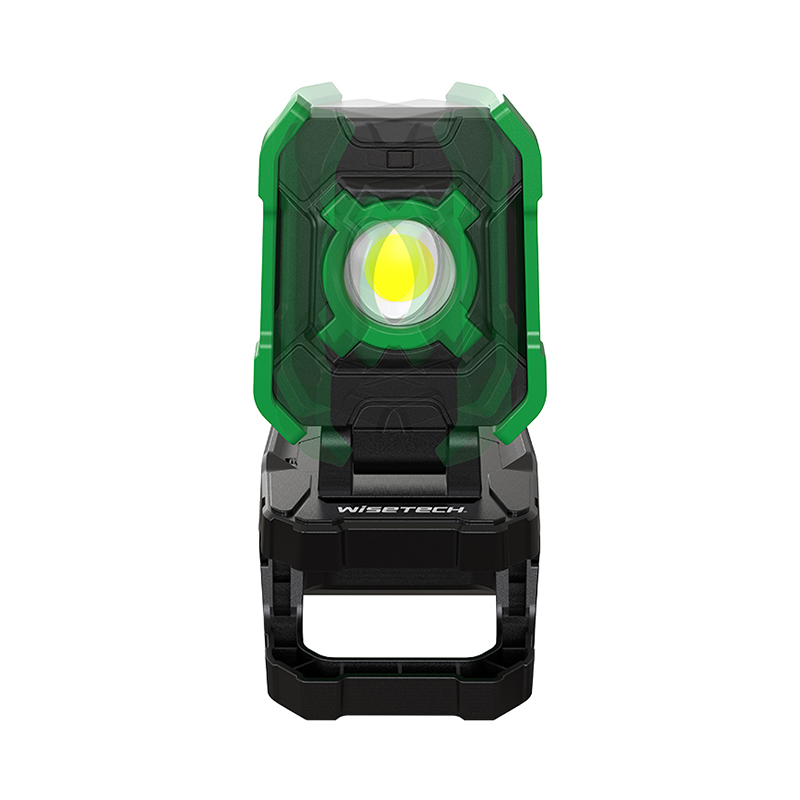
Portable floods offer an excellent balance of power and mobility. Mechanics rely heavily on these units. They easily sit on the floor or attach to steel beams.
Best for: Automotive repair, tight confined spaces, and localized task illumination.
Evaluation criteria: A strong magnetic base is crucial. It must hold the unit horizontally without sliding down greasy metal. Roll-cage designs protect the lens if the unit drops. Mounting versatility dictates its usefulness. Check if it easily mounts to standard tripods or hangs from rafters.
Task lights prioritize portability above all else. They clip onto tool belts or fit inside small tool bags. Tradesmen working inside ceilings or crawlspaces prefer this category.
Best for: HVAC installations, plumbing repairs, and tight-access electrical panel work.
Evaluation criteria: The size-to-output ratio is paramount. Because they are small, heat dissipation becomes difficult. Examine the housing for heavy aluminum heat sinks. Beam uniformity is also critical. A smooth beam without aggressive hot spots reduces eye strain during close-up wiring tasks.
Downtime kills productivity on job sites. Relying strictly on battery power creates risks during long shifts. Hybrid power systems eliminate this operational anxiety. These units accept proprietary DC tool batteries for maximum mobility. However, they also feature an AC plug. You can run an extension cord directly to the unit when power is available. This dual capability ensures the site stays illuminated indefinitely. Buying a hybrid Heavy Duty Work Light provides incredible operational flexibility. It saves you from waiting around for batteries to charge.
Brightness does not guarantee clarity. The Color Rendering Index measures how accurately a light reveals true colors. Sunlight scores 100 on the CRI scale. Cheap LEDs often score around 70. Under low CRI illumination, red wires can look brown. Blue wires can look black. This creates severe safety hazards for electricians. Automotive detailers and painters also struggle to match paint under poor lighting. Frame a high CRI (85+) as an absolute necessity. It guarantees precision visual detail for specialized trades.
Major tool brands design their cordless ecosystems to retain loyalty. A DeWalt battery will not fit a Milwaukee or Makita tool without unauthorized adapters. You must consider your existing tool inventory. Buying a bare-tool fixture within your current ecosystem saves tremendous hassle. It allows you to cycle existing batteries efficiently. Committing to a new battery ecosystem simply for one lighting fixture is rarely practical. It clutters the truck with mismatched chargers and disrupts workflow.
Heat destroys LED diodes. Proper thermal management engineering dictates the true lifespan of any lighting fixture. High-output models generate extreme internal temperatures. Manufacturers must integrate thick aluminum heat sinks to draw heat away from the board. Some ultra-high-output models even use active cooling fans. If a manufacturer builds a 10,000-lumen light entirely out of plastic, it will fail. The plastic insulates the heat, baking the internal components. Always inspect the back of the fixture for deep, metallic cooling fins.
Best Practice: Feel the back of the fixture after ten minutes of use. It should be warm or hot to the touch. This means the heat sink is successfully pulling heat away from the internal electronics.
Online marketplaces are flooded with mathematically impossible claims. You might see a compact fixture powered by two small 18650 batteries claiming 100,000 lumens. This defies the laws of physics. Current LED technology simply cannot produce that output from such a small power source. These products use cheap components and falsified specification sheets. They lack heat sinks, waterproof seals, and impact resistance. Spotting these traps requires skepticism. If a compact unit claims output numbers rivaling stadium lighting, you should immediately walk away.
Self-reported manufacturer metrics hold zero weight in professional environments. Reputable brands submit their products for independent testing. You should actively look for ANSI/NEMA FL1 standardization marks on the packaging. The FL1 standard forces manufacturers to test products under strict laboratory conditions. It standardizes how they measure runtime, beam distance, and peak intensity. When you see an ANSI FL1 certified label, you know the numbers are real. It removes the guesswork from your purchasing decision.
Warranties reveal how much confidence a manufacturer has in their engineering. A one-year limited warranty on a supposedly "heavy duty" fixture is a glaring red flag. Industrial environments destroy weak tools rapidly. Professional-grade brands understand this reality. They typically offer three-to-five-year guarantees. Some even offer lifetime warranties against manufacturer defects. A strong warranty proves they used high-quality diodes, robust drivers, and durable housing materials. Always read the fine print regarding battery warranties versus tool housing warranties.
Legacy halogen fixtures dominated sites for decades. They generated massive heat. A 500-watt halogen bulb reaches temperatures capable of instantly burning skin. They frequently started fires when knocked over near combustible materials like sawdust or drop cloths. Modern LEDs are vastly cooler, but they still pose risks. An ultra-high-lumen LED can overheat enclosed spaces if left unattended. Always ensure adequate ventilation when using high-output units in attics or small utility closets. Never place a rag or jacket over an active high-output lens.
Extension cords strung across walkways trigger OSHA fines. They represent the primary tripping hazard on active construction sites. High-output cordless illumination directly mitigates this compliance risk. By deploying battery-operated tower lights, you eliminate the spaghetti of yellow cords on the floor. Workers navigate the area safely. Forklifts do not accidentally sever live power lines. Cordless technology fundamentally improves site safety beyond simply providing visibility.
Extreme brightness introduces a new hazard: glare. Staring directly into a raw LED chip causes temporary blindness. Even indirect glare bouncing off fresh white drywall causes severe eye fatigue. Blinding workers in proximity to heavy machinery leads to accidents. You must select models equipped with frosted diffusers. Diffusers scatter the harsh light into a soft, ambient glow. Furthermore, adjustable output settings are essential. You need the ability to drop a 10,000-lumen beam down to 2,000 lumens when moving into a smaller room.
The strongest illumination tool is rarely the one boasting the highest initial burst of light. True strength lies in sustained, usable output. It requires survival mechanisms capable of withstanding the harsh realities of your specific trade. You need verified impact resistance, robust water seals, and advanced thermal management to ensure jobsite reliability.
To shortlist your next purchase efficiently, follow these simple action steps:
Identify your current battery platform. Maximize your existing investment by choosing bare-tool options compatible with your current chargers.
Determine your necessary ratings. Insist on at least an IP65 and IK07 rating if you work outdoors or in dusty environments.
Filter by sustained output. Ignore marketing burst claims. Look for honest ANSI FL1 testing that proves the light maintains brightness over its full runtime.
Demand high CRI. Protect your eyes and your work quality by ensuring the fixture accurately renders wire and paint colors.
Audit your current site lighting today. Remove those dangerous, heat-generating halogens. Upgrade to a modern, hybrid-power model to protect your crew and eliminate unnecessary downtime.
A: Professional tools typically range between 3,000 to over 10,000 sustained lumens. A 3,000-lumen unit easily handles local automotive repairs or plumbing tasks. Framing an entire house or pouring concrete requires larger tower fixtures outputting 10,000 or more sustained lumens.
A: Yes. Pushing 10,000 lumens inside a small, white-painted room causes severe glare bounce. This creates blinding conditions and eye fatigue. You must choose fixtures with frosted diffusers and dimmable output settings to adapt to confined spaces.
A: Often, yes. Batteries have discharge limitations. Standard tool batteries struggle to push ultra-high outputs (like 20,000+ lumens) for extended periods without overheating. Direct AC power handles massive power draws easily, making plug-in models dominant for sustained, extreme-output needs.
A: An IP65 rating means the fixture survives low-pressure water jets, like heavy rain or a hose spray. An IP67 rating ensures the light survives complete, temporary submersion in water up to one meter deep. Both block dust entirely.

