


Views: 0 Author: Site Editor Publish Time: 2026-09-15 Origin: Site


Many people use the phrase "flood light" to describe any bright outdoor fixture. However, its true technical meaning involves precise beam angles, specific photometric distributions, and clear application goals. Understanding this exact classification bridges the gap between a basic dictionary definition and successful commercial procurement. Getting these details right ensures project compliance, superior energy efficiency, and proper site illumination. Shifting from traditional lighting to modern solid-state technology requires you to evaluate specific operational criteria. You must assess heat management, ingress protection, and optical precision to maximize operational savings. Overlooking these metrics can lead to poor visibility and frequent maintenance failures. This article explores the technical boundaries of these heavy-duty fixtures. We will review common deployment challenges and outline key procurement dimensions. You will learn exactly how to match the right luminaire to your facility’s unique environmental demands.
Technical Definition: A flood light is defined by its wide beam angle (typically 45° to 120°), designed to "flood" a large area with uniform illumination rather than a focused beam.
Primary Value: They solve the business problem of low visibility in expansive spaces, directly impacting site security, operational safety, and architectural aesthetics.
Evaluation Metrics: Procurement decisions should hinge on IP/IK ratings (durability), Lumens per Watt (efficiency), and effective thermal management, not just initial purchase price.
Modern Equivalence: High-grade LED flood lights and portable LED work lights have largely replaced halogen variants due to superior lifespan and lower energy consumption.
The name directly references the physical function of the fixture. It delivers a broad, highly diffused spread of light. Engineers design this optical distribution to "flood" a designated zone. This prevents harsh shadows and provides uniform visibility across large areas. You do not use these fixtures to pinpoint specific objects. Instead, you use them to wash entire environments in consistent light.
Understanding beam angles clarifies the distinction between different optical tools. Lighting professionals measure beam spread in degrees. This metric determines how light leaves the diode and hits a surface.
Spotlights: These feature narrow beams measuring under 45 degrees. They deliver high peak intensity. Installers use them to highlight architectural columns or specific statues.
Flood Lights: These feature wide beams ranging from 45 to over 120 degrees. They generate lower peak intensity at the center. However, they cover a significantly broader surface area.
Lighting engineers classify these wide-beam fixtures using industry standards. The National Electrical Manufacturers Association (NEMA) provides a strict framework. NEMA categorizes beam spreads from Type 1 to Type 7. A Type 1 fixture projects a very narrow beam for extreme distances. A Type 7 fixture projects a very wide beam exceeding 130 degrees. Recognizing these classifications helps you select the exact optic for your spatial requirements.
NEMA Beam Spread Classifications
NEMA Type | Beam Angle (Degrees) | Optical Focus | Ideal Application |
|---|---|---|---|
Type 1 | 10° to 18° | Highly Focused | Distant structural highlighting |
Type 2 | 18° to 29° | Narrow | Flagpoles, tall monuments |
Type 3 | 29° to 46° | Medium Narrow | Building facades, statues |
Type 4 | 46° to 70° | Medium | Signage, mid-range perimeters |
Type 5 | 70° to 100° | Medium Wide | Small parking lots, loading docks |
Type 6 | 100° to 130° | Wide | Large manufacturing yards, sports courts |
Type 7 | 130° and above | Very Wide | Massive commercial perimeters, broad facades |
Industrial and commercial facilities constantly face visibility challenges. Poor lighting creates severe safety risks in large manufacturing yards, loading docks, and warehouses. Facility managers must meet strict OSHA safety standards. High-output fixtures mounted on poles or building walls provide the solution. They distribute bright, even light across complex operational zones. This prevents accidents and ensures workers can read labels clearly at night.
Security and perimeter compliance represent another major application. Unlit corners invite vandalism and unauthorized entry. Installing motion-activated fixtures eliminates these dangerous blind spots. Dusk-to-dawn sensors ensure the perimeter remains illuminated automatically. Bright, consistent light acts as a proven, verifiable deterrent against intrusions.
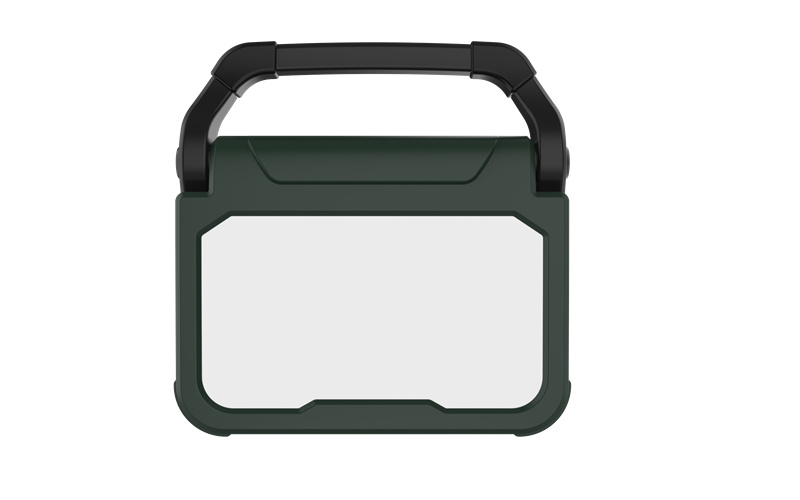
Portable and temporary job sites share similar requirements. Construction crews cannot always mount fixtures to permanent structures. In these scenarios, a rugged LED Work Light bridges the gap. These units share the same wide-beam technology. Manufacturers mount these compact, heavy-duty modules on tripods or steel roll cages. Emergency responders and night crews rely on them for immediate, portable illumination.
Architectural and sports applications demand even higher precision. Facade washing requires uniform color rendering. Stadium lighting must cover massive fields without blinding athletes. Public squares need safe illumination for pedestrians. These specific scenarios require advanced glare control and a high Color Rendering Index (CRI). Accurate color representation enhances building aesthetics and improves camera visibility for televised events.
Comparing solid-state lighting against older technologies reveals stark operational differences. Buyers must evaluate power draw purely in terms of return on investment (ROI). They should look closely at long-term operational expenditure (OPEX) reductions. Traditional Metal Halide or Halogen fixtures waste massive amounts of electricity. An old 1000-watt HID bulb can easily be replaced by a 300-watt LED fixture. Both produce the exact same lumen output. This 70% energy reduction slashes monthly utility bills immediately over a 5-to-10-year cycle.
Lifespan and maintenance realities drive further cost savings. Traditional bulbs degrade quickly. They require constant replacement. Changing a bulb on a 30-foot pole is expensive. You must rent boom lifts. You must pay certified electricians. You also experience facility downtime during repairs. Modern diodes eliminate these frequent lift-equipment rentals. They last upwards of 50,000 to 100,000 hours.
Effective thermal management ensures this long lifespan. Skeptics often point out heat sensitivity. Diodes generate minimal forward heat, but the internal driver produces thermal buildup. High-quality fixtures require heavy extruded aluminum heat sinks. These metal fins draw heat away from the sensitive electronic components. Poor thermal management causes premature diode failure. You must inspect the heat sink design before purchasing bulk orders.
Real-world maintenance liabilities for traditional HID fixtures include:
Renting heavy lift machinery for elevated installations.
Replacing blown ballasts and internal igniters.
Disposing of hazardous, mercury-filled HID bulbs safely.
Scheduling costly off-hours labor to prevent workflow disruptions.
Buyers must shift their focus away from wattage. Wattage only measures consumed energy. It does not measure produced brightness. You must prioritize luminous efficacy. This measures the lumens produced per watt consumed (lm/W). High-performance fixtures easily achieve 130 to 150 lm/W. Focusing on efficacy guarantees you receive maximum brightness for minimal power.
Durability metrics define a fixture's survival in harsh environments. Ingress Protection (IP) ratings indicate resistance to dust and moisture. An IP65 rating protects against standard rain. An IP66 or IP67 rating is crucial for harsh outdoor installations. These higher ratings defend against powerful water jets or heavy sea conditions. Impact Protection (IK) ratings measure housing strength. An IK08 rating handles moderate impacts from debris. An IK10 rating provides maximum defense against severe vandalism and heavy industrial strikes.
Color Temperature (CCT) dictates the visual atmosphere. You measure CCT in Kelvin. A 3000K warm tone suits residential facades and hospitality spaces. It creates a welcoming, soft glow. A 4000K to 5000K neutral or cool tone suits high-security zones. Industrial sites and precision tasks require this crisp, bright visibility to maximize alertness.
Integrating photocells and smart controls maximizes scalability. Simple daylight harvesting sensors turn fixtures off when the sun rises. Advanced DALI (Digital Addressable Lighting Interface) systems allow complex networking. You can dim specific zones automatically. Whether you install a permanent unit or deploy a temporary Flood Light, intelligent controls prevent wasted electricity.
Deploying powerful illumination carries inherent environmental risks. Light pollution and glare present serious legal challenges. You risk violating local zoning laws if light spills into adjacent properties. This issue is called light trespass. You must mitigate this risk proactively. Evaluate fixtures offering visors, internal baffles, or precise optic lenses. These accessories direct the beam strictly downward. Choosing Dark Sky compliant fixtures prevents community complaints and preserves night sky visibility.
Electrical infrastructure requires careful planning. Massive perimeter setups suffer from voltage drop. Daisy-chaining multiple high-power units across a large fence line stresses the wiring. The fixtures at the end of the line may receive insufficient power. You must calculate wire gauge sizing properly. You must also evaluate transformer load capacities before beginning installation.
Establishing strict shortlisting logic protects your investment. Never buy fixtures based solely on aesthetic design. Follow a rigid evaluation protocol to separate reliable manufacturers from low-tier suppliers.
Demand third-party testing reports. Request LM-79 data to verify total luminous flux and chromaticity. Request LM-80 data to verify diode lumen maintenance over time.
Verify all warranty stipulations. Read the fine print carefully. Ensure the warranty covers both the internal LED driver and the diode chip. Drivers fail much faster than diodes.
Reject any supplier unable to provide IES files. Lighting software uses IES files to simulate the exact beam spread. You need this data for pre-installation photometric modeling.
The technical meaning of a flood light goes far beyond a simple bright bulb. It serves as a highly engineered optical tool. Manufacturers design them specifically for broad, uniform area illumination. They eliminate dangerous shadows across expansive industrial yards, sports fields, and building facades. Choosing the correct wide-beam optic ensures complete visibility and optimal safety.
We advise buyers to prioritize site-specific optical requirements over the base purchase price. You must evaluate the exact NEMA beam spread, IK impact rating, and IP waterproof rating. Rely on certified IES files and specialized lighting design software. Model your expected outcomes before committing to bulk purchasing. This prevents costly installation errors and guarantees compliance.
Take proactive steps toward better site illumination today. Encourage your team to consult with a commercial lighting specialist. Request a complete photometric layout tailored to your specific facility. Investing time in upfront planning ensures decades of reliable, efficient, and exceptionally bright performance.
A: The name refers to the specific optical function of the fixture. It produces a wide, diffused distribution of light. This beam acts to "flood" a large surface area with uniform brightness. It does not create the pinpoint, concentrated focus associated with a standard spotlight.
A: An LED work light functions as a portable, ruggedized version of a standard wide-beam fixture. Manufacturers design them for temporary job sites, using tripods or sturdy handles. In contrast, standard flood fixtures are hardwired permanently to building facades, security perimeters, or high poles.
A: Residential security setups typically require between 1,500 and 3,000 lumens to illuminate driveways. Commercial or industrial applications demand significantly more power. They usually require 10,000 to 50,000+ lumens depending on the pole mounting height and the total square footage of the zone.
A: An IP66 rating certifies the physical housing is entirely "dust tight." It also indicates protection against heavy seas or powerful, high-pressure water jets from any direction. This robust rating makes the fixture strictly safe for exposure to harsh outdoor weather conditions.

