


Views: 0 Author: Site Editor Publish Time: 2026-08-25 Origin: Site


Have you ever tried lighting a dark exterior or workspace while minimizing power usage? Finding the exact right balance often feels like a frustrating guessing game. Consumers and businesses constantly struggle to balance adequate outdoor or task illumination against strict energy conservation rules. Fortunately, modern LED technology fundamentally changes this dynamic. Innovation has completely decoupled wattage from lumens. The energy a fixture consumes no longer directly dictates the brightness it delivers.
This fundamental shift alters how buyers should specify low-wattage fixtures today. You cannot simply look at power draw to understand visibility. This guide provides an evidence-based framework for evaluating ultra-low wattage lighting solutions. You will discover exactly how to shortlist and implement these efficient fixtures. We will help you maximize visibility and site safety without over-illuminating your designated space.
The absolute lowest wattage for functional LED flood lights typically ranges from 3W to 5W for low-voltage (12V) landscape systems, and 10W to 15W for standard line-voltage (120V/277V) fixtures.
Sourcing should prioritize Lumens per Watt (lm/W) efficacy rather than just baseline wattage to ensure adequate brightness.
Ultra-low wattage fixtures are ideal for architectural accenting, tight-space task lighting (e.g., an Energy Saving LED Work Light), and pathway illumination, but pose security risks if misapplied to large-area coverage.
Commercial evaluation must factor in IP ratings, heat dissipation (even at low wattages), and UL/ETL certifications.
Evaluating the lowest possible wattage requires separating fixtures by their operating voltage. You will find different minimum limits depending on electrical system designs. Understanding these boundaries helps you select the correct technology for specific applications.
Low-voltage landscape lighting represents the absolute floor for outdoor illumination. You will typically find functional fixtures operating between 3W and 7W. Integrated LED landscape arrays excel in this ultra-low range. Manufacturers design them specifically for intimate garden settings. They provide subtle glows around foliage.
These systems rely heavily on external step-down transformers. The transformer converts standard house power into a safer 12V or 24V current. This reduction delivers massive safety benefits for ground-level installations. You can bury cables shallowly. Accidental wire cuts pose minimal shock hazards in wet environments. They offer unparalleled safety for residential yards.
Commercial and hardwired residential exterior lights operate differently. They tap directly into standard AC power grids. The current commercial floor for these exterior fixtures sits between 10W and 15W. Lower wattages exist, but they rarely generate enough output for practical, elevated illumination.
You must compare these figures to legacy equivalents to appreciate their efficiency. A modern 10W LED easily replaces a 50W to 75W incandescent or halogen bulb. It pushes out the same raw brightness. It simply uses a fraction of the electricity. We consider the 10W threshold the lowest practical starting point for general architectural washing.
Physical limitations often dictate minimum commercial wattages. Driver size plays a massive role. Line-voltage units require integrated drivers to convert AC power to DC internally. These drivers occupy physical space. Engineers must design housings large enough to enclose them safely. A minimum diode count also matters. To achieve a wide, even spread, manufacturers must include multiple LED chips. This hardware baseline sets a natural floor. It makes manufacturing functional, wide-angle 3W line-voltage exterior lights highly impractical.
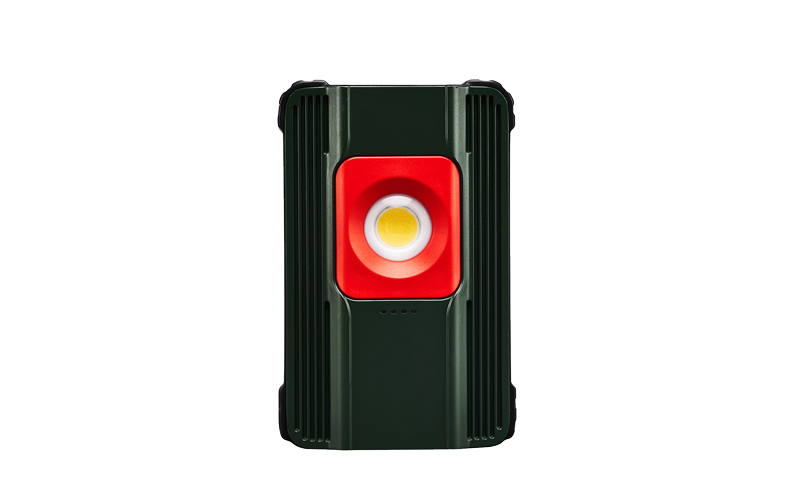
Wattage measures power consumption. Lumens measure visible light output. You must evaluate luminous flux to guarantee adequate illumination. We strongly advise dropping wattage as your primary quality indicator.
Lumens per Watt (lm/W) stands as the primary indicator of fixture quality. It tells you exactly how efficiently the diode converts electricity into usable light. You should establish a strict purchasing baseline. We recommend evaluating only fixtures offering 100 lm/W or higher. High efficacy ensures maximum brightness for minimal power input.
Mapping ultra-low wattage outputs to practical visibility limits is crucial. An efficient 10W fixture delivering 100 lm/W outputs 1000 lumens. This output mimics the brightness of a traditional 75W incandescent bulb. It provides ample light for reading clear labels. You can easily navigate small steps at this intensity. However, 1000 lumens quickly dissipates over long distances.
Hardware Visibility Limits Chart
Fixture Wattage | Estimated Lumens (at 100 lm/W) | Practical Visibility Limit | Equivalent Legacy Halogen |
|---|---|---|---|
3W (Low-Voltage) | 300 lm | Up to 3 feet (Plant accents) | 20W |
5W (Low-Voltage) | 500 lm | Up to 5 feet (Pathways) | 35W |
10W (Line-Voltage) | 1000 lm | Up to 10 feet (Small patios) | 75W |
15W (Line-Voltage) | 1500 lm | Up to 15 feet (Driveway edges) | 100W |
Beam angle completely changes perceived brightness. Narrow beams concentrate light into tight spots. A 30-degree beam makes a 10W light appear incredibly intense. It drives the light forward over a longer distance. Conversely, a 120-degree wide beam spreads those same 1000 lumens over a massive area. The wide angle dramatically reduces the peak intensity at any given spot. Always pair low wattage with the tightest acceptable beam angle.
Selecting the right fixture depends entirely on the environment. You cannot deploy sub-20W lighting universally. Each application demands specific performance characteristics. We outline the most successful deployment zones below.
Aesthetic outdoor lighting rarely requires intense power. You want to highlight features gently. Ultra-low ranges excel here.
Tree Up-Lighting: A 5W directional beam beautifully highlights trunk textures.
Facade Grazing: Placing 3W fixtures closely against brick walls reveals architectural depth.
Garden Features: Low brightness prevents blinding glare during nighttime yard navigation.
Task illumination demands high contrast but limited throw distance. You only need light immediately in front of your hands. A 15W fixture easily achieves this when placed within five feet of the work surface. These specifications make an Energy Saving LED Work Light highly effective for localized jobs. Mechanics love them for automotive under-carriage repair. Plumbers rely on them inside tight utility closets. Contractors mount them briefly for under-cabinet construction. They provide intense local visibility without heating up cramped environments.
Home entryways prioritize safe navigation. A 10W line-voltage unit mounted above a front door supplies exactly enough light for keyholes. It softly illuminates steps. Most importantly, keeping wattages near 10W prevents severe light trespass. You avoid flooding your neighbor’s bedroom windows. This approach maintains suburban harmony while keeping porches safe.
When you select a hardware housing for your next Flood Light, evaluating internal and external build quality is essential. Lower power consumption does not excuse poor manufacturing. You must scrutinize durability.
A transparent assumption exists in the lighting industry: low wattages generate negligible heat. This assumption is dangerous. Even at 10W, internal diodes generate thermal stress. Poorly designed plastic housings trap this heat. Plastic degrades LED lifespans rapidly. You should always prioritize die-cast aluminum heat sinks. Aluminum pulls heat away from the chips efficiently. It guarantees longevity.
Water and dust destroy electronics quickly. Set strict criteria for your protective housings.
Covered Outdoor Areas: Demand an IP65 minimum rating. This protects against dust ingress and low-pressure water jets.
Exposed Ground-Level Uplighting: Require IP67 ratings. This ensures the unit survives temporary submersion during heavy rainstorms.
Electrical safety certifications separate professional hardware from dangerous imports. Verify UL/cUL or ETL listings before purchasing. These marks confirm independent safety testing. They mitigate extreme fire risks. Insurance companies often mandate these certifications for hardwired line-voltage models. Installing non-certified exterior lighting exposes commercial properties to massive liability.
Correlate your application directly to the Correlated Color Temperature. Color affects perception heavily.
Hospitality and Landscape: Use 2700K to 3000K. Warm tones feel welcoming and mimic natural sunset hues.
Task and Safety: Use 4000K to 5000K. Cool tones provide a high-contrast environment. They help mechanics see intricate engine details clearly.
Applying ultra-low wattage fixtures incorrectly causes significant site issues. You must recognize their limitations. Upsizing wattage is sometimes the only viable solution.
Many property owners buy 10W lights expecting comprehensive security. We strongly warn against using sub-15W fixtures for perimeter deterrence. They simply lack the punch required for active security. Low lumen outputs fail to illuminate facial features at a distance. The minimum recommended baseline for CCTV clarity and active deterrence typically sits at 30W+ (yielding over 3000 lumens). Using anything less compromises camera footage.
Implementing 12V landscape systems introduces unique physical realities. Long cable runs cause severe voltage drop. The electrical pressure decreases as it travels further from the transformer.
Measure the total distance from the transformer to the final fixture.
Calculate the total wattage load on the specific wire run.
Notice dimming effects. A 5W fixture at the end of a 150-foot run might only receive 9V, causing a noticeable drop in brightness.
You must use thicker gauge wires to counteract this phenomenon. Alternatively, place transformers closer to the lighting clusters.
You must accept a transparent physical limitation. A 10W fixture cannot effectively illuminate large spaces. If you mount a 10W unit on an elevated eaves, it will not adequately light an area larger than 10x10 feet. The light spreads too thin before reaching the ground. When dealing with wide driveways or large backyards, you must upsize. Do not expect a tiny architectural light to perform heavy-duty area illumination.
Balancing energy conservation with optimal visibility requires deliberate planning. You must specify 3W to 10W units strictly for aesthetic landscape and accent lighting. You should reserve 10W to 20W fixtures for close-quarters task work or small entryways. Adopting the lowest possible wattage only succeeds when you pair it with high lumen efficacy and appropriate beam angles. A highly efficient 15W light with a focused beam often outperforms a cheap 30W wide-angle alternative.
Before finalizing your procurement shortlists, audit your space. Calculate your specific square footage accurately. Determine the required lux levels for your daily activities. Choose durable, aluminum-housed models with proper IP ratings. By applying these evidence-based parameters, you guarantee maximum site safety alongside peak energy efficiency.
A: No. While a 10W LED produces around 1000 lumens, standard driveways require 2000–3000 lumens (20W–30W LED) for safe navigation and security visibility.
A: Standard low-wattage (120V) wires directly into home electrical systems. Low-voltage (12V) requires a step-down transformer and is safer for ground-level outdoor installation.
A: No. Lower wattage actually generates less heat. If the fixture has a quality aluminum heat sink and driver, a 10W LED can easily outlast higher-wattage alternatives.
A: Yes, for focused, localized tasks within a 5-to-8-foot radius. For illuminating an entire room or garage bay, multiple fixtures or a higher wattage (50W+) is required.

