


Views: 0 Author: Site Editor Publish Time: 2026-08-26 Origin: Site


Using consumer-grade lighting in high-stakes commercial environments poses severe operational risks. You face frequent fixture failures, critical safety hazards, and costly compliance violations daily. A standard retail lamp simply cannot survive the grueling demands of an active job site. Frequent replacements drain your maintenance budget. Poor visibility endangers your workforce.
Conversely, engineers design a Professional LED Work Light specifically for extreme conditions. Manufacturers build these units for advanced thermal management. They feature severe impact resistance. They handle continuous duty cycles without hazardous overheating. Commercial operations require this level of heavy-duty reliability.
Identifying the right lighting solution goes far beyond checking basic lumen output. You must carefully match specific industry standards with verifiable performance metrics. This article breaks down exactly how different sectors evaluate and implement these heavy-duty illumination tools. You will learn the exact specifications needed to protect your workforce. We will show you how proper lighting dramatically boosts operational efficiency across multiple industries.
ROI Over Initial Cost: Professional LED work lights reduce long-term operational costs through lower energy consumption and drastically reduced replacement cycles.
Safety & Compliance: Heavy industries rely on these lights to meet strict occupational safety regulations (e.g., OSHA) and prevent workplace accidents.
Environment-Specific Specs: Different sectors require distinct specifications, such as chemical resistance for automotive or extreme vibration tolerance for heavy machinery.
Productivity Metrics: Proper color rendering and glare reduction directly impact employee focus and reduce fatigue in continuous-shift environments.
Inadequate lighting hides massive operational costs. You face unplanned maintenance downtime constantly. Facility managers pay exorbitant energy bills for outdated fixtures. You also carry significant safety liabilities when workers cannot see hazards clearly. Poor visibility directly causes workplace accidents. It slows down production timelines. Hidden costs quickly destroy project budgets. When a bulb burns out, work stops entirely. Maintenance teams must deploy heavy lifts just to change a simple fixture. This creates massive logistical inefficiencies.
Consistent, flicker-free LED lighting directly mitigates eye strain. Human biology reacts strongly to light quality. Poor lighting induces melatonin production. Workers become drowsy during night shifts. High-quality LEDs mimic natural daylight. They support natural circadian rhythms effectively. This suppresses sleep hormones. It keeps equipment operators alert. Productivity increases naturally. Workers stay highly focused throughout long shifts. They make fewer costly errors. Quality control improves dramatically when visual acuity remains sharp.
We must evaluate the return on investment carefully. You contrast the higher upfront capital expenditure of a commercial fixture with its long-term financial benefits. These industrial units offer a 50,000+ hour lifespan. You eliminate endless bulb replacements entirely. You drastically cut daily energy consumption. The massive reduction in maintenance labor easily justifies the initial investment. Commercial gear pays for itself rapidly.
Heavy industries operate in truly brutal conditions. Unpredictable weather batters equipment constantly. Rain, snow, and extreme UV rays degrade weak materials. Heavy machinery generates relentless vibration. Bulldozers and rock crushers shake everything nearby. Mining and construction sites expose tools to endless dust and flying debris. Ordinary gear fails quickly here. You need dedicated industrial solutions.
You must evaluate equipment across specific technical dimensions. Ingress protection is paramount. You need IP67 or IP68 ratings on all fixtures. These ratings are absolutely non-negotiable for dust and waterproofing. They keep harmful microscopic particles away from sensitive electronics. An IP67 rating ensures complete dust exclusion. It also guarantees survival during temporary underwater submersion. Shock and vibration resistance is equally critical. You need solid-state construction. Polycarbonate lenses are essential for job site safety. They prevent dangerous shattering upon heavy impact.
Many procurement managers ignore implementation risks. They fail to verify mounting bracket durability. This simple oversight leads to premature fixture failure. The metal bracket often breaks long before the LED chip actually degrades. You must evaluate the entire housing assembly. Follow this essential checklist to mitigate failure risks:
Verify the specific IP rating for environmental sealing capabilities.
Inspect the outer lens material for certified impact resistance.
Evaluate the mounting bracket thickness and metal alloy quality.
Request independent laboratory vibration testing certifications.
Check the cable strain relief mechanisms for high-tension durability.
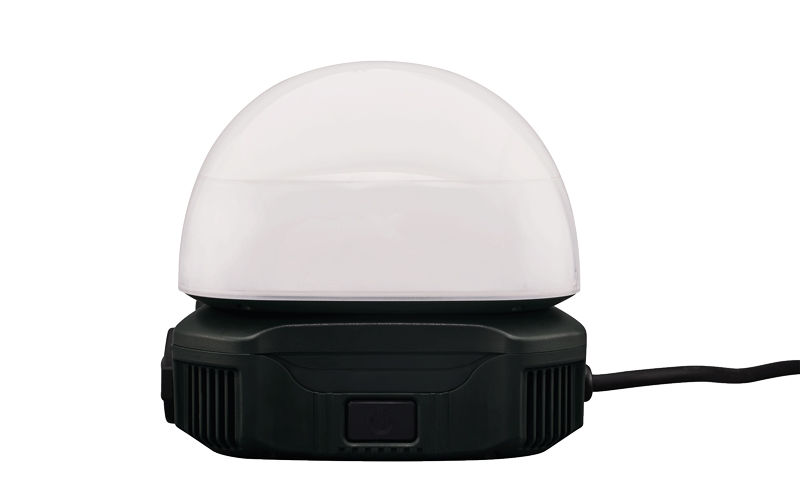
Fleet mechanics navigate extremely tight spaces every day. They face daily exposure to harsh automotive solvents. Motor oil, brake fluid, and degreasers ruin weak plastics. Technicians also need accurate color matching for complex tasks. They inspect intricate wiring harnesses. They evaluate subtle paint differences. Precision tasks require precision tools. A dedicated Work Light solves these specific challenges.
You must demand an 85+ Color Rendering Index (CRI). High CRI ensures highly accurate visual inspections. Mechanics must differentiate between a dark blue and a black wire quickly. A low CRI makes these colors look identical. This prevents catastrophic wiring mistakes. Form factor and magnetism dictate usability. Technicians demand articulating light heads. They need ultra-low-profile designs to fit under dashboards easily. Industrial-grade magnetic bases enable crucial hands-free operation. Mechanics secure the unit directly to the vehicle chassis.
Material integrity prevents premature tool death. Housings must resist severe chemical degradation. Prolonged solvent exposure destroys cheap retail plastics quickly. Industrial units utilize specialized synthetic polymers or treated aluminum alloys. They withstand aggressive chemical washdowns effortlessly.
Automotive Lighting Features Comparison
Feature Category | Consumer Grade | Professional Grade |
|---|---|---|
Color Accuracy (CRI) | Low (<70 CRI) | High (85+ CRI) |
Housing Material | Standard ABS Plastic | Chemical-Resistant Polymer/Aluminum |
Mounting Options | Basic Hook or Stand | Industrial Magnets & Articulating Joints |
Form Factor | Bulky and Fixed | Ultra-Thin and Adjustable |
Large manufacturing facilities operate continuously without pausing. They feature massive open areas and exceedingly high ceilings. Facility managers must enforce strict adherence to workplace safety mandates. Regulatory bodies like OSHA require specific minimum foot-candle measurements across various work zones. Failure to meet these metrics results in heavy fines.
Extended duty cycles generate immense internal heat. Heat destroys delicate electronics over time. Heavy-duty aluminum heat sinks effectively dissipate this thermal load. They pull heat rapidly away from the LED chips. This advanced thermal management prevents dangerous lumen depreciation. The fixture maintains maximum brightness throughout its entire lifecycle.
You must select the correct beam angle and distribution. Narrow warehouse aisles require focused rectangular beams. Open assembly floors need wide floodlight patterns. Selecting the wrong distribution creates dangerous dark spots. It causes severe glare for forklift operators. Intelligent scalability defines modern facilities. Managers integrate smart controls seamlessly. Motion sensors and automated dimming networks maximize energy efficiency. You can scale these intelligent systems across a massive footprint effortlessly.
Light Distribution Application Chart
Distribution Pattern | Beam Angle Range | Ideal Industrial Application |
|---|---|---|
Spotlight | 10° - 30° | Detailed assembly stations, long-distance targeting. |
Narrow Flood | 30° - 60° | High racking warehouse aisles, targeted machine inspection. |
Wide Flood | 90° - 120° | Open loading docks, general facility illumination. |
360° Omnidirectional | 360° | Central room lighting, emergency response command tents. |
First responders and utility crews rarely have access to active grid power. Disasters destroy local electrical infrastructure. Crews face extreme urgency and unpredictable environmental hazards. Lives depend directly on equipment reliability. They need robust, independent illumination platforms immediately.
Battery chemistry dictates field autonomy. Lithium-ion cells provide unmatched operational reliability. They deliver strong cold-weather performance consistently. Older lead-acid batteries lose half their capacity in freezing temperatures. You must evaluate realistic runtimes at maximum power output. Responders constantly balance physical portability against necessary lux levels. The disaster site requires intense, penetrating illumination. However, the gear cannot burden the user physically. Lightweight materials and dense battery packs solve this issue.
Hazardous locations demand strict specialized certifications. Chemical spills create volatile, explosive atmospheres. A single electrical spark causes a massive disaster. You must use certified equipment.
Intrinsically Safe Design: Prevents internal electrical arcs and thermal sparking entirely.
ATEX Certification: Legally certifies the fixture for specific European explosive atmospheres.
HazLoc Ratings: Meets rigorous North American standards for volatile environments (Class I, Div 1/2).
Anti-Static Housings: Prevents external friction sparks during manual transport.
You need a rigid framework for proper evaluation. Move beyond inflated marketing claims of "total lumens". Theoretical numbers tell you nothing about usable light. You must assess the actual Lux or Foot-candles hitting the specific work surface. A 10,000-lumen fixture is completely useless if the lens scatters light into the sky. You need focused, directed energy delivered precisely where operators work.
Demand hard data to validate manufacturer claims. Look for independent, third-party testing reports. The Illuminating Engineering Society (IES) developed the LM-79 standard. This test verifies actual power consumption, optical efficiency, and true color output. It tests the complete assembled fixture. Do not accept theoretical LED chip maximums. They never reflect real-world output.
Assess the commercial warranty structure closely. Consumer warranties hide behind complex fine print. They explicitly exclude commercial usage. True professional gear offers multi-year terms unconditionally. They provide fast, no-hassle replacement guarantees. Finally, take concrete action. Initiate a formal pilot test. Request sample units directly from the manufacturer. Evaluate their real-world performance aggressively against your specific facility conditions before ordering.
A professional LED fixture represents a critical investment in your daily operational efficiency. It serves as a vital risk mitigation tool. It ensures strict employee safety compliance. You are not just making a basic hardware purchase. You are securing long-term facility reliability. High-quality illumination eliminates expensive maintenance downtime and prevents severe workplace accidents.
We advise procurement and facility managers to evaluate lighting options critically. Strictly align your final shortlists with the specific environmental hazards present in your industry. Never deploy consumer retail gear in heavy-duty commercial scenarios. The hidden operational costs far outweigh any initial savings.
Take action today to protect your workforce. Consult an industrial lighting specialist immediately. Review official technical specification sheets carefully. Request a formal commercial quote for your entire facility. Upgrading your illumination infrastructure yields immediate and permanent operational benefits.
A: Lumens measure the total light output emitted by a fixture in all directions. Lux measures the actual light intensity reaching a specific surface area. When selecting equipment, prioritize lux. High lumens mean nothing if the light scatters poorly. Focus entirely on how much usable light effectively reaches your specific target work zone.
A: The Color Rendering Index (CRI) measures how accurately a light source reveals true colors. Industrial environments require an 85+ CRI. This accuracy is vital for strict quality control. It helps workers read colored safety warnings clearly. Electricians and mechanics rely heavily on high CRI to distinguish complex wiring colors and spot subtle fluid leaks.
A: No. An IP65 rating only protects against dust and low-pressure water jets. It survives light rain effectively. However, outdoor construction often involves heavy downpours, thick mud, and temporary submersion. For these brutal conditions, you need IP67 or IP68 ratings. These higher ratings guarantee full dust-tight seals and allow for temporary or continuous underwater submersion safely.
A: LED technology completely eliminates severe burn hazards. Halogen bulbs run dangerously hot and easily ignite nearby combustible debris. LEDs operate at safe temperatures continuously. Furthermore, LEDs utilize solid-state construction. They lack fragile glass filaments entirely. This prevents hazardous shattering upon impact. They also deliver clearer, true-color visibility, which significantly reduces severe workplace accidents.

