


Views: 0 Author: Site Editor Publish Time: 2026-09-08 Origin: Site


Traditional directional lighting often creates hazardous shadows on dynamic jobsites. Crews constantly reposition fixtures as they move across a space. This disrupts workflows and introduces unnecessary physical risks. A well-designed Work Light solves this recurring operational hurdle. It provides omnidirectional illumination mimicking natural daylight perfectly. You immediately improve site safety and reduce your overall equipment footprint. Upgrading your gear also streamlines compliance with strict workplace regulations. We will explore exactly what these fixtures do and how they function. We will evaluate primary applications, structural form factors, and vital procurement criteria. You need these specific details for bottom-of-funnel decision-making. Knowing how to choose the right gear prevents deployment failures. Every project demands reliable visibility to maintain strict schedules. This guide ensures you select the most effective solution. Read on to master the fundamentals of omnidirectional jobsite illumination.
360 degree work lights are purpose-built for area illumination, eliminating high-contrast shadows critical for construction, emergency response, and industrial maintenance.
Form factors range from 700W+ heavy-duty balloon light towers for expansive sites to compact, high-efficiency battery models for tight quarters.
Procurement should prioritize verifiable IP ratings, lumen-to-wattage efficiency, and OSHA-compliant glare reduction over simple peak brightness claims.
The right setup reduces overall equipment costs by replacing multiple directional task lights with a single omnidirectional unit.
Standard task lighting restricts visibility significantly. It forces workers to rely on narrow beams. This creates severe slip and trip hazards. Multiple trades often work in the same room. A directional beam only helps one specific trade at a time. It slows down collective workflows. Plumbers and electricians end up fighting for the same spotlight. This constant adjustment wastes valuable labor hours.
Success depends on achieving uniform footprint visibility. You want minimal setup time and reduced energy draw. You need equipment capable of illuminating a space uniformly. True success means setting up a light once per shift. Crews can then focus entirely on their specific tasks. Efficient power consumption also prevents generator overloads.
Diffused, shadow-free light offers a massive operational advantage. It supports crucial peripheral vision. Multiple teams operate simultaneously within a single perimeter safely. They never need to constantly adjust light angles. Soft illumination prevents eye strain during long shifts. This operational velocity drives project success. You replace chaotic shadows with predictable, safe visibility.
Feature | Directional Task Lighting | Omnidirectional (360) Lighting |
|---|---|---|
Beam Angle | Typically 45 to 120 degrees | Full 360-degree coverage |
Shadowing | High contrast, sharp shadows | Soft, diffused, minimal shadowing |
Repositioning Needs | Constant adjustment required | Set once per area |
Glare Potential | High (blinding if looked at directly) | Low (diffuser softens the diode output) |
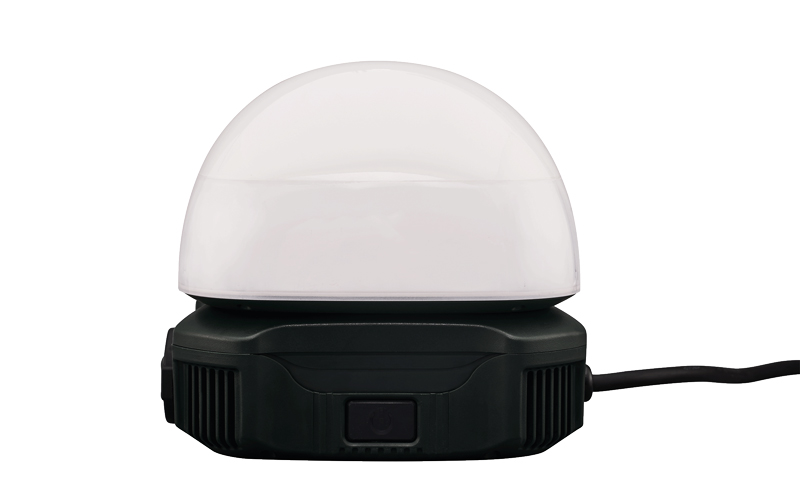
Heavy construction and paving crews rely on these fixtures daily. You must illuminate broad infrastructure sites and highway repairs securely. Concrete pours require absolute precision. Large teams operate heavy machinery continuously throughout the night. They absolutely require shadowless depth perception to avoid accidents. Eliminating harsh glare also protects oncoming highway traffic.
Emergency and first response teams benefit immensely from area lighting. Rapid-deployment illumination saves lives during critical moments. Triage tents and disaster recovery zones need immediate visibility. Accident scenes demand reliable light as a basic life-safety requirement. First responders cannot waste time pointing directional beams. They need immediate, comprehensive scene illumination.
Industrial maintenance introduces different challenges entirely. You light up confined spaces and large holding tanks. Complex facility floors require illumination during plant shutdowns. You must achieve this without causing blinding glare to workers. Reflective metal surfaces in factories often bounce directional beams dangerously. Diffused lighting prevents this dangerous reflection.
Temporary event structures use these fixtures extensively. They provide scalable and easily deployable ambient lighting. Planners use them for outdoor commercial events or basecamps. Temporary medical facilities depend on them for safe patient intake. The soft light creates a welcoming environment. It ensures safe pedestrian navigation across uneven ground.
Understanding form factors helps you match the tool to the task. Manufacturers engineer different styles for varying site scales.
Balloon Light Towers: These represent the heaviest tier. They offer high-output illumination, often exceeding 700 watts. These units utilize inflatable nylon covers. The fabric diffuses light over massive outdoor areas effectively. You use them for large-scale operations requiring maximum glare reduction. They easily replace noisy diesel light plants.
Heavy-Duty Pedestal and Tripod Lights: These industrial-grade portable units elevate the light source safely. They are ideal for mid-sized rooms and drywalling tasks. Plumbers and electricians use them for elevated electrical work. A sturdy tripod prevents accidental tip-overs on busy floors.
Compact & Clamping 360 Lights: These highly portable units fit into tight mechanical spaces perfectly. Automotive mechanics rely on them for under-hood inspections. You use them for quick-inspection tasks requiring multi-surface mounting. Magnetic bases or scaffolding clamps provide excellent mounting versatility. Finding the right 360 Degree Work Light for cramped quarters boosts efficiency.
Do not over-index on raw lumen numbers alone. A high lumen rating means nothing without proper distribution. You must assess the verifiable square-footage coverage instead. Evaluate the actual quality of the diffusion element. High lumens without proper diffusion create severe and dangerous glare. Blinding glare negates the safety benefits of area lighting entirely. You need soft, even light reaching the room corners. Always ask manufacturers for photometric data or coverage maps.
Corded AC models handle continuous, high-draw applications effortlessly. Balloon towers require consistent power for inflation and illumination. However, cables introduce new trip hazards across the site. They also create strict dependencies on noisy portable generators. Battery and cordless options provide superior mobility. You must evaluate realistic runtime claims at maximum output. Assess potential battery degradation risks in extreme weather temperatures. Ensure cross-compatibility between the light and your existing tool ecosystems.
Jobsite gear must survive harsh environmental punishment daily. Mandate minimum IP65 or IP67 ratings for outdoor use. Dust-heavy applications require sealed enclosures to prevent internal failures. Impact resistance dictates how long the unit survives. Look for verifiable drop-test ratings from reputable manufacturers. Choose polycarbonate and aluminum construction over cheap plastic housing. Ensure the equipment meets relevant OSHA standards for jobsite illumination. Check for UL or cUL listings to guarantee electrical safety. Safety certifications prove the manufacturer prioritizes user protection.
IP Rating | Dust Protection Level | Water Protection Level | Ideal Jobsite Environment |
|---|---|---|---|
IP54 | Protected against dust | Protected against splashing water | Indoor renovations, covered workshops |
IP65 | Dust-tight | Protected against water jets | Standard outdoor construction sites |
IP67 | Dust-tight | Protected against temporary immersion | Heavy infrastructure, extreme weather |
Wind resistance matters immensely for outdoor setups. Balloon and tower models pose significant tipping risks. High winds can turn a large diffuser into a sail. Evaluate outrigger stability before any deployment. Check the required ballast weight and maximum wind-load ratings. Always stake down tripods when working in open plains or highways. Ignoring wind ratings often leads to broken equipment.
Heat dissipation remains a critical engineering factor. Omnidirectional LEDs still generate substantial thermal load internally. Check for passive aluminum heat sinks on the chassis. Quality sinks prevent thermal throttling during extended use. They also extend the overall lifespan of the diodes. Poor thermal management causes color shifting and premature diode failure. Touch the housing after an hour to check thermal performance.
Storage and transport logistics determine practical usability. The fixture is only useful if it survives transport intact. Assess the collapsed footprint and total unit weight. Look for the availability of custom hard cases. Good packaging simplifies your daily deployment logistics. Bulky, awkward equipment usually gets left behind in the truck. Ensure the unit breaks down quickly for rapid demobilization.
Step 1: Audit the Environment: Determine if the primary hazard is weather-related. High moisture needs a high IP rating immediately. Scale dictates whether you need significant tower height. Mobility needs often push buyers toward cordless models. Understanding your baseline environment prevents costly mismatched procurements.
Step 2: Evaluate Equipment Consolidation Benefits: Factor in overall energy efficiency and LED lifespan. You can eliminate redundant directional lights entirely. Reducing the number of fixtures streamlines your power needs. It also drastically reduces the labor required for setup and teardown. This consolidation maximizes your daily resource efficiency.
Step 3: Standardize the Fleet: Consolidate around a single battery platform where possible. Choosing one manufacturer simplifies ongoing maintenance tremendously. It makes spare parts replacement much faster for your crew. Workers learn the deployment quirks of one system perfectly. Standardization eliminates the chaos of mixing incompatible power systems.
Investing in quality area illumination pays immediate dividends. You increase operational velocity and improve site safety simultaneously. Diffused lighting eliminates the harsh shadows causing daily accidents. We encourage a pilot test of a single unit first. Place it in a high-traffic zone to benchmark productivity gains. Compare it directly against your legacy lighting systems. You will likely see fewer shadows and faster workflows.
Do not wait for a lighting failure to upgrade. Direct your procurement team to contact a lighting specialist today. Review technical spec sheets for exact coverage data. Browse a curated catalog of industrial-grade omnidirectional lights. Take action now to protect your most valuable assets. Proper illumination is the foundation of a highly productive jobsite.
A: A standard indoor room usually requires about 5,000 lumens for clear visibility. Mid-sized renovations may demand 10,000 lumens for optimal safety. Heavy outdoor sites and highway projects often require 20,000+ lumens. Always verify the actual square-footage coverage rather than just peak brightness.
A: Yes, modern LED balloon alternatives often replace bulky diesel light towers. LED units eliminate toxic emissions and operate silently. They require significantly less setup time and maintenance. They also reduce the severe glare associated with traditional metal halide towers.
A: They are generally safer than halogen alternatives because they produce less heat. However, thermal management remains important. You must verify intrinsically safe or explosion-proof ratings for hazardous environments. Proper localized ventilation is still necessary in tight, enclosed areas.

