


Views: 0 Author: Site Editor Publish Time: 2026-09-03 Origin: Site


The jobsite has shifted drastically over the past decade. Restrictive corded halogens gave way to standard cordless tools, and now we are entering the era of truly ecosystem-agnostic lighting. Professional crews often suffer frustrating downtime because of fragmented power tool ecosystems on modern sites. Mixing Makita, DeWalt, and Milwaukee batteries frequently leads to dead lighting when specific brand batteries suddenly deplete. We define the "Multi Battery Work Light" as a highly versatile fixture accepting multiple 18V/20V power tool battery brands through built-in interfaces or interchangeable adapters.
This guide provides a transparent, commercial-grade evaluation of where these adaptive lights perform best. You will learn how to evaluate them against standard fixed-battery options and understand the real-world implementation realities. Before outfitting your entire crew, it helps to understand the technical limitations, thermal management constraints, and the immense workflow benefits these hybrid lighting systems bring to demanding environments.
Primary Value Proposition: Multi battery work lights eliminate ecosystem lock-in, allowing crews to leverage existing 18V/20V battery fleets regardless of brand.
Top Applications: High-impact environments—specifically remote construction, automotive repair, and emergency response—see the highest ROI due to reduced downtime.
Critical Evaluation Metric: Buyers must balance maximum lumen output against realistic battery draw; sustained high-lumen operation requires active thermal management and high-amp-hour (Ah) batteries.
Implementation Risk: Cross-brand battery adapters can sometimes bypass native tool-battery communication, requiring user vigilance against deep discharge.
Single-brand lighting creates a hidden logistical problem for complex job sites: the stranded asset. Crews rarely operate just one tool brand exclusively. Plumbers might run Milwaukee pipe threaders, while carpenters prefer DeWalt framing nailers. This fragmentation leaves idle batteries sitting unused in toolboxes while lighting fixtures sit dead. A Multi Battery Work Light instantly maximizes the utilization rate of these existing tool investments. You unlock the potential of every charged battery on site.
When hot-swapping different battery brands becomes seamless, you maintain continuous illumination effortlessly. Critical tasks like large concrete pours or urgent emergency repairs simply cannot pause for a specific brand's battery to charge. By accepting any available charged pack, you keep the site safe, active, and fully productive. You remove the bottleneck of hunting for one specific charger type in a crowded gang box.
Fleet managers also gain immense scalability when adopting an ecosystem-agnostic approach. Standardizing on multi-battery lighting allows procurement teams to purchase essential site lights independently from primary power tool brand contracts. You no longer tie auxiliary equipment decisions to your heavy-duty drill or saw platforms. This operational flexibility empowers managers to equip teams faster and adapt to changing tool preferences across different operational departments.
Modern construction sites frequently lack active grid power during the critical early phases. Running dozens of extension cords across framing stages poses major OSHA tripping hazards and slows down material transport. The operational demand here is extremely heavy. Crews require wide-angle flood lighting, strict IP54+ ratings for heavy dust and splash resistance, and robust impact resistance against unavoidable scaffolding drops.
The multi-battery advantage shines brightest during these chaotic phases. Sub-contractors usually bring entirely different tool brands onto the site. Plumbers, electricians, and drywallers all have their distinct preferences. A shared multi-battery lighting system allows whoever has a fresh battery to power the site for everyone. It turns individual tool preferences into a collaborative power grid.
Professional mechanics rely heavily on focused lighting for undercarriage inspections, mobile call-outs, and heavy machinery field repairs. The operational demands focus intensely on flexibility and placement. Mechanics need reliable magnetic mounting, highly compact form factors, and strong resistance to corrosive chemical and oil exposure in the bay.
Mobile mechanics operate from trucks lacking vast storage space. Carrying a single, flexible light streamlines their physical inventory. They can power a reliable Work Light using either their 12V diagnostic tool batteries or 18V heavy impact wrench batteries interchangeably. This reduces clutter in the service truck and ensures they always have brilliant illumination when crawling under disabled heavy equipment on the shoulder of a highway.
First responders, utility repair crews, and search-and-rescue teams operate in unpredictable, high-stakes chaos. They demand utmost reliability, extreme waterproofing, and long-duration sustained illumination to safely execute rescues or repairs. When responding to hurricane zones or severe winter storm outages, standard lighting rules no longer apply.
During prolonged grid outages, scavenging power becomes a critical fail-safe strategy. If rescue teams can grab any major-brand power tool battery from an abandoned utility truck or a local resident to light up a staging area, they operate significantly faster. Multi-battery fixtures transform random power tool batteries into vital, life-saving illumination resources during the darkest hours.
Farmers often handle sudden barn maintenance, late-night harvesting, and remote equipment repairs miles away from the main power panel. Expansive agricultural areas demand incredibly high lumens and rugged equipment capable of enduring highly variable temperature swings across the seasons.
Over the years, farm equipment sheds accumulate scattered, mismatched power tools inherited from different generations or bought during clearance sales. Multi-battery systems unify these disjointed power sources perfectly. Instead of maintaining five different proprietary flashlights, farmers can deploy a single adaptable floodlight. It brings reliable cohesion to highly decentralized, off-grid agricultural operations.
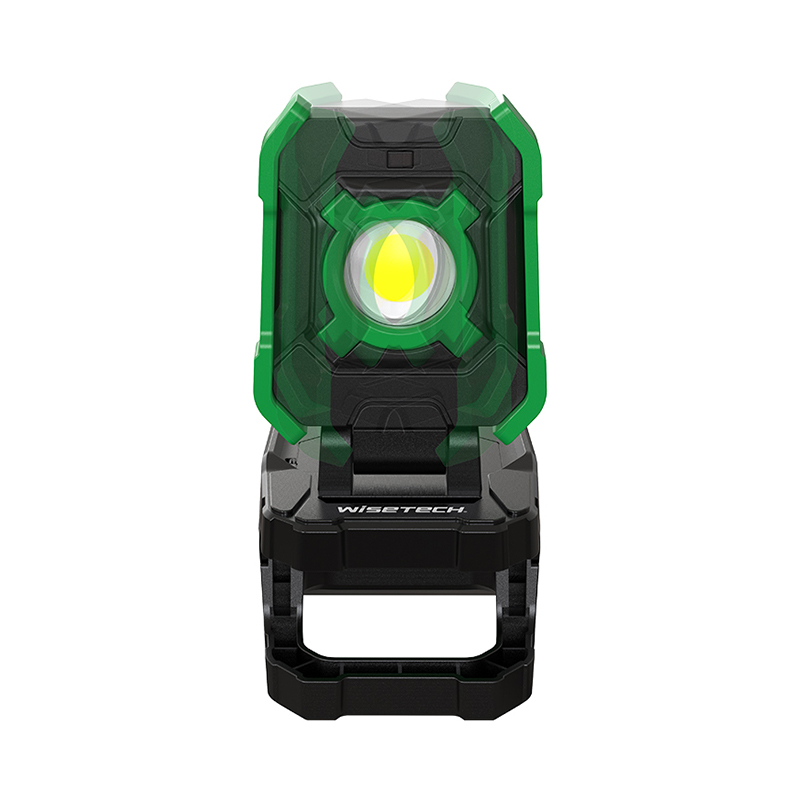
Buyers must understand realistic LED efficiency expectations before committing to a lighting ecosystem. Many manufacturers claim astronomical 10,000+ lumen outputs on their packaging. However, physics dictates that running at maximum intensity will easily drain a standard 5.0Ah 18V battery in under an hour. Sustainable, practical output for entire work shifts usually hovers between 3,000 and 5,000 lumens.
Typical LED Runtime Estimates (Based on 5.0Ah 18V Battery)
Lumen Output | Estimated Runtime | Best Use Case |
|---|---|---|
2,000 Lumens | 6 - 8 Hours | Targeted task lighting and tight spaces |
4,000 Lumens | 3 - 4 Hours | Small room illumination and finishing work |
10,000 Lumens | < 1 Hour | Short bursts for wide site inspections |
You must also assess the structural integrity of the battery adapters carefully. Are they simple slide-in inserts, integrated multi-pins, or external snap-on plates? Flimsy plastic adapters introduce major points of failure on a busy job site. High-vibration environments, like those near heavy compaction equipment, will quickly shake cheap adapter connectors loose. Look for reinforced nylon polymer construction and secure locking mechanisms.
Establish strong baseline requirements for your specific environmental conditions using standard Ingress Protection (IP) ratings.
IP54: Adequate for general indoor tasks, warehousing, and covered work sites. It resists minor dust accumulation and indirect splashing.
IP65: Required for true outdoor utility work. This rating withstands low-pressure water jets and heavy rain storms without internal shorting.
IP67: Necessary for extreme disaster relief scenarios requiring temporary submersion protection in flooded zones.
Finally, always look for hybrid power capabilities. Having an integrated AC bypass plug remains crucial for situations where grid power eventually becomes available. Plugging the unit directly into an extension cord preserves precious battery life for strictly mobile tasks required later in the day. Hybrid functionality ensures your light never sits idle just because you ran out of charged batteries.
Lithium-ion technology requires careful, precise management. Some third-party battery adapters lack built-in low-voltage protection circuitry. This represents a critical reality check for users. If left running unattended, a basic adapter can drain a lithium-ion cell completely below its safe minimum voltage threshold. This deep discharge permanently damages the cell chemistry, ruining expensive battery packs. You must strictly verify if your lighting fixture includes an internal, active low-voltage cutoff to safeguard your investment.
High-output LEDs naturally generate immense thermal energy. You should look for heavy cast-aluminum heat sinks instead of cheap plastic housings. Plastic-housed high-lumen units risk severe thermal throttling during extended use. They will automatically drop their brightness levels after just 20 minutes to prevent internal wiring from melting. Active, well-engineered thermal management keeps your illumination steady and safe throughout an entire eight-hour shift.
Transparency is essential when mixing closed tool ecosystems. Using a major brand's battery in a third-party multi-battery fixture might complicate the original manufacturer's warranty. If a battery fault or thermal event occurs, brands often blame the non-native accessory for drawing power outside standard parameters. Keep this reality in mind when managing large enterprise tool fleets and enforcing site safety protocols.
Following a structured, logical approach ensures you select the best possible hardware for your daily operations. Do not simply buy the light featuring the highest lumen count; evaluate your actual site logistics first.
Audit Your Battery Fleet: Take an actionable inventory of your current tool crib. Identify the dominant Amp-Hour (Ah) ratings and rank the most common tool brands currently in daily circulation. This dictates which adapters you need most.
Determine Form Factor: Choose your physical mount style carefully based on your trade. Tripod-mounted flood lights excel for wide room illumination and drywall finishing. Portable spot and task units fit targeted automotive and utility work perfectly.
Verify Native vs. Adapter Compatibility: Enterprise buyers prioritizing strict warranty safety should recommend native alliances (like the Bosch/Brennenstuhl 18V system). Conversely, smaller agile repair crews prioritizing maximum daily flexibility benefit most from universal adapter units.
A multi battery work light operates as a strategic workflow upgrade, going far beyond a simple auxiliary lighting purchase. It fundamentally solves the stranded asset problem, ensuring your expensive lithium-ion batteries never sit idle simply because a proprietary tool is not currently in use. By embracing ecosystem-agnostic lighting, you dramatically reduce site downtime and improve overall worker safety.
Buyers must prioritize solid build quality, reliable thermal management, and integrated low-voltage protection rather than blinding sheer lumen output. A light dropping to half brightness after ten minutes due to overheating serves nobody. Robust heat sinks and smart circuitry remain the true markers of a professional-grade tool.
Take five minutes today to assess your current job site downtime caused by lighting failures. Review the compatibility of your top three battery brands, inventory your available amp-hour capacities, and begin streamlining your field equipment immediately.
A: Generally, no. Most hybrid models function only as power draws, not chargers. This intentional design avoids severe cross-brand charging hazards and complex voltage regulation issues. Always charge batteries using their native, brand-specific charging stations.
A: Lighting creates a continuous, sustained draw on the battery cells. Power tools create intermittent, high-peak power draws. While the usage feels distinctly different, the light will not necessarily drain the battery faster than heavy drilling—it just drains it at a steady, unbroken pace.
A: If the lighting unit lacks built-in low-voltage cut-offs, it can drain lithium-ion cells far below their safe operational threshold. This permanently damages the internal cell capacity. Always choose modern fixtures featuring integrated low-voltage protection.
A: You must strictly verify the specific IP rating of the unit. When external adapter interfaces remain exposed, water intrusion becomes a serious short-circuit risk. Only deploy IP65 or higher rated units in genuinely wet, outdoor environments.

