


Views: 0 Author: Site Editor Publish Time: 2026-10-13 Origin: Site


Imagine being elbow-deep in a complex transmission rebuild. You are just aligning a crucial gear. Suddenly, your primary light source flickers and dies. Traditional corded drop lights have long been a garage staple. Yet, they frequently cause dangerous tripping hazards and restrict your movement. Cheap battery-powered alternatives are not much better. They suffer from rapid battery drain and lack the structural durability required for harsh mechanical environments.
This guide breaks down the critical balance between battery runtime and efficient charging solutions. You will gain actionable insights into the engineering features that elevate a basic flashlight into a rugged diagnostic instrument.
Mobility and Safety: Cordless lighting eliminates physical hazards and spatial limitations associated with trailing cables in industrial environments.
Runtime Optimization: Evaluating the technical balance between lumen output and battery capacity is necessary to ensure consistent all-day illumination.
Workflow Efficiency: Implementing fast-charging protocols or docking systems significantly reduces tool downtime and standardizes workshop organization.
Ergonomic Design: Hands-free engineering is a functional requirement for automotive mechanics operating in confined spaces.
Advanced Optics: Chip-on-board technology delivers a broad, uniform, shadow-free beam that objectively outperforms traditional surface-mounted diodes for close-proximity inspection tasks.
The evolution of workshop lighting has moved rapidly from fragile incandescent bulbs and hazardous halogen drop lights to highly efficient portable LED solutions. For decades, professionals accepted the limitations of corded lights. However, trailing cables present significant compliance issues. Tripping hazards and the risk of electrocution in damp environments are real daily threats.
Recent industry analysis highlights a massive shift toward sustainable, high-efficiency lithium-ion ecosystems in commercial garages. As automotive technology becomes increasingly intricate, especially with the rapid adoption of electric vehicles, technicians demand diagnostic lighting that matches the sophistication of their electronic scanners. Market trends show a decisive move away from disposable low-tier lighting. Instead, shop owners favor modular smart-charging systems. These systems lower the long-term total cost of ownership while drastically improving bay safety.
Modern automotive bays, manufacturing floors, and HVAC repair sites require technicians to navigate complex machinery. By cutting the cord, professional-grade models allow mechanics and industrial technicians to move freely. You no longer have to worry about tangling wires around vehicle lifts or heavy equipment.
Tracing a wiring fault deep within a chassis presents a unique challenge. The light source must be compact enough to slip into tight crevices. Simultaneously, it must be powerful enough to illuminate the workspace without blinding the technician.
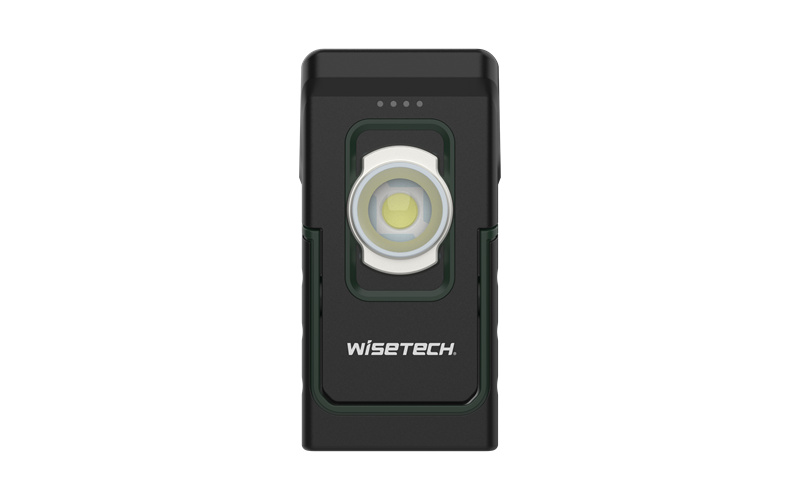
Evaluating the operational lifespan of a lighting tool requires a foundational understanding of lithium-ion battery specifications. The primary metric is milliampere-hours. This rating indicates the energy storage capacity. For professional diagnostic tools, this typically ranges from 2000 to over 5000 milliampere-hours. A higher capacity generally translates to extended runtime, assuming the power draw remains constant.
Runtime is directly dictated by lumen output. There is an inherent trade-off between extreme brightness and battery conservation. Running a lamp at a maximum output of 1000 lumens demands significant power. It generates thermal heat, which rapidly depletes the lithium cells. In contrast, operating the same device in an eco mode of 250 lumens reduces the power draw exponentially. This allows the tool to last through an entire shift.
To accommodate varying task requirements, premium Rechargeable Hand Lamp models feature variable brightness settings. A mechanic inspecting a highly reflective aluminum cylinder head may only need 200 lumens to avoid glare. Illuminating a cavernous dark engine bay may require the full 800 lumens.
Brightness Mode | Lumen Output | Estimated Power Draw | Expected Runtime | Primary Use Case |
|---|---|---|---|---|
High | 800 - 1000 Lumens | 10W - 12W | 2.5 - 3.5 Hours | Broad area illumination, deep engine bays |
Medium | 400 - 500 Lumens | 5W - 7W | 5.0 - 7.0 Hours | General component inspection, wheel wells |
Low Eco | 150 - 250 Lumens | 2W - 3W | 10.0 - 15.0+ Hours | Close-up wiring tasks, reading schematics |
Setting realistic workshop expectations is crucial. A high-quality tool should provide enough runtime on medium or low settings to last a standard shift. High-output modes should be strategically reserved for intermittent high-visibility needs.
In a high-paced commercial garage or industrial plant, tool downtime directly impacts profitability. When a lamp dies, the technician must pause their workflow to hunt for a replacement or wait for a recharge. To mitigate this frustrating bottleneck, manufacturers have integrated advanced charging protocols into modern equipment.
The integration of Type-C technology has established a new standard. Older micro-USB ports were limited to slow charging speeds. A high-capacity 4000 milliampere-hour battery could take up to six agonizing hours to fully replenish. Modern power delivery supports 10 to 15 watts. This allows a completely depleted Fast Charging Work Light to reach an 80 percent charge in under two hours. These ports are reversible and structurally more robust, effectively reducing the likelihood of mechanical port failure.
While fast charging is incredibly efficient, the physical management of loose cables in a busy workshop can still be problematic. A docking station serves as a designated fixed home for the tool.
Workflow standardization is a major benefit. Technicians develop the muscle memory to return the lamp to its dock after a task. This ensures it is never accidentally left inside a customer vehicle. The lamp is systematically charged between jobs. You are virtually guaranteed a full battery at the start of the next ticket. Drop-in contact charging also eliminates the repetitive stress of plugging and unplugging a cable.
Modern docking stations are equipped with sophisticated battery management systems. These microchips actively monitor voltage and temperature. They automatically cut off the current when the battery hits full capacity to prevent thermal runaway.
The type of light-emitting diode utilized fundamentally alters a tool utility. While traditional surface-mounted diodes have been the historical industry standard, chip-on-board architecture has rapidly become the preferred choice for close-proximity mechanical work.
A COB Inspection Lamp utilizes a manufacturing method where multiple LED chips are bonded directly to a thermally efficient substrate like aluminum. This creates a single continuous lighting module rather than a series of individual dotted diodes.
The primary advantage of this technology is its impeccable beam quality. Traditional clusters often create a ghosting effect. These multiple overlapping harsh shadows can obscure minute details like stripped threads on a bolt or hairline cracks in a serpentine belt. A chip-on-board module acts as a dense singular light source. It produces a wide uniform flood of light that often spans a 120-degree angle. This smooth dispersion eliminates harsh shadows and provides a clear high-contrast view of the entire work area.
Recognizing that technicians encounter varied scenarios, premium designs frequently employ a dual-light configuration. The main body features a large module for wide floodlighting. The top houses a high-powered spotlight. This top-mounted beam functions as a traditional flashlight, allowing the user to peer down deep narrow crevices where a wide floodlight simply cannot penetrate.
In automotive and industrial repair, technicians rarely have a free hand to merely hold a flashlight. They require both hands to manipulate heavy wrenches, align suspension components, or operate diagnostic tablets. Reliable hands-free functionality is a non-negotiable requirement.
The Magnetic Inspection Lamp is widely considered a mechanic best friend. By embedding high-strength neodymium magnets into the chassis, the tool can be securely mounted to vehicle hoods, steel frames, or hydraulic lifts. Magnet placement and protective design require careful engineering.
Effective lamps feature magnets on both the base for vertical standing and the back for flat mounting against panels. Bare magnets will instantly scratch automotive clear coats. Professional-grade models encase the magnets beneath a layer of thermoplastic rubber. This ensures a formidable hold without causing cosmetic damage to a client vehicle.
A magnetic base is only useful if the light can be aimed correctly. Combining magnets with an articulating body capable of pivoting 180 degrees or rotating 360 degrees allows the user to anchor the base securely and then precisely direct the beam. Integrated stowable hanging hooks provide an alternative hands-free solution when working with non-magnetic materials like aluminum hoods or plastic interior trims.
Workshops are inherently hostile environments for delicate electronics. A standard consumer-grade flashlight will fail rapidly when exposed to the daily rigors of a commercial garage. To ensure longevity, a professional tool must meet specific industrial standards for ingress protection, impact resistance, and chemical resilience.
Ingress protection ratings classify the degree of defense against dust and liquids. An IP54 rating ensures the lamp is protected against interfering dust and splashing water. For more extreme conditions, an IP65 rating offers total protection against dust ingress and can withstand low-pressure water jets. This is ideal for mechanics who frequently wash down engines or work outdoors in inclement weather.
Tools are inevitably dropped. The kinetic impact rating measures an enclosure resistance to drops. A reliable workshop lamp should possess an IK07 or IK08 rating. This guarantees that the internal circuitry, battery, and LED module will survive being dropped from a height of two meters directly onto a concrete floor.
Automotive environments are saturated with corrosive substances. If a housing is molded from cheap plastic, exposure to brake cleaner, hydraulic fluid, or synthetic motor oil will cause it to become brittle and crack. High-quality lamps are constructed from robust polycarbonate lenses and nylon-fiberglass housings. These materials are specifically chosen for their chemical resistance and structural integrity.
Selecting the optimal lighting equipment requires moving beyond basic lumen claims. You must examine how technical specifications align with daily operational workflows. An empirical approach to procurement ensures that technicians have reliable illumination. This reduces diagnostic errors and minimizes operational downtime.
When evaluating options, consider a matrix of variables including battery chemistry, optical engineering, ergonomic design, and environmental resistance. Creating a structured checklist based on specific professional roles is the most effective method for identifying the appropriate tool.
For heavy-duty automotive mechanics, physical build and mounting capabilities supersede extended battery capacity. A robust magnetic base, articulating head, and oil-resistant housing are paramount. The optical clarity provided by advanced lighting modules is crucial for distinguishing between similarly colored electrical wires.
Fleet maintenance and shop managers must prioritize tool accountability. Implementing a Docking Station Hand Lamp system resolves the issue of lost cables and uncharged tools. Centralized docking stations ensure complete operational readiness for the next rotation while integrated smart-charging circuits preserve the lithium-ion cell lifespan.
Mobile technicians and emergency responders face unpredictable environments without access to stationary wall outlets. Their primary concerns revolve around rapid power replenishment and sustained performance in extreme temperatures. High-density lithium-ion batteries and power delivery protocols are essential for rapid recharging between remote service calls.
Selecting the right lighting tools fundamentally improves workshop safety, technician efficiency, and diagnostic accuracy. A reliable well-engineered lamp prevents costly project delays and eliminates the frustrations associated with poor visibility.
By matching battery capacity, charging speed, and optical technology to your specific daily workflow, you can optimize your operational output. Investing in durable chemically resistant equipment with smart-charging capabilities significantly reduces long-term tool replacement costs. Ready to upgrade your daily operations? Evaluate your workshop needs and explore premium lighting solutions at WiseTech Lighting to experience the difference professional-grade illumination makes.
The operational runtime of a lithium-ion inspection lamp is strictly governed by the relationship between its battery capacity and the current draw of the LED module. A professional-grade lamp utilizing a standard 2600 milliampere-hour battery will typically operate for 2.5 to 3.5 hours on its maximum output setting. By stepping down the brightness to a medium or low setting, the current draw is significantly reduced, extending the runtime to anywhere from 8 to 15 hours. Ambient temperature also plays a critical role, as freezing conditions temporarily increase the internal resistance of the cells.
Yes, modern industrial lighting systems are specifically designed to safely remain on their docking stations indefinitely. This is made possible through the integration of a battery management system. Once the internal voltage reaches its maximum safe threshold, the system actively terminates the charging current. The station then enters a monitoring phase, preventing thermal runaway and ensuring the tool is always at full capacity without degrading the overall lifecycle of the power cell.
The distinction lies in the architectural packaging of the light-emitting diodes. Standard surface-mounted diodes consist of discrete individual diodes that are excellent for producing focused spot beams, but they often create harsh overlapping shadows for close-up work. Chip-on-board technology mounts multiple LED chips directly onto a single substrate, yielding a highly dense uniform light source. This produces an ultra-smooth shadow-free floodlight that is vastly superior for illuminating entire engine compartments.
Professional-grade models are explicitly engineered to prevent damage to delicate surfaces, including clear-coat automotive finishes. Instead of exposing bare metal, the high-strength neodymium magnets are heavily encapsulated in a dense non-abrasive thermoplastic elastomer. This rubberized coating creates a soft barrier that cannot scratch paint and dramatically increases the coefficient of friction, preventing the lamp from sliding down vertical highly polished surfaces.
The charging duration depends on the battery total capacity and the wattage supported by the charging protocol. Traditional micro-USB lights accept a maximum charge rate of 5 watts, requiring 4 to 6 hours to fully replenish. Modern tools utilizing Type-C technology and power delivery protocols can safely accept 10 to 15 watts. Consequently, a depleted high-capacity battery can often reach an 80 percent state of charge in approximately 1.5 to 2 hours, minimizing workflow interruptions.
In most professional-grade inspection lamps, the lithium-ion cells are built into the sealed housing to maintain high ingress protection ratings against dust and water. Therefore, they are not typically user-replaceable. However, premium manufacturers utilize high-cycle batteries designed to last for hundreds of charge cycles before any noticeable degradation occurs. When the battery eventually reaches the end of its lifespan, replacing the entire unit is often the standard practice to ensure continued safety and optical performance.
For general automotive repair, a work light producing between 400 and 600 lumens is generally ideal for most under-hood and suspension tasks. This range provides ample illumination without causing blinding glare when the light reflects off shiny metal components. Higher outputs of 800 to 1000 lumens are excellent for broad bay illumination or inspecting deep dark crevices, but they will drain the battery much faster. Having a lamp with adjustable brightness settings is the most practical solution for a mechanic.

