


Views: 0 Author: Site Editor Publish Time: 2026-09-10 Origin: Site


For industrial buyers, commercial vehicle outfitters, and B2B distributors, selecting the right lighting manufacturer is a high-stakes decision. Substandard equipment inevitably leads to project delays, severe safety hazards, and ballooning replacement costs.
Sourcing reliable illumination goes far beyond simply negotiating the lowest unit price. It requires rigorously evaluating a manufacturer’s engineering standards, production capacity, and strict compliance protocols. You must look past basic glossy spec sheets. Relying on unverified vendor claims puts your entire field operation at significant risk.
This guide provides a comprehensive, evidence-based framework to systematically evaluate potential lighting suppliers. It helps filter out unreliable vendors while ensuring your procurement actively meets rigorous field-tested standards. You will learn how to audit engineering capabilities, navigate complex industry compliance, and secure hardware built for endurance.
Prioritize suppliers that provide verifiable third-party testing for IP/IK ratings and lumen output, rather than theoretical claims.
Industry-specific compliance (e.g., ECE R10 for commercial vehicles, OSHA alignment) is a non-negotiable filtering criterion.
Evaluate the supplier’s engineering depth by analyzing their approach to thermal management, CRI (Color Rendering Index), and beam pattern customization.
A reliable supplier must demonstrate scalable manufacturing, transparent quality control (QC) protocols, and straightforward warranty support.
Before contacting any manufacturer, you must outline your specific technical needs. Broad inquiries often attract unqualified vendors. Clear specifications act as your first filter. They quickly separate capable engineering partners from basic assembly workshops.
Define the exact end-user environment. Different scenarios demand entirely different engineering approaches. A mechanic needs distinct specifications compared to a heavy machinery operator. You must map these applications accurately.
Mechanic and Automotive Environments: These scenarios demand portable solutions. You need magnetic bases for hands-free operation. Chemical resistance is crucial against grease and brake fluid.
Commercial Vehicles: Trucks and tractors require heavy-duty mounts. They face constant vibration. You need robust brackets and anti-glare lens designs.
Construction Sites: When sourcing a heavy-duty Work Light for outdoor sites, prioritize high-impact resistance. Dust and water ingress protection become your primary concerns.
Determine your primary power source early in the process. Ask yourself how the end-user will integrate the device. Your catalog might require cordless, battery-operated solutions for maximum mobility. Alternatively, standard corded AC models suit static job sites perfectly. For fleet upgrades, integrated 12V/24V DC systems remain standard. Misaligning power requirements wastes time during the negotiation phase.
Establish your Minimum Order Quantity (MOQ) tolerance immediately. Acceptable lead times also dictate supplier compatibility. Large-scale manufacturers often reject small trial orders. Conversely, small workshops cannot fulfill massive fleet demands. Set these targets upfront. Doing so immediately filters out misaligned manufacturers. It ensures you only engage vendors capable of supporting your scaling needs.
A vendor’s engineering depth defines their product quality. You must move beyond superficial aesthetics. Investigate their internal testing methodologies. Robust engineering ensures longevity and consistent performance under stress.
Evaluate how the supplier measures and reports lumens. Unreliable vendors often advertise "raw lumens." This represents a theoretical maximum based on the LED chip's rating. It ignores optical and thermal losses. Reliable vendors report "effective lumens." This metric reflects actual measured output from an integrating sphere. Always demand effective lumen data.
Table 1: Key Differences Between Output Metrics
Metric | Definition | Reliability for Sourcing | Common Vendor Usage |
|---|---|---|---|
Raw Lumens | Theoretical max output of bare LED chips. | Low (Ignores physical energy loss). | Used by low-tier suppliers to inflate specs. |
Effective Lumens | Actual measured output of the fully assembled unit. | High (Reflects real-world brightness). | Provided by premium engineering partners. |
Heat is the primary enemy of LED circuitry. Poor heat dissipation degrades LED lifespan rapidly. It causes severe color shifting and brightness reduction. Look for aluminum die-cast housings. Advanced heat sink designs pull thermal energy away from the core. Steer clear of vendors heavily reliant on generic plastic housings for high-output models.
Check if the manufacturer offers application-specific optics. Different tasks require specific light distribution. Flood beams illuminate wide areas seamlessly. Spot beams provide focused distance illumination. Some premium models offer combination beams. A competent supplier can manipulate optics to match your exact application requirements.
Competent suppliers design for real-world pain points. They anticipate daily wear and tear. Look for robust, stainless-steel mounting brackets. Test their magnetic bases for adequate holding force. Insist on resilient polycarbonate lenses instead of brittle plastics or standard glass. These small design choices drastically reduce field failure rates.
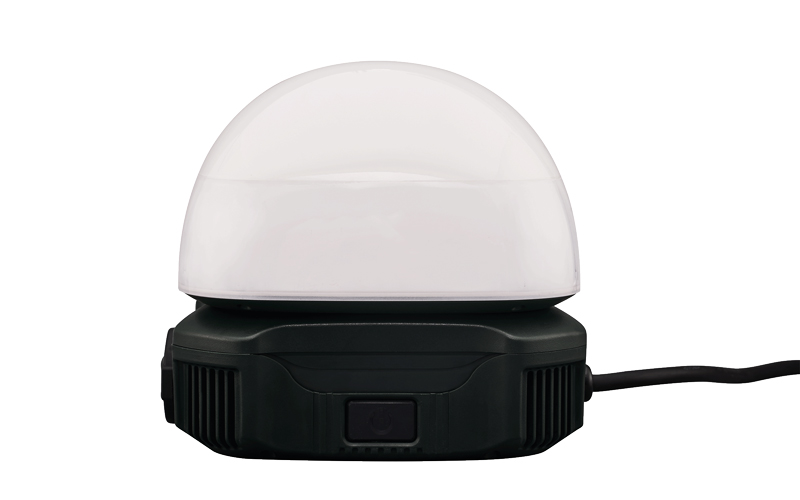
Trusting a spec sheet without verification is dangerous. You must mandate supporting documentation. Rigorous validation separates professional equipment from consumer-grade toys.
Mandate official documentation for IP (Ingress Protection) ratings. Standard outdoor usage requires a minimum of IP67. This prevents dust ingress and survives temporary submersion. For extreme environments, demand IP69K. This rating guarantees survival against high-pressure, high-temperature washdowns. Additionally, check IK ratings for impact resistance. A rating of IK07 or higher ensures the lens survives direct tool strikes.
Cross-examine claimed battery runtimes relentlessly. Do not accept flat hour-estimates. Request precise data on battery chemistry. High-quality Lithium-ion cells resist extreme temperature fluctuations. Ask about charge cycle degradation. How much capacity remains after 500 cycles? Requesting discharge curves reveals the true performance of a portable Work Light over a full shift.
Verify the supplier understands high CRI (Color Rendering Index). Tasks like electrical wiring or automotive painting require strict color accuracy. You need a CRI greater than 80. Furthermore, demand optimal color temperatures. Ratings between 5000K and 6500K provide high-contrast visibility. They reduce eye strain during prolonged night shifts.
Regulatory compliance is non-negotiable. It protects your business from liability. It also ensures seamless integration into existing industrial systems.
Commercial vehicles contain sensitive electronics. Poorly shielded equipment causes severe electromagnetic interference (EMI). This disrupts two-way radios, GPS modules, and telematics systems. Strictly require EMC/EMI certifications. Look specifically for ECE R10 or CISPR 25 standards. These certifications guarantee the unit operates silently on the electrical network.
Verify regional certifications before finalizing any contract. Different markets enforce strict boundaries. Europe requires CE markings. North America mandates UL or ETL standards. You must also ensure RoHS compliance. This guarantees the product contains no restricted hazardous materials. Selling uncertified products invites legal penalties and immediate product recalls.
Never accept a simple logo pasted on a website. These are easily forged. Request actual, up-to-date compliance certificates. Verify they originate from recognized, independent third-party testing laboratories. Cross-reference the certificate numbers online. If a supplier hesitates to provide lab reports, immediately remove them from your shortlist.
A supplier might produce a perfect prototype. However, replicating that perfection across ten thousand units requires stringent factory controls. You must evaluate their operational backend.
Investigate the supplier's ISO 9001 certification. This standard indicates a structured management system. Try to assess whether they own their manufacturing facility. Many companies simply assemble outsourced parts. Direct manufacturers offer tighter control over the entire production cycle. They resolve design flaws faster than mere trading companies.
Ask explicit questions about their assembly line testing. What are their standard QA protocols? Reliable vendors implement 100% aging tests. They run every unit for several hours to catch early chip failures. Look for routine submersion tests and vibration testing. Factories skipping these steps will pass their defect costs directly onto your business.
Aging Tests: Running units continuously to identify premature diode failure.
Submersion Tests: Pressurized water tanks verifying IP67/IP68 seal integrity.
Vibration Tests: Shaker tables simulating rough terrain transit.
Evaluate their reliance on single-source component providers. Ask where they source their LED chips. Brands like Cree, Osram, or Epistar indicate high quality. However, sole reliance on one chip supplier creates bottlenecks. Gauge their vulnerability to global supply chain disruptions. Diverse, transparent sourcing networks ensure steady inventory flow during macro-economic crises.
Narrowing down your list requires sharp intuition and strict protocols. Pay attention to how vendors communicate during initial inquiries. Warning signs appear early.
Avoid suppliers unwilling to send evaluation samples. Be extremely wary of evasive answers regarding warranty claim processes. If they cannot explain their return merchandise authorization (RMA) workflow, they likely ignore defective units. Furthermore, avoid prices drastically below the market average. Unusually cheap pricing almost always indicates substandard internal components, thin heat sinks, or counterfeit chips.
Always order off-the-shelf samples first. Do this before committing to custom branding or bulk orders. Once received, perform aggressive internal field tests. Do not treat the sample gently.
Execute drop tests onto concrete floors.
Run continuous runtime tests to monitor thermal throttling.
Conduct water exposure tests using pressure washers.
These physical trials expose structural weaknesses invisible on paper.
Ensure your final terms clearly define defect resolution. Draft a strict SLA. Outline exact warranty periods. Industrial lighting typically requires warranties spanning two to five years. Define replacement turnaround times. If a batch fails, you need guaranteed replacements shipped within days, not months. Clear SLAs protect your margins and client relationships.
Choosing a reliable supplier requires moving far beyond surface-level spec sheets. You must systematically interrogate their manufacturing processes. Validate their compliance certificates rigorously. Test physical prototypes to guarantee real-world durability. Do not rush this procurement phase.
Start your process by shortlisting three to five vendors. Select those providing transparent compliance documentation immediately. Request physical samples from these finalists. Evaluate their communication efficiency and technical honesty during the initial quoting phase. Partnering with a proven manufacturer secures your supply chain and elevates your operational safety.
A: MOQs vary widely depending on customization. Off-the-shelf models may start at 50–100 units. Custom-branded or OEM designs typically require 500+ units. Always negotiate MOQ based on your long-term purchasing volume.
A: Request the discharge curve documentation from their lab tests. Next, independently test a sample unit on its highest lumen setting in a temperature-controlled environment. Compare your real-world runtime against their stated claims.
A: ECE R10 ensures the light’s electrical components do not emit electromagnetic interference (EMI). Unregulated EMI can heavily disrupt a vehicle's GPS, two-way radios, or crucial telematics systems, causing operational failures.
A: Direct manufacturers offer better control over QA, deeper customization, and faster warranty resolution. However, trading companies may offer lower MOQs and broader cross-category catalogs. Base your choice on your volume and customization needs.

