


Views: 0 Author: Site Editor Publish Time: 2026-09-03 Origin: Site


Commercial and industrial buyers need precise illumination for optimal site safety. Contractors cannot afford guesswork when sourcing fixtures. Purchasing lighting on a whim often leads to safety compliance failures. It also triggers light trespass fines and wastes valuable energy budgets. We know coverage area is never a static number printed on a box. Instead, it remains a dynamic metric. Optic design, installation variables, and specific site requirements constantly alter your actual footprint. You need a definitive, math-based framework to calculate exact lighting needs. Our guide helps you abandon vague wattage estimations. You will learn to use precise lumen-to-lux conversions. This ensures you buy exactly what your project demands.
Coverage is dictated by lumens, beam angle, and mounting height, not just wattage.
Industry standards (foot-candles/lux) determine how much light is required for specific tasks (e.g., security vs. active workspaces).
Doubling the mounting height increases the coverage area but reduces the intensity (lux) by a factor of four (Inverse Square Law).
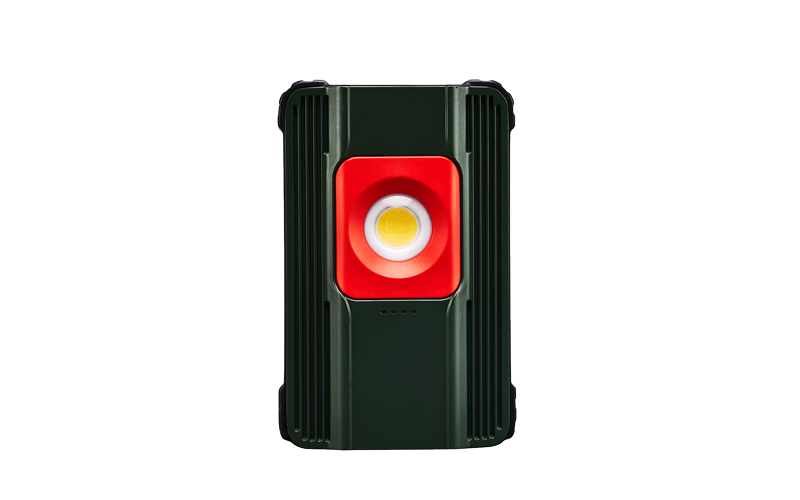
Selecting a specialized Wide Beam Work Light versus a narrow spot fixture radically alters the necessary fixture count for large open areas.
Many buyers still use legacy wattage to estimate area. A common request involves seeking a "1000W metal halide equivalent" to light a specific yard. This legacy approach fails entirely today. Modern LEDs feature varying luminous efficacy rates. Two fixtures consuming 100 watts might perform completely differently. You must base your calculations on three core pillars.
Lumens measure total light output. Watts only measure energy consumption. A high-efficacy 100W LED might output 15,000 lumens. A low-tier 100W LED might only generate 10,000 lumens. The higher lumen output covers significantly more area. You should always look at the lumen rating first. It gives you the actual volume of light available to distribute across your site.
Light distribution changes based on the optic lens. A narrow beam throws light far but covers a very small footprint. A 30-degree lens acts like a spotlight. Conversely, a wide beam covers a massive area. A 120-degree lens spreads light broadly across a lot. However, this wide spread requires lower mounting heights or higher total output. Spreading the same lumens over a wider area decreases the intensity.
Coverage means nothing until you define the required brightness. Lighting professionals measure illuminance in foot-candles or lux. A single fixture might cover 1,000 square feet for basic security purposes. Basic security usually demands only 1 to 2 foot-candles. If you use the exact same fixture for detailed task work, the coverage shrinks. Detailed work often requires 50 foot-candles. The fixture might only cover 200 square feet under these strict demands.
Physics dictates how light disperses across a surface. The higher you mount the fixture, the wider the pool of light becomes. However, this creates a major performance trade-off based on the Inverse Square Law. Pushing a light higher minimizes glare. It definitely widens your overall coverage. Unfortunately, it dilutes brightness exponentially. If you double the mounting height, you increase the coverage area by four. Simultaneously, you reduce the light intensity to one-quarter of its original strength.
You must balance height and output carefully. Choosing the wrong pole height ruins site visibility. We rely on standard industry benchmarks to guide installation planning.
Height Range | Ideal Application | Fixture Requirements |
|---|---|---|
10–15 feet | Residential driveways, low-level commercial perimeters | Standard lumen output, wide beam angles to prevent hot spots. |
15–20 feet | Mid-sized parking lots, commercial loading docks | Medium to high lumen output, specialized optics for uniformity. |
20+ feet | Large industrial yards, stadium perimeters, heavy duty zones | High-lumen, tight-beam fixtures to push light to the ground effectively. |
You need a transparent, standardized method for calculating fixture needs. Guessing leads to dark zones or overpowering glare. Following a strict evaluation framework guarantees optimal visibility. We recommend this exact sequence for planning any commercial layout.
Determine Total Square Footage: Measure the target area carefully. Multiply the length by the width. A 50-foot by 100-foot lot equals 5,000 square feet.
Identify Required Foot-candles: Consult credible industry benchmarks. OSHA standards require a minimum of 5 foot-candles for general construction areas. The Illuminating Engineering Society (IESNA) recommends 1 to 5 foot-candles for standard parking lots.
The Calculation: Multiply your total square footage by your target foot-candles. Formula: Total Lumens Needed = Total Square Footage × Target Foot-candles. If you need 5 foot-candles across 5,000 square feet, you need 25,000 total lumens reaching the ground.
Factor in Light Loss: Theoretical calculations never match real-world degradation. Add a 10% to 15% buffer to your final lumen count. This accounts for dirt depreciation on the lens. It also covers natural LED degradation over time.
Once you determine the total lumens required, you divide that number by the output of your selected fixture. This tells you exactly how many units you need to purchase.
Calculations change drastically based on your specific application. A wall washer behaves differently than a site tower. Understanding solution categories prevents poor fixture selection.
Imagine lighting a 30-foot by 50-foot commercial wall. You need directional, wall-washing illumination to highlight the architecture. You cannot point a single light directly at the center. Instead, you must space multiple fixtures evenly along the base or roofline. You calculate the 1,500 square foot vertical surface area. A standard Flood Light placed at strategic intervals ensures overlapping beams. Overlapping prevents dark spots and creates a smooth, uniform wash of light across the masonry.
Active workspaces demand intense, uniform visibility. Heavy machinery operation requires perfect depth perception. You face serious hazards if shadows obscure ground materials. These environments highlight the absolute necessity of a specialized Wide Beam Work Light. Wide-angle lenses exceeding 120 degrees reduce harsh shadows significantly. They soften the transition between light and dark zones. You must use specific spacing calculations to ensure uniform visibility. Workers need consistent lux levels to prevent eye strain during long shifts.
Failing to calculate coverage properly causes expensive mistakes. Site managers often rush purchases based on generic spec sheets. This introduces massive compliance risks and safety hazards into the environment.
Over-illuminating an area causes light pollution. Using fixtures featuring beam angles too wide for your mounting height pushes light beyond your property line. Municipalities strictly enforce light trespass regulations. You might face fines if your illumination spills into residential windows. Always verify local Dark Sky compliance requirements. Choose fixtures offering precise beam control to keep light exactly where you need it.
Many buyers space fixtures based entirely on maximum coverage claims. This ignores uniformity ratios. A light might technically reach 50 feet, but the edges will appear extremely dim. Placing fixtures too far apart leads to hazardous dark zones between light pools. These alternating bright and dark spots confuse machinery operators. Always overlap beam edges to maintain a safe, even uniformity ratio across the site.
Your theoretical calculation only holds up if the fixture survives the environment. Dust, heavy rain, and corrosive elements destroy weak housings. Industrial sites necessitate true outdoor reliability. You must verify IP65 or IP67 ratings before installation. IP65 ensures the unit remains dust-tight and handles water jets. IP67 allows for temporary submersion. An unprotected light degrades quickly, ruining your carefully calculated coverage footprint.
You must look at a manufacturer’s spec sheet using a skeptical eye. Marketing claims often exaggerate usable coverage. Enterprise buyers and contractors need hard data to justify selections.
Never trust a simple "covers 500 square feet" claim printed on a box. True professional planning requires digital simulation. Instruct your suppliers to provide IES files. Engineers use these files inside professional lighting software like DIALux. This software simulates your exact site dimensions, pole locations, and required foot-candles. It proves whether the fixture actually meets the standard before you install anything.
Efficacy determines how well the fixture converts energy into visible light. Set a strict benchmark for your projects. Demand greater than 130 lumens per watt for modern commercial installations. High efficacy ensures you hit your required lumen target using fewer fixtures.
Mounting powerful lights at lower heights creates blinding glare. This blinds pedestrians and drivers. Look for fixtures featuring built-in visors. Check for specific optic lenses engineered to diffuse intensity. Proper glare control improves visual comfort while maintaining your calculated coverage area.
Determining how much area a flood light covers remains a strict math equation. It relies heavily on total lumens, optic beam angles, mounting height, and target lux. You should never treat site illumination as a guessing game. Always audit your exact site dimensions and check local code requirements before finalizing your purchase quantities. Follow the lumen calculation framework to ensure you hit OSHA or IESNA standards precisely. Finally, utilize a professional photometric layout service or contact an in-house engineering team to verify your math before committing to a bulk purchase.
A: It depends entirely on the lumen output and target brightness. Assuming the fixture outputs 13,000 lumens, it covers roughly 1,300 square feet for basic security requiring 10 lux. However, it covers only about 260 square feet for detailed work demanding 50 lux.
A: You must differentiate between throw distance and coverage width. A 30-degree beam angle shines much farther down a pathway than a 120-degree beam angle, even at the exact same wattage. Narrow optics push light forward, while wide optics spread it laterally.
A: First, multiply your total square footage by your required foot-candles to find total lumens needed. Next, divide that total lumen number by the lumen output per fixture. This formula gives you the approximate number of fixtures required.
A: All wide beam work lights act technically as flood lights. However, work lights are heavily ruggedized and portable or semi-permanent. Engineers design them specifically for extreme beam uniformity. This precise uniformity reduces eye strain in task-heavy, active environments.

