


Views: 0 Author: Site Editor Publish Time: 2026-09-01 Origin: Site


Buying exterior illumination often leads to massive frustration for property owners and facility managers alike. You install a brand-new fixture only to face instant disappointment. The light either leaves dark, dangerous shadows or creates a blinding glare across the entire property. The root cause usually stems from outdated shopping habits. People still try to buy modern illumination based strictly on power consumption rather than actual visible brightness.
In the highly efficient LED era, using the traditional metric of watts as your only guide fails completely. You need a smarter, more structured approach to evaluate your specific exterior spaces. This guide provides a concrete, evidence-based framework for your next lighting purchase. You will learn how to translate precise area dimensions and specific security needs into exact output requirements. By following these calculated steps, you will prevent costly buying errors. We will help you achieve perfect illumination for your exact outdoor environment.
Watts = Energy, Lumens = Brightness: Modern purchasing decisions must start with lumen requirements, which are then reverse-calculated into LED wattage.
Residential Baselines: Most standard residential needs (patios, driveways) only require 10W to 50W LED flood lights (roughly 1,000 to 5,000 lumens).
Commercial Baselines: Parking lots or large facilities typically require 50W to 150W+ LED fixtures (5,000 to 15,000+ lumens).
Height Multipliers: Mounting height drastically alters wattage needs; doubling the installation height requires significantly higher output to maintain ground-level visibility.
We must first address a persistent industry myth. Wattage does not measure brightness. It strictly measures power consumption. In the past, incandescent bulbs provided a predictable relationship between energy used and light emitted. You could easily guess how bright a 100-watt bulb would be. Today, LED technology shatters this old correlation completely.
Why do people still shop by watts? It stems from decades of conditioning. We grew up buying 60-watt bulbs for lamps and 100-watt bulbs for garages. It became a universal shorthand for brightness. Today, we must retrain our brains. An LED uses semiconductors to generate light. This process wastes very little energy as heat. Therefore, we must focus strictly on lumens, which measure the actual visible light hitting your eye.
Modern fixtures use a metric called luminous efficacy. It defines how effectively a unit converts electrical energy into visible light. Current LED modules average between 100 and 130 lumens per watt. High-end commercial units sometimes push even higher. This massive leap in efficiency changes everything. An old 100W halogen bulb emitted roughly 1,000 lumens. Today, a highly efficient 10W to 15W LED achieves the exact same output.
Furthermore, you must factor in color temperature. While color temperature does not change the mathematical lumen output, it heavily influences perceived brightness. A 5000K daylight bulb will look piercingly bright to the human eye. A 3000K warm white bulb of the exact same wattage will look softer. When you evaluate your space, keep this psychological effect in mind. A lower wattage daylight fixture might provide all the visibility you need.
Before buying any fixture, audit your physical space. You must determine the required lumens first. Avoid shopping for a specific wattage out of sheer habit. Look at your intended coverage area. Assess your ambient light levels. Define your security objectives clearly. Once you lock in a lumen target, you simply reverse-calculate to find the matching LED power rating.
Traditional vs. LED Wattage Equivalency Chart
Target Lumens (Brightness) | Traditional Halogen Wattage | Modern LED Wattage |
|---|---|---|
1,000 Lumens | 75W - 100W | 10W - 15W |
3,000 Lumens | 250W - 300W | 25W - 30W |
5,000 Lumens | 400W - 500W | 40W - 50W |
10,000 Lumens | 1,000W | 80W - 100W |
Properly sizing your lighting prevents over-illumination and under-performance. We can categorize residential and commercial needs into three distinct tiers. Each tier demands a specific approach to output.
Compact areas require subtle, welcoming light. You want to see who stands at the door. You do not want to blind your guests. Imagine a narrow side alley next to your house. A small fixture here provides a gentle pool of light. It allows you to find your keys easily. It deters casual intruders. Yet, it remains soft enough to keep the space inviting rather than stark.
Target: 700–1,500 lumens.
LED Wattage Equivalent: 10W–15W.
Implementation Note: Prioritize lower wattage to avoid glare and maintain a comfortable ambient environment.
Best Practice: Mount these low-wattage fixtures at eye-level or slightly above. Use frosted lenses to diffuse the beam smoothly across small patios.
Driveways and standard backyards act as prime security zones. You need enough brightness to identify a vehicle. A standard Flood Light in this bracket works perfectly for general safety. A standard two-car driveway typically measures about 400 square feet. A 30W fixture delivering 3,000 lumens covers this zone beautifully. It provides enough detail to see a license plate clearly. It gives motion sensors plenty of contrast to detect movement accurately.
Target: 1,500–3,000 lumens.
LED Wattage Equivalent: 20W–30W.
Implementation Note: Ideal range for standard motion-sensor security applications without washing out security camera sensors.
Common Mistake: Installing a 50W fixture here will overexpose your security camera footage. The intense glare causes image sensors to drop surrounding details into pure blackness. Stick to the 20W–30W range for reliable surveillance clarity.
Expansive yards and light commercial loading zones demand serious illumination. These wide-open spaces swallow light quickly. You cannot treat a massive 5,000-square-foot lot the same way you treat a driveway. Here, more powerful units become absolutely essential.
Target: 3,000–6,000+ lumens.
LED Wattage Equivalent: 40W–60W.
Implementation Note: Assess overlapping beam patterns if using multiple fixtures to avoid dark spots.
When illuminating a loading bay, space multiple 50W units evenly. Do not rely on one massive 150W unit. A single, ultra-high wattage source creates harsh shadows behind vehicles. Distributed medium-wattage units ensure uniform visibility.
You cannot rely on area measurements alone. Real-world physical conditions constantly shift your power requirements. Three critical environmental factors will heavily alter your final selection.
Mounting Height Physics: Light behaves according to the Inverse Square Law. As you double the distance from the source, perceived brightness drops significantly. Let us look at a practical example. You install a 30W unit directly above a garage door at a height of 8 feet. The ground below will flood with brilliant, crisp light. Now, you take that exact same unit and mount it 22 feet up. By the time the light travels down, it scatters. The ground will look dim and muddy. If you must mount fixtures high up, you must increase your wattage.
Beam Angle Spread: Optics matter just as much as raw output. You must choose between wide-angle and narrow-spot lenses. A wide 120-degree optic acts like a spray nozzle on a hose. It covers a massive area but with low intensity. Because the light spreads out, you may need a slight step up in wattage. Conversely, a 45-degree spot focuses all energy into a tight beam. It requires much less wattage to illuminate a specific target vividly.
Surface Reflectivity: Different materials absorb or reflect light differently. Winter environments highlight this reflectivity rule perfectly. When snow covers your yard, the white surface reflects nearly all ambient light. A low-wattage fixture suddenly feels incredibly powerful. Conversely, dark asphalt driveways absorb massive amounts of illumination. If you recently paved your lot with dark asphalt, you might need higher wattage just to maintain safe visibility levels. Light concrete reflects light beautifully, allowing you to step down your power requirements.
Permanent architectural lighting serves a totally different purpose than task-based portable lighting. You must distinguish between stationary application constraints and temporary site demands. Permanent security fixtures operate high above the ground. They must bathe wide swaths of property in consistent light. This often demands higher output due to the sheer mounting distance.
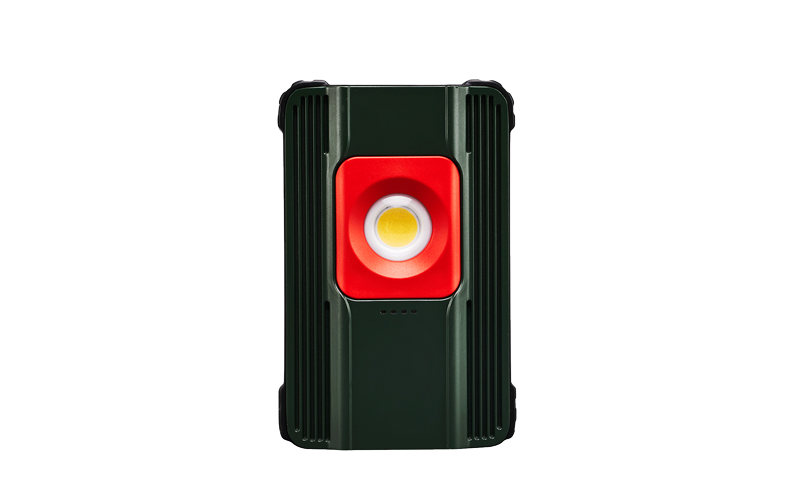
Portable job site illumination flips this entire dynamic. Sizing an Outdoor LED Work Light requires a highly specialized approach. Because these portable units sit much closer to the actual task, they rarely need extreme power. A well-designed portable unit often requires lower overall wattage, typically falling between 10W and 30W. Painters, mechanics, and construction crews keep their lights within arm's reach.
Because the light source sits merely three to six feet from the task, you do not need 100 watts of power. In fact, a 100W portable unit would blind the worker instantly. You can physically move a smaller unit. You can easily adjust the angles. This close proximity means a 20W portable unit often feels just as bright on your workbench as a 60W unit mounted on a pole 20 feet away.
Durability and heat dissipation play vital roles here. High-output units generate considerable thermal loads. When a permanent fixture gets hot, the open night air cools it down naturally. A portable unit sitting on a dusty garage floor lacks that aerodynamic advantage. A 50W work unit needs a massive, heavy aluminum heat sink. If it uses cheap plastic, the internal circuits will fry within weeks. Evaluating the physical housing material matters just as much as checking the power rating.
Bigger does not always mean better in exterior illumination. The over-illumination trap claims countless victims. Homeowners routinely purchase the highest wattage available just in case. They fear buying a fixture that feels too dim. Many facility managers browse catalogs and choose the 150W model simply because they have the budget for it. They assume more power automatically creates a safer environment.
In reality, extreme brightness creates deep, harsh shadows. Human eyes adjust to the brightest point in their field of vision. When you install an excessively powerful light, your pupils constrict. Every shadow around the building suddenly turns pitch black. Intruders can easily hide in these deep contrast zones. This mistake results in wasted electricity and creates stark, uninviting environments.
You must also consider regulatory and neighbor implications. Massive 100W residential fixtures often cause severe light trespass. The beam spills over property lines, shining directly into your neighbor's windows. We must respect our communities. Municipalities across the globe now aggressively fight light pollution. They enact strict Dark Sky ordinances. These codes prohibit light trespass onto neighboring properties. They mandate maximum lumen outputs and require full-cutoff shielding.
To mitigate purchasing risks, employ smart shortlisting logic. Look for fixtures offering adjustable lumen outputs. Many modern units feature selectable wattage switches right on the housing. If measuring your exact requirement feels difficult prior to installation, an adjustable unit solves the problem entirely. You can toggle between 20W, 30W, and 40W modes to find the perfect balance after dark.
Successful exterior lighting requires a highly systematic approach. You must match your lumen requirements to your actual area size first. Only then should you select the corresponding LED wattage. Do not let outdated habits drive your purchasing decisions. High wattage no longer guarantees better visibility; it often just guarantees harsh glare, wasted energy, and angry neighbors.
Take immediate action to secure the right fixture. Step outside and measure your intended coverage area in square feet or meters. Determine your exact mounting height and note the color of your driving surfaces. Use the baseline benchmarks detailed in this guide to shortlist two or three specific models. By carefully matching output to your environment, you will create a beautifully lit, secure, and inviting exterior space.
A: A 10W LED emits about 900 to 1,000 lumens. This output is roughly equivalent to a traditional 75W or 100W halogen bulb. In real-world applications, it provides enough brightness to comfortably illuminate a 15x15 foot patio, a small walkway, or a standard front door area without causing visual glare.
A: Stick to the 10W to 20W LED range per fixture for residential boundaries. This wattage provides ample security without causing light trespass. Furthermore, ensure your chosen fixture features directional shields or a downward tilt mechanism to keep the beam focused strictly on your own property.
A: No. The required wattage remains exactly the same based on your specific area size. However, immediate full-brightness is critical for security purposes. This instant-on capability makes LEDs the optimal technology for motion sensors, unlike older HID lamps that require long warm-up periods.

