


Views: 0 Author: Site Editor Publish Time: 2026-09-01 Origin: Site


Selecting the right wattage for exterior illumination is no longer as simple as matching old halogen numbers. Overestimating power leads to blinding light trespass, while underestimating compromises site security.
Modern lighting technology has fundamentally changed the relationship between power consumed and brightness produced. You can no longer rely on wattage alone to gauge how far a beam will reach. Instead, you must balance raw output and fixture efficacy.
This guide provides a practical, calculation-based framework to help you specify the exact wattage needed. You will learn how to evaluate your space based on mounting height, coverage area, and primary use case. By the end, you can confidently size any fixture for residential or commercial projects.
Evaluate Lumens First: Base purchasing decisions on total lumen output required for the space, then find the most efficient wattage that delivers it.
Residential Baselines: Most driveways and backyards require only 15W to 50W LED flood lights (1,500–5,000 lumens) for adequate security.
Commercial & Industrial Scaling: Parking lots, high-mast applications, and heavy-duty sites typically demand 100W to 300W+ fixtures.
Height Dictates Power: Every time mounting height doubles, the required lumen output (and corresponding wattage) must increase exponentially to maintain surface-level brightness.
Lighting specifications shifted drastically over the past decade. Buyers often still search for fixtures based on outdated electrical metrics. We must clarify a common buyer misconception regarding modern power draw. Traditional 300-watt halogen fixtures can now be replaced by highly efficient 30-watt to 50-watt LED units. Both produce similar brightness levels, but the modern equivalent draws a fraction of the electrical current.
To evaluate modern fixtures accurately, we use a metric called luminous efficacy. Industry standards define luminous efficacy as "Lumens per Watt" (lm/W). This metric tells you how efficiently a fixture converts electrical power into visible light. Guide your purchasing decisions toward fixtures offering 100 to 130 lm/W. High-efficacy units maximize brightness and minimize electrical load simultaneously.
Many property owners fall for the "brighter is better" fallacy. They purchase the highest wattage available. Excess wattage causes severe light pollution. It aggravates neighbors and creates hazardous glare for drivers. Furthermore, overpowering a space washes out security camera feeds. When a high-wattage beam hits a camera lens directly, the image sensor blows out. You lose all critical nighttime surveillance footage.
Common Mistakes to Avoid:
Buying a 100W LED for a small patio, expecting it to act like a 100W incandescent bulb.
Ignoring luminous efficacy ratings on product spec sheets.
Failing to consider how extreme brightness affects digital camera sensors.
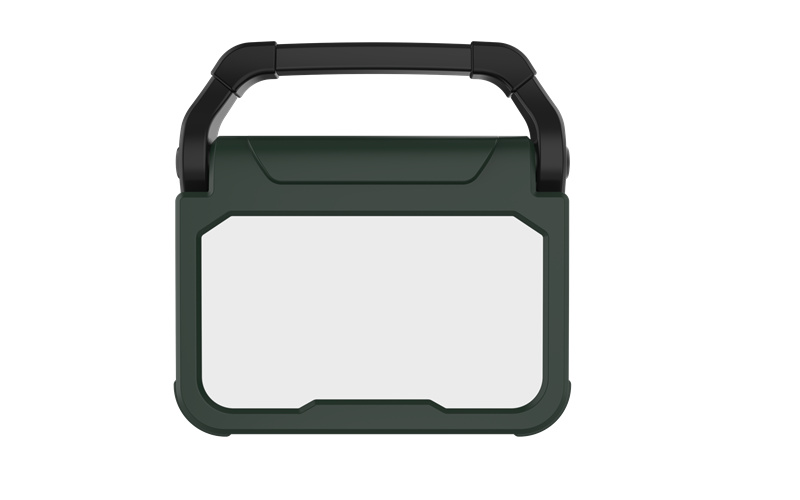
Residential properties rarely require massive power draws. Common use cases include driveways, patios, backyard perimeters, and architectural accent lighting. Homeowners need balanced illumination to deter intruders without creating an uncomfortable glare zone.
The evaluation logic relies on standardized mounting heights. A 30-watt LED is generally ideal for a standard two-car driveway when mounted at 9 to 12 feet. This configuration provides enough spread to identify visitors clearly. If you want to highlight garden features, use lower wattages. Fixtures drawing 15W to 20W are better for localized landscape aesthetics. Low-wattage units prevent harsh shadows from distorting architectural details.
Industrial spaces operate under entirely different lighting requirements. Heavy-duty use cases include retail parking lots, warehouse loading docks, sports courts, and vast building facades. In these environments, precise photometric planning becomes mandatory. You cannot guess the required power.
We rely on standardized models for commercial safety compliance. A 150-watt fixture mounted at 20 feet provides the broad, uniform coverage required for retail parking lots. If you elevate the pole to 30 feet, you often need 300W+ fixtures to push adequate light down to the pavement. Uniformity is critical here. Dark spots in commercial areas create liability risks. A properly sized Flood Light ensures smooth transitions across wide operational zones.
Contractors face unique challenges on temporary job sites. Typical use cases involve construction zones, auto repair bays, and temporary event setups. These environments require flexible, repositionable illumination.
When selecting an LED Work Light, portability and power source dictate your wattage limits. Battery-operated units often cap out lower to preserve runtime. Corded units can push higher limits. Generally, 20W to 50W is standard for localized task lighting. Mechanics and drywall installers rely heavily on this range. Conversely, 100W+ fixtures are reserved for illuminating entire unfinished rooms or large exterior excavation sites.
Table Title: Typical Wattage Requirements by Zone
Application Area | Recommended Wattage (LED) | Expected Lumens | Typical Mounting Height |
|---|---|---|---|
Landscape Accents | 15W - 20W | 1,500 - 2,500 lm | Ground level |
Residential Driveways | 30W - 50W | 3,000 - 6,000 lm | 9 - 12 feet |
Temporary Task Zones | 20W - 50W | 2,000 - 5,500 lm | Portable stands |
Commercial Parking | 100W - 150W | 12,000 - 18,000 lm | 15 - 20 feet |
High-Mast / Industrial | 200W - 300W+ | 25,000 - 40,000+ lm | 25 - 40 feet |
Wattage tells you how much electricity the fixture consumes. It does not guarantee optimal visual performance. You must consider several physical and optical dimensions to achieve the desired result.
The mounting height to wattage ratio dictates surface brightness. Lighting follows the inverse square law. A fixture mounted at 10 feet requires significantly less wattage than the exact same fixture mounted at 25 feet. If you double the mounting height, the light spreads over a much wider area. Consequently, you need drastically higher wattage to achieve the same foot-candles on the ground.
Beam angle selection completely alters perceived brightness. Manufacturers classify beam spreads using specific degree measurements. A narrow beam (e.g., 30°) focuses light tightly. It requires lower wattage for long-distance targeting. Flagpole illumination utilizes this narrow approach. Conversely, a wide beam (e.g., 120°) scatters light horizontally. Wide angles require higher wattage to fill a large area adequately.
Color Temperature (CCT) also influences your perception. We measure CCT in Kelvin. Perceived brightness is directly affected by this rating. A 5000K (Daylight) fixture appears brighter and more secure than a 3000K (Warm White) fixture operating at the exact same wattage. The human eye responds differently to cooler light spectrums at night. Select 5000K for high-security commercial zones and 3000K for relaxed residential patios.
Best Practices for Optics:
Always match the beam angle to the physical shape of the target area.
Use 120° spreads for broad parking areas.
Use 5000K CCT to maximize perceived security visibility.
Before finalizing high-wattage equipment, you must verify your electrical infrastructure. Overloading circuits presents severe fire hazards.
Understanding electrical load and amp draw prevents breaker failures. The basic formula is Amps = Watts / Volts. Let us examine a standard 120V household circuit. If you retrofit multiple fixtures on a single circuit, you must calculate total amp draw, not just individual wattage. A 15-amp breaker handles a limited capacity safely. Fortunately, LEDs draw very few amps. You can safely string far more LED units together compared to old halogen arrays.
Higher wattage fixtures generate substantial internal heat. IP ratings and thermal management directly dictate lifespan. Heavy-duty aluminum heat sinks pull thermal energy away from sensitive diodes. Ensure your selected equipment features robust cooling fins. Furthermore, outdoor installations demand specific ingress protection. Look for IP65 or IP67 ratings. These certifications guarantee protection against heavy rain, dust storms, and snow accumulation.
Finally, respect compliance and local regulations. Many municipalities enforce strict "Dark Sky" ordinances. These rules dictate maximum allowable lumens and overall wattage. They also mandate specific physical shielding to prevent upward light trespass. Verify local zoning codes before ordering 300W commercial fixtures. Non-compliant installations often face immediate removal notices from city inspectors.
Guessing required specifications leads to frustrating returns. Use a structured, step-by-step mathematical approach to finalize your hardware.
Step 1: Define the Coverage Area. Measure the square footage of the target zone accurately. A standard suburban driveway might measure 400 square feet, while a retail lot measures 10,000 square feet.
Step 2: Determine Required Foot-Candles. Identify the purpose of the space. High-security zones require brighter illumination (e.g., 2 to 5 foot-candles). Ambient navigation pathways need softer levels (e.g., 0.5 to 1 foot-candle). The Illuminating Engineering Society (IES) publishes exact recommendations for various environments.
Step 3: Calculate Total Lumens Needed. Multiply your square footage by your target foot-candles. If you have a 1,000 square foot area needing 2 foot-candles, you require roughly 2,000 total lumens reaching the ground.
Step 4: Select Fixture Wattage & Quantity. Divide the total required lumens by the fixture's efficacy (lm/W). This reveals your target wattage. Next, decide whether one high-wattage fixture or multiple lower-wattage fixtures will provide better uniformity. Spreading multiple smaller units across a wall almost always yields superior visual comfort.
Following this precise logical sequence eliminates guesswork. It grounds your final purchase in physical space measurements rather than abstract product marketing.
Choosing the correct fixture wattage requires calculated assessments of height, area, and purpose. It is never a simple guess. Modern LED technology provides immense output from minimal electrical loads. You must shift your focus from watts consumed to lumens delivered.
We advise buyers to prioritize multi-fixture layouts over a single, blindingly high-wattage unit. Distributing power across three 50W fixtures produces significantly better light distribution than one harsh 150W fixture. This strategy eliminates deep shadows and reduces blinding glare.
Take action today by measuring your target zone. Review product spec sheets closely for lumen output and efficacy ratios before committing to a specific power rating. If you manage a large facility, contact a lighting specialist to request comprehensive commercial photometric layouts.
A: Yes, it typically produces 4,000–5,000 lumens, which is more than enough to heavily illuminate a standard residential backyard. In fact, many homeowners find 50W slightly too bright for small patios. A 30W unit often provides a better balance for localized evening activities.
A: Typically, a 50W to 70W LED fixture replaces a 500W halogen. The exact equivalent depends on the luminaire's luminous efficacy. High-quality LEDs producing 130 lumens per watt can easily match 500W halogen output using roughly 50 watts of electricity.
A: Not inherently, provided the fixture has proper thermal management and heat sinking. Higher power generates more internal heat. Low-quality housings on high-wattage LEDs will fail prematurely due to thermal stress. Always look for heavy-duty aluminum cooling fins on powerful units.
A: Because LEDs draw very few amps compared to traditional lighting, existing circuits can usually handle multiple LED fixtures safely. However, you must always verify the total amp draw across the entire circuit. Never exceed the rated capacity of your breaker.

