


Views: 0 Author: Site Editor Publish Time: 2026-08-28 Origin: Site


Choosing the right outdoor lighting often feels like a guessing game. Many buyers simply grab the brightest fixture available. This approach usually backfires. Guessing brightness leads to inadequate security or excessive light pollution. You might end up harboring dark spots hiding potential threats. Conversely, you might install intensely bright beams triggering angry neighbor complaints. To solve this dilemma, we must shift our focus directly to lumens. A lumen strictly measures visible light output. It replaces outdated wattage metrics completely. Selecting the perfect Flood Light requires balancing coverage area, mounting height, and your intended outcome. You need to decide if you want gentle ambient illumination or harsh active deterrence. In this guide, you will learn how to evaluate your specific lighting requirements. We will cover standard lumen ranges for various applications. You will also discover how beam angle and color temperature change real-world performance.
Residential areas (doors, pathways) generally require 700–1,500 lumens.
Large backyards and driveways require 1,500–3,000 lumens for adequate visibility.
Active security zones require 3,000–5,000 lumens to deter intrusion and support CCTV.
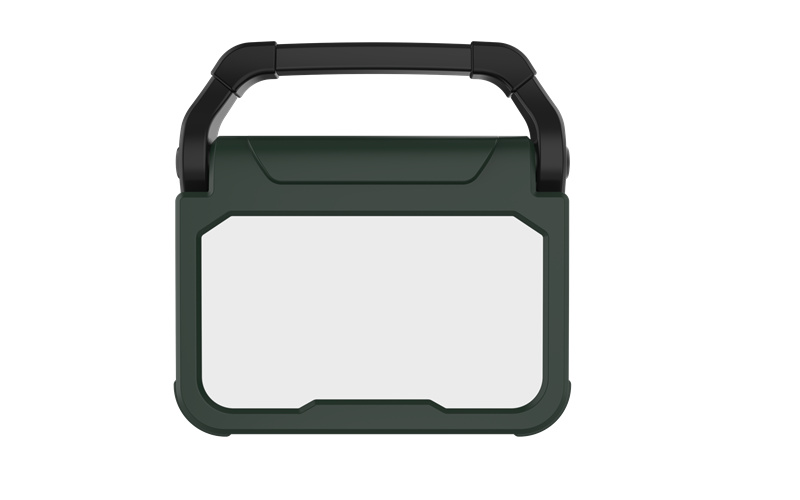
Commercial and construction applications rely on a high lumen work light (5,000 to 20,000+ lumens) for safe operation.
Higher lumens do not guarantee better visibility; beam angle, mounting height, and color temperature heavily influence real-world performance.
Buying the brightest possible fixture seems like a logical choice for outdoor security. We naturally assume more light equals better visibility. However, real-world implementation proves otherwise. Selecting excessive lumens often creates more problems than solutions. You must understand the practical risks before finalizing your purchase.
Buying excessively bright lights carries severe real-world consequences. Light trespass occurs when illumination spills beyond your property line. A massive 6,000-lumen fixture mounted improperly will easily blast harsh glare into a neighbor's bedroom window. This violates local light pollution ordinances in many municipalities. It also triggers inevitable neighbor disputes. Local authorities often require homeowners to remove or redirect non-compliant fixtures. Controlling your lumen count ensures you illuminate your yard without disrupting the entire neighborhood.
Homeowners often place ultra-bright fixtures right next to their surveillance cameras. They believe this helps the camera see better at night. In reality, excessive lumens cause severe glare. Modern security cameras use sensitive digital sensors. A blinding light placed too close forces the camera aperture to close rapidly. This washes out the image entirely. It blinds the camera's infrared night vision sensors rather than aiding them. You end up capturing a glowing white orb instead of an intruder's face. Proper camera integration requires balanced, moderate illumination.
Unnecessarily high-lumen fixtures draw significantly more power. They also generate substantial heat. LED chips require efficient thermal management to survive. A 10,000-lumen fixture demands a massive aluminum heat sink to prevent internal melting. This structural requirement increases the upfront unit cost. It also increases long-term operating costs through higher electricity consumption. Over-illuminating a small patio forces you to pay for commercial-grade thermal hardware you simply do not need. Precision sizing saves money and extends hardware lifespan.
Evaluating outdoor lighting requires authoritative benchmarks. You cannot use a one-size-fits-all approach. Every space has specific success criteria based on safety, navigation, and security goals. We have categorized the standard lumen ranges below to help you select the exact output for your project.
We use this lower range primarily for residential navigation. The main goal here involves safe movement without blinding your guests. A person walking up to your front door should see the steps clearly. They should not squint against a blinding beam.
Success Criteria: Safe navigation, facial recognition at close range, and welcoming ambient light.
Assumption: You will mount these fixtures below 10 feet. At this height, lower lumens provide plenty of ground-level visibility.
Medium-sized residential spaces require substantial illumination. You need enough light to see vehicles, identify wildlife, and support general recreational activities. A standard suburban driveway benefits heavily from this mid-tier range. It pushes enough light to the edges of the property line without causing severe light trespass.
Success Criteria: Illuminating parked vehicles clearly, spotting animals in the grass, and achieving general backyard visibility.
Assumption: You will mount these fixtures at the roof eaves, typically 10 to 15 feet off the ground.
Active security zones require intense, startling brightness. If someone enters a restricted perimeter, the light must overwhelm them visually. This range delivers excellent deterrence. It leaves no dark corners for anyone to hide in.
Success Criteria: Startling intruders immediately and clearly illuminating deep shadows for security systems. You should always pair fixtures in this range with passive infrared (PIR) motion sensors. Leaving 5,000 lumens on all night creates unnecessary energy waste.
Industrial applications operate on a completely different scale. Construction zones and commercial parking lots require daytime-level visibility. Safety regulations often dictate strict minimum illumination standards. Precision tasks require zero shadows.
Success Criteria: Achieving daylight-level visibility for worker safety and precision machinery operation.
Evaluation Note: When evaluating a High Lumen Work Light or a commercial parking lot fixture, you must prioritize industrial-grade thermal management. Look for broader beam angles. Wide angles prevent intense focal hotspots on the ground. Hotspots cause eye fatigue for workers.
Summary of Lumen Requirements by Application
Application Area | Recommended Lumens | Ideal Mounting Height | Primary Function |
|---|---|---|---|
Entryways & Patios | 700 – 1,500 | Under 10 feet | Navigation, welcoming guests |
Driveways & Backyards | 1,500 – 3,000 | 10 – 15 feet | Visibility, vehicle safety |
Security Perimeters | 3,000 – 5,000 | 15 – 20 feet | Active deterrence, CCTV support |
Commercial Job Sites | 5,000 – 20,000+ | 20+ feet | Industrial safety, daylight simulation |
Brightness alone does not determine how well you see. Many buyers install a high-lumen fixture only to find the coverage completely inadequate. Contextual factors deeply alter the math. You must account for mounting height, beam angle, and color temperature to predict real-world performance accurately.
Physics plays a crucial role in outdoor lighting. The Inverse Square Law states that as light travels away from its source, it spreads out and loses intensity rapidly. If you double your mounting height, the light spreads over a much larger area. However, it significantly reduces the perceived brightness at ground level.
For example, a 2,000-lumen fixture mounted at 8 feet looks incredibly bright on the ground directly below it. If you move that exact same fixture up to a 16-foot eave, the ground below will look quite dim. Higher mounts require exponentially higher lumens to push visible light all the way down to the surface.
How the fixture shapes the light matters just as much as the lumen count. A raw lumen measurement does not tell you where the light goes.
Narrow Beam (40° Angle): A 3,000-lumen light restricted to a narrow 40° angle acts like a spotlight. It pushes all 3,000 lumens into one small circle. This creates an intensely bright spot, leaving the surrounding yard completely dark.
Wide Beam (120° Angle): A 3,000-lumen light spread across a wide 120° angle behaves differently. It provides softer, broader coverage. It lights up the entire yard evenly but looks less intense in any single spot.
Choose a narrow angle for illuminating tall trees or specific architectural features. Choose a wide angle for illuminating driveways and lawns.
Color temperature changes how our eyes perceive brightness. We measure this in Kelvin (K). A 5000K (Daylight) fixture emits a crisp, bluish-white light. A 3000K (Warm White) fixture emits a soft, yellowish glow.
Here is the critical detail: 5000K appears "brighter" and more severe to the human eye than 3000K. This remains true even if both fixtures output exactly 2,000 lumens. If you want strong security deterrence, use 5000K. The harsh daylight color startles intruders effectively. If you want a relaxing patio atmosphere, use 3000K. The warmer tone feels inviting and reduces eye strain.
Decision-makers must look beyond basic visibility. Modern lighting requires technical compatibility with other systems. You must manage risk. Improper integration ruins security footage and invites legal penalties from local zoning boards.
You must carefully position your illumination sources relative to your cameras. Follow a strict rule: never point a light toward a camera lens. Mount your fixtures above or adjacent to the camera housing. Ensure the light pushes outward in the same direction the camera points. This bathes the target area in uniform light. It allows the camera sensor to capture crisp, full-color footage at night without struggling against glare.
Operating modes drastically affect your property's security profile and energy consumption.
Motion Sensors (PIR): High-lumen fixtures (3,000+ lumens) perform best on motion sensors. A sudden blast of 4,000 lumens maintains the element of surprise. It scares away trespassers instantly. Furthermore, keeping high-powered lights off until needed heavily reduces energy waste.
Dusk-to-Dawn (Photocell): Lower-lumen fixtures (1,500 lumens) suit continuous operation better. A subtle wash of light left on all night prevents accidental trips and falls. It provides consistent, gentle ambient security without bothering the neighbors.
Before buying industrial-grade hardware, verify your local regulations. Many residential zones strictly enforce dark-sky compliance laws.
Compliance Verification Checklist:
Check Homeowner Association (HOA) rules regarding maximum wattage or brightness limits.
Review municipal light trespass laws. Check if they require specialized shields to block upward light spillage.
Confirm permitted color temperatures. Some dark-sky communities ban any lighting above 3000K to protect nocturnal wildlife and stargazing visibility.
Do this before installing 5,000+ lumen fixtures in a standard residential neighborhood.
You now understand the variables. It is time to transition from specification to purchasing. Do not rely solely on the marketing text on the box. Use the following metrics to evaluate the true quality of your shortlisted products.
You must evaluate electrical efficiency. We measure this in lumens-per-watt (lm/W). Guide your purchasing logic toward modern, efficient LED technology. Look for fixtures offering at least 100 to 130 lumens per watt. If a product consumes 50 watts to produce only 3,000 lumens (60 lm/W), it uses outdated, cheap LED chips. High efficacy ensures maximum brightness while keeping operating costs low.
Outdoor fixtures face brutal weather conditions. Water intrusion destroys cheap electronics quickly. Establish a strict baseline requirement for weatherproofing. Do not accept anything lower than IP65 for exposed outdoor hardware. The "6" indicates total protection against dust. The "5" indicates protection against low-pressure water jets from any direction. Rain, snow, and sprinkler systems will not penetrate an IP65-rated housing.
Static, fixed-position lights severely limit your coverage options. Prioritize fixtures featuring adjustable dual or triple heads. Multi-head setups allow you to direct lumens exactly where you need them. You can point one head toward the driveway and another toward the side gate. This reduces the need to buy a single, massively overpowered fixture. You achieve better coverage using lower total lumens through targeted distribution.
Selecting the right outdoor illumination requires thoughtful calculation. Do not default to the highest lumen count available on the shelf. This leads to harsh glare, neighbor complaints, and washed-out security cameras.
Take actionable steps to finalize your setup. First, measure your intended mounting height. Second, match your lumen output precisely to your specific task. Choose 1,500 lumens for simple navigation, 3,000 lumens for standard backyards, or 5,000+ lumens for active commercial work. Finally, prioritize adjustable heads and IP65 weather resistance. By balancing these factors, you ensure long-term safety, electrical efficiency, and local compliance.
A: Modern LED fixtures typically offer an efficacy of 100 to 130 lumens per watt. Therefore, a 3,000-lumen LED light generally consumes between 25 and 30 watts of power. This is highly efficient compared to old halogen bulbs, which required roughly 150 to 200 watts to produce the exact same amount of visible light.
A: Yes, it easily can. A 5,000-lumen light is intensely bright. To prevent neighbor complaints and light trespass, you must angle the fixture downward. Direct the beam strictly within your property lines. Additionally, place fixtures of this brightness on motion sensors rather than leaving them illuminated all night.
A: We do not recommend this. A High Lumen Work Light is designed for temporary, portable, and extremely bright job site illumination. It lacks the hardwired safety integrations and continuous weather-sealing expected in a permanent residential fixture. Use dedicated, hardwired IP65 fixtures for permanent backyard installations.
A: A standard 50-foot driveway usually requires between 2,500 and 3,000 lumens. Mounting a fixture within this range at a 15-foot height equipped with a wide 120-degree beam angle will effectively push enough light to the end of the driveway. This allows you to identify vehicles and navigate safely at night.

