


Views: 0 Author: Site Editor Publish Time: 2026-08-30 Origin: Site


You are likely staring at a burned-out bulb or feeling the intense heat radiating off your outdated job site lighting. Relying on dangerously hot equipment creates unnecessary hazards on any project. Upgrading your gear requires clear, actionable information before you spend any money. To upgrade properly, you need to translate traditional halogen wattage into modern lumen metrics accurately.
Replacing an old fixture means understanding exactly how much light you truly need for a safe workspace. Accurate replacement purchasing ensures your team maintains optimal visibility without relying on blind guesswork. We will break down the true brightness of these legacy fixtures step by step. You will learn why matching traditional brightness requires looking closely beyond simple lumen equivalence.
Modern technology manages light direction and controls thermal heat far better than older alternatives. We will guide you through the exact specifications needed to transform your workspace effectively. You will discover how to evaluate directional beams, color temperatures, and structural durability. This knowledge guarantees you select the safest, most efficient illumination tool for your specific daily tasks.
The Baseline: A standard 500W halogen work light produces between 8,000 and 10,000 lumens (averaging 16–20 lumens per watt).
The LED Equivalent: To match this output, a replacement LED work light typically requires only 80W to 100W.
The Efficiency Gap: Halogen bulbs lose brightness over their short lifespan (approx. 2,000 hours) and waste over 90% of their energy as heat.
The Buying Reality: Due to the directional nature of LEDs, a 5,000 to 7,000-lumen LED fixture often provides the same usable illumination on a work surface as an omnidirectional 10,000-lumen halogen.
Quartz-halogen technology relies heavily on a super-heated tungsten filament. This intense heating process generates illumination at a standard efficacy of 16 to 20 lumens per watt. If you multiply 500 watts by this efficacy metric, you get a theoretical output ranging from 8,000 to 10,000 lumens. This mathematical range serves as your primary baseline when shopping for a reliable Work Light. However, raw mathematical calculations do not tell the whole story. You must understand how this light actually travels through the air. Older technology generates raw power but completely fails to control it efficiently. Testing labs measure this total output inside a perfect sphere. Real-world conditions demand much smarter light distribution to remain effective.
Standard Efficacy and Output Comparison
Lighting Technology | Power Draw (Watts) | Average Efficacy (lm/W) | Total Projected Lumens |
|---|---|---|---|
Traditional Halogen | 500W | 16 - 20 lm/W | 8,000 - 10,000 |
Modern Equivalent | 80W - 100W | 100 - 130 lm/W | 8,000 - 10,000 |
Halogen bulbs emit light uniformly in 360 degrees. Much of that massive 10,000-lumen output relies heavily on the fixture's internal metal reflector. This housing must capture backward-facing light and push it forward toward your task area. Unfortunately, these standard reflectors are highly inefficient by design. They degrade rapidly under intense operational heat and accumulate job site dust easily. You lose a massive percentage of actual illumination inside the housing before it even escapes the glass. The light scatters uselessly upward into the ceiling or sideways into empty space. Modern alternatives focus all generated energy precisely where you point the primary lens.
We must also evaluate the harsh reality of lumen depreciation over time. A 500W halogen drops in brightness significantly as the fragile filament ages. The surrounding glass tube often blackens from internal chemical reactions over several months. A bulb rated for "10,000 lumens" rarely delivers that peak brightness for its entire lifespan. You begin losing crucial visibility after just a few dozen hours of active use. You continually work in progressively dimmer conditions without noticing the gradual change. Workers often strain their eyes heavily without realizing the fixture has permanently lost twenty percent of its original output.
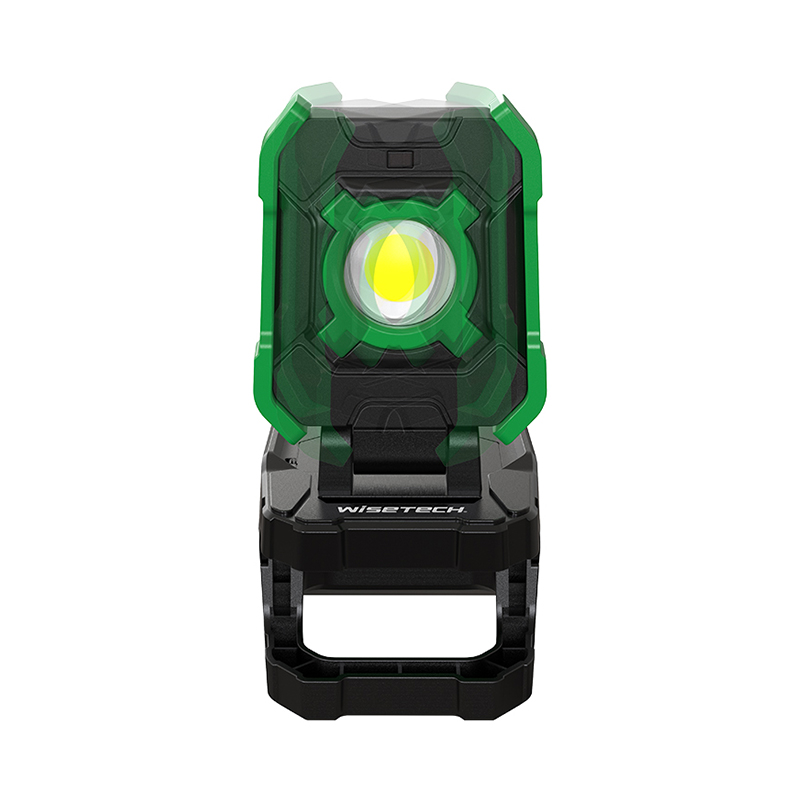
Older fixtures operate at extreme, inherently dangerous temperatures. The external bulb surface often exceeds 1,000°F during standard continuous operation. These units waste roughly 90% of their consumed energy entirely as thermal exhaust. This creates severe, instantaneous burn risks for anyone simply brushing past the metal stand. It also introduces serious fire hazards, especially in confined workspaces near combustible sawdust or plastic drop cloths. Finding a proper Halogen Work Light Replacement immediately solves this severe operational hazard. You instantly protect your team members and your physical job site from catastrophic accidents.
Let us compare the heavy electrical load placed on standard circuit breakers. Many contractors run dual-head 500W halogens on a single telescoping metal stand. This standard setup pulls a massive 1,000W total directly from the wall receptacle. Standard 15-amp job site circuits can quickly become overloaded under this strain. You risk tripping breakers constantly when running heavy power tools alongside these demanding lights. An upgraded equivalent draws only 100W for the exact same visual output. Your operational return on investment appears instantly through continuous, uninterrupted job site power. You stop wasting valuable production hours walking to the panel to reset overloaded breakers.
Job sites are inherently chaotic environments full of movement. You deal with accidental drops, heavy equipment bumps, and constant truck bed vibrations. Contrast the fragile tungsten filament against modern solid-state reliability. Traditional filaments snap incredibly easily under minor physical impacts. You constantly stop productive work to sweep up shattered glass tubes from the floor. Modern solid-state diodes eliminate this physical fragility entirely. They survive harsh transport in unpadded toolboxes and rough handling effortlessly. You gain peace of mind knowing your essential equipment will turn on dependably every single morning.
You must evaluate Lux rather than strictly chasing total raw lumens. Lux accurately measures the actual light density hitting a specific target surface area. A 6,000-lumen directional fixture often easily outperforms an 8,000-lumen halogen for specific task visibility. The flat diodes push all generated light directly forward into your immediate workspace. You achieve a brighter, significantly denser pool of light right where your hands are working. You waste absolutely zero energy illuminating the empty space directly behind the unit. This targeted approach dramatically improves visual clarity on intricate tasks.
Color temperature drastically impacts your daily job accuracy and eye comfort. We strongly recommend finding daylight equivalents ranging strictly between 4000K and 5000K. This specific range mimics mid-morning sunlight beautifully. It handles high-contrast tasks like painting, drywall finishing, or complex electrical wiring perfectly. You should intentionally avoid the muddy yellowish tint of older bulbs, which sit around 2700K to 3000K. You must also avoid overly harsh blue units rated at 6500K or higher. Those extreme blue spectrums cause intense eye strain and headaches during long shifts.
You must define your shortlisting logic based on actual daily use cases. Consider the following structural designs to maximize your daily efficiency:
Cordless/Battery Platform: Best for rapid punch-list work and inspections. They excel on early-stage construction sites completely lacking temporary grid power. You can move them rapidly between tight, restricted spaces without tripping over extension cords.
Tripod/Tower Fixtures: Best for massive full-room illumination during extended jobs. They cleanly replace classic dual-head halogen stands. They elevate the light source effectively to minimize awkward, dangerous floor shadows while you walk around.
Moisture and fine airborne debris quickly destroy unprotected electronics. You must ensure your selected unit is rated IP54 or theoretically higher. The first digit represents solid particle defense. A rating of 5 means it withstands heavy job site drywall dust effortlessly. The second digit represents liquid defense. A rating of 4 protects critical internal components from accidental splashing water or sudden rain showers. High IP ratings guarantee your vital equipment keeps functioning safely in unpredictable outdoor conditions.
Many users attempt to take a cheap, seemingly clever shortcut. We call this the bulb swap trap. You might feel heavily tempted to buy a simple drop-in replacement bulb for a legacy housing. It seems like a fast solution to completely bypass frustrating heat issues. However, placing new technology inside an outdated metallic shell creates a brand new set of critical failures. You inevitably waste effort trying to make incompatible hardware cooperate.
Enclosed legacy housings completely lack proper thermal heat sinks. They were originally built to simply radiate heat outward, not dissipate it through engineered fins. Modern units generate minimal forward heat, but their rear base gets exceptionally hot during operation. Retrofit bulbs placed inside enclosed housings trap this rear thermal energy completely. The diodes overheat rapidly inside the thick protective glass shield. They will fail prematurely, often burning out within just a few short weeks of moderate use.
Optical geometry dictates exactly how well you can see details. Traditional reflectors are engineered specifically for long, cylindrical glowing filaments. They expect the light source to bounce perfectly off deeply curved metal surfaces. Flat solid-state diodes project beams completely differently. Putting a flat directional source inside a curved bowl results in severe optical glare. You create terrible, scattered beam patterns filled with harsh hot spots and dark, useless shadows. This misalignment completely defeats the purpose of upgrading.
We strictly recommend purchasing a complete, factory-integrated fixture. Attempting to clumsily retrofit a legacy housing wastes precious time and creates exceptionally poor visibility. Integrated units perfectly pair the aluminum heat sink, the diode plate, and the protective outer lens. They function reliably as one cohesive optical system. You gain truly optimal performance simply by retiring the old metal housing permanently. The structural upgrades alone justify leaving the legacy hardware behind.
You now understand the metrics necessary to upgrade your site illumination safely. Making the switch removes dangerous hazards and greatly improves daily productivity. Keep these actionable next steps in mind as you move forward:
Recognize the vital baseline conversion metric. Remember that 500 watts equals 8,000 to 10,000 raw lumens, but a focused 6,000-8,000 lumen modern unit is the ideal practical replacement.
Treat your immediate upgrade as a functional leap in workplace safety. You instantly eliminate severe 1,000°F burn hazards and drastically reduce overloaded electrical circuits.
Select your specific form factor based entirely on your exact daily operational tasks. Choose modular battery platforms for high mobility or telescoping towers for total room coverage.
Stop constantly replacing highly fragile glass filaments. Invest in modern solid-state reliability to ensure your entire team always has clear, dependable illumination exactly when they need it.
A: Technically yes, if the base matches standard socket types like T3 or RSC. However, it is highly discouraged. Legacy halogen housings completely lack the necessary heat sinks to cool modern bases properly. This causes rapid, damaging overheating. Additionally, the outdated metal reflectors create poor light projection and terrible beam patterns when incorrectly paired with flat directional diodes.
A: A modern unit producing this specific output typically draws between 80W and 100W. The exact power draw depends heavily on the specific diode efficiency rating. Most high-quality integrated fixtures consistently average between 100 and 130 lumens per watt. This offers massive, immediate efficiency gains over traditional, heat-heavy lighting methods.
A: Yes. While halogens may technically boast higher raw initial lumens on paper, they scatter that light inefficiently in 360 degrees. Modern alternatives provide focused, highly directional brightness. This appears significantly clearer and far more intense on the actual target work surface. You also maintain continuous brightness without experiencing the rapid degradation seen in older filaments.

