


Views: 0 Author: Site Editor Publish Time: 2026-08-30 Origin: Site


Commercial and industrial properties are rapidly abandoning old lighting technology for high-efficiency LED alternatives. This massive shift completely transforms how we measure and expect brightness on site.
Facilities and project managers must ensure perfect safety, strict compliance, and excellent visibility when replacing legacy fixtures. You need precise light output data to guarantee adequate illumination across expansive areas. Guessing brightness based on energy consumption alone often leads to dangerous dark spots or severe over-illumination.
We will explore the definitive metric for evaluating modern fixtures: lumens rather than wattage. You will learn the exact lumen output you can expect from a standard 150-watt unit. We will also examine equivalency standards and show you how to size your lighting accurately.
Average Output: A modern 150W LED flood light produces between 19,500 and 22,000 lumens (averaging 130–150 lumens per watt).
Legacy Equivalency: Directly replaces 400W Metal Halide (HID) or High-Pressure Sodium fixtures, cutting energy use by over 60%.
Coverage Rule of Thumb: At a standard 20-foot mounting height, a 150W LED fixture typically covers a 50x50 foot area at commercial brightness levels.
Evaluation Priority: Purchasing decisions should prioritize DLC certification, IP65+ weather ratings, and photometrics over raw stated wattage.
Industry professionals no longer evaluate fixtures based on their power draw. They look at luminous efficacy. Efficacy measures how efficiently a fixture converts electrical watts into visible light. Today, the standard commercial LED benchmark sits between 130 and 150 lumens per watt. This provides a very clear mathematical baseline for expectations.
We can determine a transparent output range using basic arithmetic. At the lower end of commercial efficiency, a unit yielding 130 lumens per watt generates 19,500 total lumens (150W x 130 lm/W). At the higher end, a premium fixture producing 150 lumens per watt delivers 22,500 lumens. When you evaluate a modern Flood Light, expect an average delivery around 20,000 lumens.
Several hardware variables dictate the exact final output. Lens quality directly impacts light transmission. Cheap polycarbonate lenses can block or scatter usable light. Diode tiers also matter immensely. Top-tier LED chips produce more light and less heat. Furthermore, robust thermal management preserves brightness. Aluminum heat sinks draw damaging heat away from the diodes. Cool diodes operate efficiently and maintain high lumen output for years.
Legacy lighting technologies highlight why wattage remains a fundamentally flawed metric for brightness. An old halogen bulb wastes enormous amounts of energy as heat. A 150-watt halogen bulb might only produce 3,000 lumens. An incandescent bulb performs even worse. LEDs flip this script entirely. They convert electrical energy almost exclusively into visible light. This makes power consumption a poor indicator of ground-level illumination.
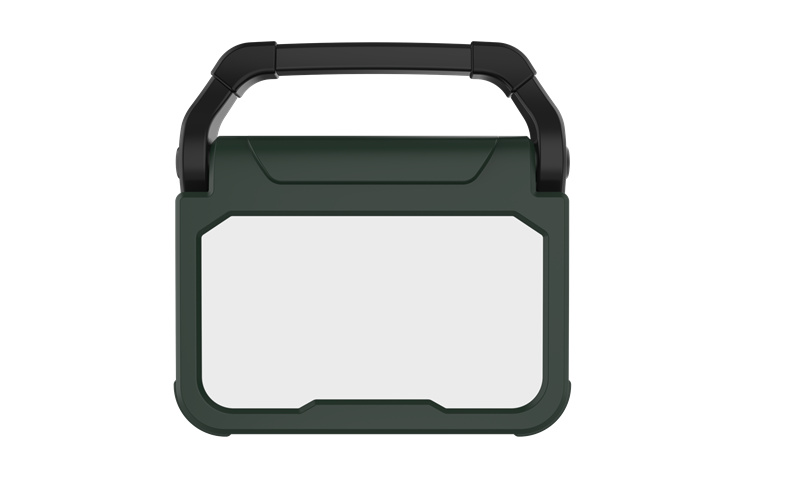
Facility managers frequently upgrade old lighting systems to improve safety and cut utility bills. The most common retrofit scenario involves replacing outdated parking lot and building perimeter lights. Historically, these areas relied heavily on 400-watt Metal Halide or High-Pressure Sodium fixtures. A modern 150-watt LED serves as the exact direct replacement for these 400-watt legacy units.
We must examine lumen depreciation to understand why a 150-watt LED replaces a 400-watt HID. A brand-new 400-watt Metal Halide might boast an initial output of 35,000 lumens. However, this number drops rapidly. Metal Halide lamps often lose 30% to 40% of their brightness within the first 12 months. After two years, they produce a dim, off-color glow. Conversely, premium LEDs maintain steady brightness. They typically experience less than 10% lumen degradation over a decade.
The return on investment (ROI) equation heavily favors the LED upgrade. First, you reduce energy consumption by over 60% per fixture. Second, you dramatically cut routine maintenance costs. You no longer need to rent a bucket truck every two years for bulb changes. Finally, modern LEDs operate without separate ballasts. This eliminates a common point of mechanical failure.
Buyers must exercise caution during procurement. Do not purchase fixtures based solely on "400W equivalent" marketing claims. Manufacturers often use this term loosely. Always locate the actual spec sheet. Verify the delivered lumens. You need verifiable proof of a 19,000+ lumen output to safely replace a 400W HID unit. Trusting vague equivalent claims can leave your facility dangerously underlit.
LED vs. Metal Halide Performance Comparison
Performance Metric | 150W LED Fixture | 400W Metal Halide Fixture |
|---|---|---|
Initial Lumen Output | 19,500 - 22,500 lumens | ~35,000 lumens |
Actual Power Draw (System) | 150 Watts | ~455 Watts (Including Ballast) |
Lumen Maintenance (Year 2) | ~95% retained | ~60% retained |
Warm-up Time | Instant On | 10 to 15 Minutes |
Understanding raw lumen output solves only half the problem. You must also translate those 20,000+ lumens into practical ground-level visibility. Industry experts use foot-candles to measure light striking a specific surface. One foot-candle equals one lumen per square foot. Commercial parking lots typically require 1 to 2 foot-candles of illumination. High-security zones might demand 5 foot-candles or more.
Mounting height dramatically impacts ground-level foot-candles. The sweet spot for a 150-watt fixture falls between 15 and 25 feet. At 20 feet, a 150-watt LED easily covers a 50 by 50-foot zone. Mounting the fixture higher scatters the light over a broader footprint. However, higher elevations reduce direct intensity. Lower mounting heights create intensely bright hotspots directly below the pole.
Beam angle serves as the next critical variable. Fixtures utilize specialized optics to direct light exactly where needed. Narrow-beam spot optics focus intense light on distant architectural features or flags. Wide-beam optics push light outward horizontally. Wide beams work perfectly for open perimeters, driveways, and expansive lots. You must match the optic distribution pattern to your specific ground layout.
Sometimes you need massive illumination without permanent pole installation. If you manage a temporary construction site, you require flexibility. In these demanding scenarios, teams rely on a High Lumen LED Work Light. These portable units utilize heavy-duty tripods or durable base stands. They deliver the same 20,000-lumen output as a commercial wall pack but can move safely alongside your changing work zones.
Choosing the right fixture requires a structured evaluation process. You cannot rely on price alone. Cheap units often fail prematurely in harsh outdoor environments. Use the following decision framework to shortlist reliable manufacturers and models for your facility.
Color Temperature (CCT): Select the proper light appearance. We strongly recommend 5000K (Cool White) for commercial environments. The 5000K spectrum closely mimics crisp daylight. It provides high contrast, making it ideal for security cameras and industrial task visibility. A 4000K option offers a slightly warmer tone, suitable for softer architectural highlights.
Durability and Ingress Protection: Outdoor environments destroy poorly sealed electronics. Demand an IP65 or IP66 rating at minimum. IP65 ensures complete protection against dust and low-pressure water jets. IP66 protects against heavy seas or powerful rainstorms. Always verify a UL or cUL listing to guarantee electrical safety compliance.
Rebate Eligibility and Certification: Maximize your project budget. Check for the DesignLights Consortium (DLC) Premium logo on the spec sheet. Utility companies rely heavily on DLC lists to approve cash rebates. Furthermore, DLC certification acts as an independent audit. It proves the manufacturer’s lumen-per-watt claims are accurate and tested.
Housing and Material Quality: Examine the physical build. Look for die-cast aluminum housings. Avoid cheap plastic bodies. Aluminum resists corrosion and actively dissipates internal heat. Inspect the lens material as well. UV-stabilized polycarbonate or tempered glass prevents yellowing over time.
Upgrading to high-output LEDs seems straightforward. Yet many facility managers encounter frustrating setbacks during rollout. Understanding common implementation failures ensures a smooth transition and prevents costly electrical rework.
Voltage Compatibility Issues: Never assume voltage requirements. Many commercial and industrial properties run on 277V circuits. Standard residential fixtures only support 120V. Wiring a 120V fixture into a 277V line instantly destroys the unit. Always purchase commercial LED models featuring auto-sensing 100-277V universal drivers.
Mounting Hardware Mismatches: Old lighting poles utilize different bracket styles. Ordering the wrong mount halts installation entirely. A slip-fitter mount slides over a round tenon and offers adjustable tilting. A trunnion mount attaches to flat surfaces like walls or square poles. Yoke mounts function similarly but typically secure smaller fixtures. Physically audit your existing poles before ordering replacements.
Glare and Light Trespass: A 20,000-lumen light easily blinds passing drivers. It can also annoy adjacent residential neighbors. Address light trespass proactively. Review the Backlight, Uplight, and Glare (BUG) rating on the spec sheet. Opt for low-glare lenses or install attachable glare shields to block unwanted light spill.
Bypassing Old Ballasts: Retrofitting existing fixtures requires care. LEDs do not use HID ballasts. Your electrician must physically bypass or remove the old ballast entirely. Wiring an LED directly into an active metal halide ballast causes immediate failure and voids warranties.
Transitioning to modern illumination significantly improves site safety and slashes energy expenses. The core benchmark remains consistent: you should expect approximately 20,000 reliable lumens from a quality 150-watt LED fixture. This output directly and safely replaces old 400-watt metal halide systems.
Successful procurement demands more than just finding the cheapest 150-watt option online. You must match the beam angle to your layout. You must optimize your mounting height for even distribution. Most importantly, you must demand verified efficacy through independent certifications.
Take action before making a bulk purchase. Review your site's photometric plans. Audit your existing pole mounts to guarantee hardware compatibility. Finally, request DLC-certified spec sheets from your preferred suppliers. This diligent approach guarantees perfect visibility and long-term durability for your project.
A: A 150W LED covers roughly 2,500 to 3,000 square feet. This area varies slightly depending on mounting height and required foot-candles. A 20-foot pole height provides optimal, even commercial coverage for this wattage.
A: Yes, significantly brighter. A 500W halogen bulb produces roughly 10,000 total lumens. A modern 150W LED produces around 20,000 lumens. The LED delivers double the brightness while consuming a fraction of the electrical power.
A: Mounting at 15 to 25 feet serves as the standard range. This elevation provides excellent light distribution across wide areas. It limits blinding ground-level glare while preventing the light from dispersing too thinly across the property.
A: Select 5000K for high-acuity work zones, parking lots, and security areas. It offers crisp, daylight-like contrast. Choose 4000K for general exterior lighting where you prefer a slightly warmer, less clinical aesthetic tone.

