


Views: 0 Author: Site Editor Publish Time: 2026-09-01 Origin: Site


A standard 500W halogen bulb produces between 8,000 and 10,000 lumens. This massive brightness made it the default illumination tool on job sites for decades. However, professionals now recognize major drawbacks inherent to this older technology. Halogen work lights are historically standard but suffer from high heat generation, fragility, and power inefficiency. They turn job sites into fire hazards while consuming excessive electricity that frequently trips breakers.
Most users asking this question are actually sizing an LED alternative. Transitioning to newer technology requires more than just guessing numbers. You must understand how to evaluate a modern work light upgrade based on accurate lumen-to-watt conversions. In this guide, we will break down the fundamental differences between total output and usable light. You will learn practical lighting metrics, essential safety standards, and how to select the correct replacement fixture for your specific site requirements.
Baseline Brightness: A traditional 500W halogen emits ~8,000 to 10,000 lumens, operating at an efficacy of 16–20 lumens per watt.
The LED Equivalent: To match this output, a modern LED work light requires only 70W to 100W of power.
Safety & Efficiency: Upgrading eliminates the severe burn/fire hazards of halogen bulbs (which can reach over 1,000°F) and reduces power draw by 80%.
Directional Advantage: Because LEDs are directional, a 6,000-lumen LED often provides higher workable illumination (lux) on a target area than a 10,000-lumen omnidirectional halogen.
To accurately gauge your lighting needs, we must first examine luminous efficacy. This metric measures how well a light source converts electrical power into visible light. Industry standards for halogen technology typically hover between 16 and 20 lumens per watt (lm/W). When you apply this math to a 500W fixture, the theoretical output peaks at 10,000 lumens. While this sounds impressive on paper, practical application tells a different story.
Traditional halogen bulbs emit light in 360 degrees. This creates a severe omnidirectional light loss. Manufacturers install reflectors behind the bulb to push light forward. However, these metal shields are rarely perfectly efficient. Dust, dirt, and oxidation quickly degrade their reflective properties. Even with a high-quality reflector inside the housing, 30% to 40% of the theoretical lumen output is lost. It becomes trapped inside the fixture as wasted light and extreme heat.
Furthermore, halogen performance degrades over time. The tungsten filament physically burns away during operation. As it thins out, its light output drops significantly compared to its first day of use. Solid-state lighting does not suffer from this rapid drop-off, maintaining a much more consistent brightness over its lifespan.
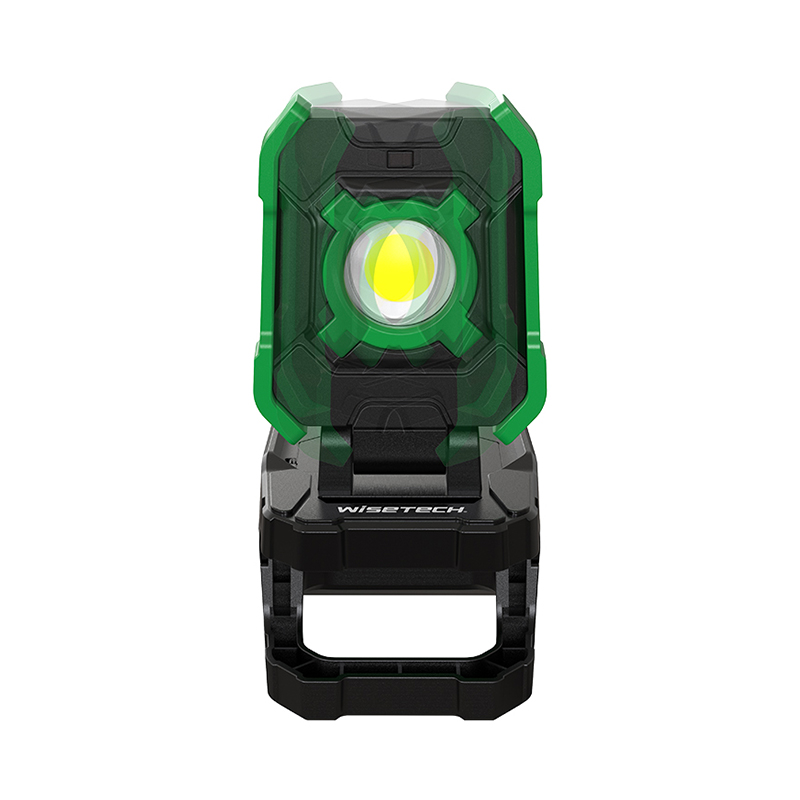
We must break the prevailing wattage myth. For generations, workers equated watts directly with brightness. Clarify this in your mind: watts measure energy consumption, not illumination. When upgrading to newer technology, relying on wattage will leave you wildly off target.
Lumens measure the total volume of visible light emitted by a source. If you think of lighting like plumbing, lumens represent the total gallons of water flowing out of a pipe. However, knowing the total volume does not tell you how effectively it reaches your actual workspace.
This is where lux becomes the critical metric. Lux measures usable light, specifically calculated as lumens per square meter. It tells you how much illumination actually hits your wall, floor, or workbench.
Consider a practical job site scenario. A 500W halogen might output 10,000 total lumens, but it scatters them everywhere. Conversely, a highly directional 80W LED pushing 8,500 lumens focuses its beam strictly where you point it. Because the LED wastes virtually no light backward, it will often yield a higher lux measurement on a target area. Your actual workspace feels visibly brighter despite the lower total lumen rating.
Primary Lighting Metrics Explained
Metric | Definition | Practical Impact on Job Site |
|---|---|---|
Watt (W) | Measurement of electrical power consumption. | Dictates how many units you can run on a single circuit breaker without tripping it. |
Lumen (lm) | Total quantity of visible light emitted. | Provides the baseline brightness rating of the fixture before considering optics. |
Lux (lx) | Lumens spread over a square meter of surface. | Determines the actual visibility and brightness on your hands, tools, and materials. |
Finding the right replacement requires simple conversion math. Modern LED fixtures typically operate at an efficacy of 100 to 130 lumens per watt. To match a legacy 10,000-lumen halogen, you only need an LED drawing between 70W and 100W. This reliable evaluation framework allows you to size your equipment confidently without under-lighting your space.
Next, you must match the form factor to your work style. Manufacturers offer several standard replacement styles designed for different tasks.
Tripod Stands: Ideal for large, open rooms where you need elevated, wide-angle illumination.
Dual-Head Units: Perfect for intersecting hallways or casting light across two different workstations simultaneously.
Portable Floor Sleds: Best for low-angle lighting, painting, and automotive undercarriage work.
We must address a common DIY implementation warning: the retrofit risk. Do not attempt to put aftermarket LED bulbs into enclosed 500W halogen housings. This is a severe safety hazard. Halogen housings are designed to withstand high heat but not to dissipate it efficiently from electronic components. LEDs require proper thermal management. Their diodes and drivers will quickly bake inside a sealed glass and metal box, leading to premature failure. Upgrading to a complete, dedicated Halogen Work Light Replacement is the only standard practice for ensuring reliability and safety.
When selecting a modern fixture, lumens and watts only tell part of the story. You must evaluate several other technical criteria to ensure the unit performs adequately in rugged environments.
Color Temperature (CCT): We strongly recommend aiming for 4000K to 5000K. This range provides accurate color rendering. It is crucial for matching paint, identifying electrical wire colors, and finishing drywall. Avoid units pushing 6000K or higher, as they emit a harsh blue glare that causes severe eye strain over long shifts.
Durability and Ingress Protection: Job sites are hostile environments. Set strict standards for your equipment. Look for a minimum IP65 rating to guarantee resistance against heavy dust and splashing water. Additionally, prioritize cast aluminum housings over thin plastics to ensure proper drop protection.
Thermal Management: Efficient LEDs still generate heat at the circuit board level. You must evaluate the heat sink design. Look for thick, finned aluminum backs. Proper heat dissipation prevents the diodes from degrading, thereby maintaining both maximum lumen output and expected lifespan.
Power Source Scalability: Determine your mobility requirements. Corded AC units provide continuous, uninterrupted high-lumen output for large projects. Hybrid or battery-operated units offer incredible portability for punch-list work but usually cap their output at 3,000 to 5,000 lumens to preserve battery life.
Taking the time to verify these four criteria ensures you invest in a reliable Work Light that will survive daily professional use.
Beyond brightness, modernizing your job site illumination fundamentally shifts your operational efficiency. Consider energy consumption models on a standard construction project. Running two traditional 500W halogens draws a continuous 1,000 watts. This massive load occupies almost half the capacity of a standard 15-amp circuit. If you plug in a heavy power tool, you trip the breaker. Replacing them with two 100W LEDs drops your lighting load to just 200 watts. You free up critical electrical capacity for tools, compressors, and heaters.
Bulb replacement frequency also dictates job site efficiency. Halogen bulbs rely on fragile tungsten filaments. Standard job site vibrations, accidental tip-overs, or even a slight bump can snap a hot filament instantly. Their theoretical 1,000 to 2,000-hour lifespan is rarely achieved in reality. By contrast, an integrated LED board consists of solid-state technology. It easily withstands drops and shocks while delivering a 50,000+ hour lifespan.
Finally, we must highlight OSHA safety and compliance considerations. A 500W halogen bulb turns 80% of its energy directly into infrared heat. The protective grill and glass face frequently reach temperatures exceeding 1,000°F. This creates immediate, severe burn hazards for anyone brushing against the unit. It also presents a massive fire risk when positioned near flammable materials like sawdust, plastic sheeting, or chemical solvents. Upgrading to solid-state fixtures eliminates these liabilities entirely, keeping the housing merely warm to the touch and your crew safe.
To directly answer the core question, a traditional 500W halogen bulb produces approximately 8,000 to 10,000 lumens. However, because they scatter light omnidirectionally and waste significant energy as heat, their practical performance on a job site is far less impressive. You do not need a 10,000-lumen LED to match your old fixture's visible brightness.
Your shortlisting logic should remain straightforward. Choose a dedicated 70W to 100W LED unit to replace a legacy 500W halogen effectively. Ensure the new fixture features an IP65 rating for durability, a finned aluminum heat sink for longevity, and a 5000K color temperature for crisp, accurate task visibility.
Before purchasing your replacement, physically measure the actual square footage of your primary workspace. Match the lux requirements of your specific tasks against the directional output of the new fixture. Upgrading your lighting improves safety, reduces tripped breakers, and makes precise detail work significantly easier.
A: We strongly advise against this. Halogen fixtures lack the thermal management required by LEDs. Enclosing an aftermarket LED bulb in a sealed halogen housing traps heat around the electronic driver, causing it to fail rapidly. A full-fixture replacement is the safer, standard practice.
A: LED fixtures emit directional light, focusing all their output directly onto your target area. Halogens emit omnidirectional light in 360 degrees. Due to poor reflector efficiency and light scatter, much of the halogen's theoretical output is wasted, making the focused LED appear much brighter.
A: Halogens traditionally produce a very warm, yellowish light around 3000K. However, most professionals prefer not to match this. Upgrading to a 4000K or 5000K color temperature is highly recommended, as it provides a crisp, neutral white light that vastly improves detail visibility.
A: While the aluminum heat sinks on the back of the fixture will get warm to the touch, they do not emit the dangerous radiant infrared heat of halogens. This entirely eliminates the severe burn liabilities and fire hazards associated with older job site lighting.

