


Views: 0 Author: Site Editor Publish Time: 2026-08-26 Origin: Site


Buying an outdoor fixture based on guesswork usually results in two frustrating outcomes. You might end up with a dim yard full of dangerous security blind spots. Alternatively, you might buy an overpowered fixture that aggressively blinds neighbors and completely washes out security camera footage. Traditional wattage remains an obsolete metric for modern LEDs. Today, buyers must evaluate fixtures based entirely on lumen output, which measures total light volume. You must balance this output against specific environmental variables like mounting height and your target area size. We will provide an evidence-based framework to calculate the exact lumen range you need. You will learn to size fixtures for residential, commercial, and temporary outdoor lighting projects accurately. This guide ensures you achieve perfect visibility without over-specifying or overpaying for unnecessary brightness. Proper planning eliminates the guesswork and guarantees excellent nighttime illumination.
Entryways & Pathways: 500–1,500 lumens are sufficient for safe navigation without causing glare.
Driveways & Backyards: 1,500–3,000 lumens provide robust residential security and visibility.
Commercial & High-Mount Areas: 5,000–10,000+ lumens are required to maintain ground-level visibility from high elevations.
Variables Matter: Total lumens are useless without factoring in beam angle, mounting height, and color temperature (CCT).
Risk Mitigation: Over-illuminating causes "light trespass" (neighbor disputes) and violates Dark Sky compliance standards in many municipalities.
Lumens measure visible light output. Watts measure energy consumption. Decades ago, consumers judged brightness by checking the wattage on a halogen bulb. Now, this old approach fails completely. Modern LED technology successfully separated power draw from light generation. You must look at the lumens to understand actual brightness. This shift confuses many first-time buyers. They often buy fixtures based on power consumption rather than visible output. You need to focus strictly on the total volume of light produced.
The efficiency of LED chips varies wildly across different brands. We call this the lumens-per-watt ratio. Two different LED fixtures might both consume exactly 30 watts of power. However, they can output drastically different lumen counts. A lower-quality chip might produce 80 lumens per watt. A high-end commercial chip might produce 150 lumens per watt. The second fixture generates almost twice the brightness while using the exact same energy. You cannot rely on wattage to estimate performance anymore.
Many buyers fall for the fallacy regarding extreme brightness. They assume brighter is always better. Over-illumination creates severe optical glare. This intense glare forces human eyes to squint, reducing overall visibility. Furthermore, excessive lumens wash out night-vision security cameras entirely. They also create harsh, deep shadows along the perimeter of your property. Intruders can easily hide inside these dark pockets. You need the correct amount of light, not the maximum amount of light.
Sizing your lighting correctly depends entirely on your specific application zone. Different areas require distinct visibility levels to function safely. A narrow pathway needs far less light than a wide commercial lot. Let us explore the recommended ranges for common outdoor spaces.
Focus strictly on safety and localized visibility here. Homeowners typically implement wall-mounted sconces or low-level directional fixtures for these zones. You want enough light to unlock a door safely. You do not want to blind guests as they approach your porch. Keeping the lumen count low ensures a welcoming, safe entrance. It highlights walkway steps without creating overwhelming glare.
Focus directly on intrusion deterrence. You also need clear facial recognition for your security cameras. We recommend installing twin-head motion-sensor fixtures at your eaves. Keep them mounted around eight to ten feet high. This lumen range casts a wide, bright net over parked cars. It startles potential trespassers effectively. The motion sensor ensures the intense light only activates during a genuine event.
Focus on broad area illumination. You must illuminate the space without ruining the ambient evening environment. Implement wide-beam fixtures here. We highly recommend dimmable or selectable-lumen models. They let you control intensity based on your immediate needs. Entertaining guests requires soft, gentle light. Securing the yard late at night requires bright, penetrating light. Dimmable units offer perfect versatility.
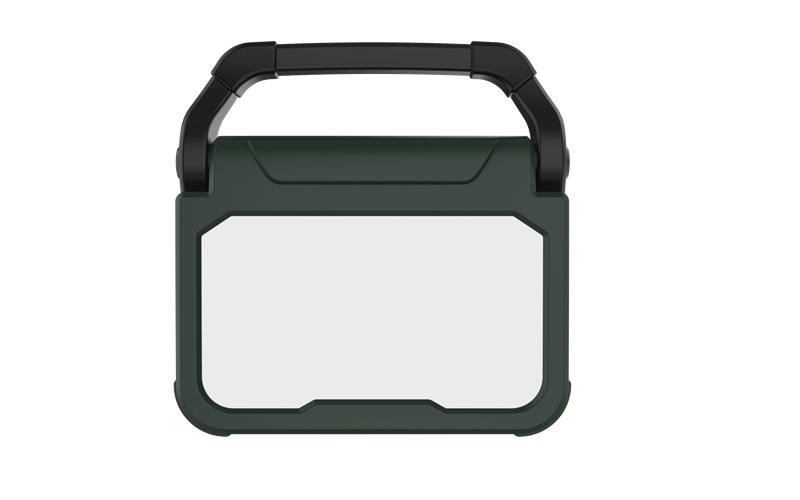
Focus entirely on high-intensity, portable illumination. Workers need extremely safe conditions during night operations. Do not permanently install oversized residential fixtures for short-term jobs. Instead, utilize a dedicated Outdoor LED Work Light. These rugged units feature heavy-duty stands and wide dispersion angles. They deliver intense brightness exactly where you need it. You can move them easily as the project evolves.
Focus on meeting commercial safety regulations. Many municipalities mandate strict foot-candle minimums for public spaces. Implement high-mast installations for these expansive areas. They require specialized photometric planning to guarantee even ground coverage. Engineers carefully map these massive lumen outputs. This prevents dark spots between light poles and ensures customer safety.
Zone | Recommended Lumens | Primary Goal |
|---|---|---|
Doors & Pathways | 500 - 1,500 | Safe navigation, inviting ambiance |
Driveways | 1,500 - 3,000 | Camera visibility, active deterrence |
Backyards | 2,000 - 4,000 | Broad coverage, flexible usage |
Application Type | Typical Range | Hardware Strategy |
|---|---|---|
Temporary Construction | 3,000 - 10,000 Lumens | Portable stands, rugged casing, wide spread |
Commercial Lots | 10,000 - 20,000+ Lumens | High-mast poles, fixed photometric planning |
Total lumen output only tells part of the story. Other technical factors drastically alter how bright a fixture actually appears to human eyes. You must evaluate these elements to make a truly informed choice. Ignoring these variables guarantees poor lighting results.
Physics dictates how light travels through space. Doubling the mounting height requires significantly more lumens. You need this massive increase to achieve the same brightness at ground level. A 2,000-lumen fixture looks incredibly bright mounted at eight feet. Move it up to sixteen feet, and the ground below looks surprisingly dim. The light spreads out and loses intensity as it travels downward. Always factor in your specific eaves height before selecting a lumen rating.
The beam angle determines how light disperses from the lens. Consider a 3,000-lumen fixture featuring a 120-degree beam angle. It provides soft, wide coverage over a large area. This setup is ideal for backyards. Now, imagine a 3,000-lumen fixture utilizing a tight 40-degree beam angle. It acts as a highly concentrated spotlight. It pushes intense light over much longer distances. Same total lumens, entirely different visual results. Match the angle to your target space.
Light color dramatically changes human visual perception. Warm White (3000K) appears visually softer and more yellow. Because of this softening effect, it requires slightly more lumens to achieve the same perceived brightness. Daylight or Security White (5000K) appears sharper, bluer, and much more intense. Homeowners commonly pair 5000K temperatures alongside high-lumen security fixtures. This specific combination maximizes visual contrast. It deters intruders effectively by eliminating shadows sharply.
Installing high-powered fixtures carries specific environmental risks. You must respect neighborly boundaries and local lighting regulations. Ignoring these rules often leads to fines or angry disputes.
This phenomenon occurs when light spills beyond your property lines. It carries both legal and neighborly risks. Shining a massive Flood Light directly into a neighbor's bedroom window invites immediate disputes. You must mitigate this risk proactively. Use adjustable heads, external glare shields, and precise lumen targeting. Keep your illumination strictly within your own property bounds. Test your angles at night to confirm the cutoff points.
Many local ordinances restrict "up-light" pollution. The International Dark-Sky Association (IDA) sets strict standards for outdoor fixtures. They aim to reduce skyglow worldwide. Emphasize evaluating models featuring fully shielded designs. These specialized designs direct all lumens strictly downward. This responsible practice protects nocturnal ecosystems. It also preserves local stargazing views. Check your municipal code, as many cities now legally mandate Dark Sky compliant fixtures.
High-lumen fixtures can actively sabotage your home security system. Placing intense lights too close to infrared (IR) cameras causes immediate visual problems. It triggers severe lens flare. It completely blinds the sensitive camera sensor, turning your footage completely white. Always maintain proper physical separation between your lights and your camera lenses. Position the light source higher than the camera, pointing away from the lens entirely.
Choosing the perfect fixture does not have to feel overwhelming. Follow this structured process to finalize your lighting decision accurately.
Step 1: Define the Objective. Decide what you actually need. Are you aiming for general backyard ambiance? Do you need active work illumination? Are you seeking high-security deterrence? Your primary objective dictates your required lumen range immediately.
Step 2: Measure the Target Area. Estimate your total square footage accurately. This measurement helps determine your layout. Often, installing multiple low-lumen fixtures works much better. They provide more even, balanced coverage than a single high-lumen fixture mounted in the center.
Step 3: Select the Control Mechanism. Evaluate if you need continuous output all night long. Alternatively, consider a motion-activated (PIR) sensor. Motion sensors allow you to deploy higher lumens only when necessary. This smart approach saves energy and greatly reduces neighborhood light pollution.
Step 4: Verify Hardware Longevity. Check the IP65 or IP67 waterproof ratings carefully. Inspect the internal heat-sink capabilities. High-lumen LEDs generate substantial internal heat during operation. This heat quickly degrades the LED chip if the housing breathes poorly. Good thermal management ensures a remarkably long operational life.
Selecting the proper lighting requires careful balance and planning. You must weigh total lumen output against beam angle, mounting height, and specific area needs. A one-size-fits-all approach simply does not work for outdoor environments. High lumens solve some problems but create new ones if deployed incorrectly.
We strongly advise buyers to prioritize multi-fixture coverage. Spreading the light out yields better results. If you feel uncertain about exact numbers, choose selectable-lumen models. This incredible flexibility helps you avoid the severe pitfalls of glaring over-illumination. You can adjust the brightness up or down after installation.
Evaluate your specific square footage against our recommended ranges right now. Do this before you start reviewing manufacturer spec sheets. Map out your property zones carefully. Smart planning guarantees you get the exact visibility you need. Take control of your outdoor space tonight.
A: Yes, usually. It creates severe glare unless mounted very high (15+ feet) or used in a massive, deep lot.
A: Roughly 1,000 to 1,500 lumens, achieved by a 10W–15W LED.
A: Not recommended long-term. An outdoor LED work light is optimized for portability and immediate task lighting, often lacking the specific motion sensors and aesthetic shielding desired for permanent residential security.
A: Lumens measure the total visible light emitted directly from the source. Foot-candles measure the actual amount of light hitting a specific surface area. While lumens tell you how powerful the fixture is, foot-candles tell you how bright the ground will actually look.

