


Views: 0 Author: Site Editor Publish Time: 2026-08-28 Origin: Site


Have you ever stared at a wall of tool specifications and felt completely overwhelmed? Manufacturers constantly push higher lumen counts in their marketing materials. This rapid escalation leaves many buyers confused about how much brightness they actually need. Purchasing a portable fixture with too few lumens leaves your workspace unsafe. Shadows hide details and increase the risk of injury. Conversely, chasing excessive lumens creates blinding glare in tight spaces. It drains battery power unnecessarily and wastes your equipment budget on unused capacity.
We built this evidence-based framework to help you navigate these choices. You will learn to match lighting output directly to your specific job site or garage realities. We want you to move past pure marketing metrics. By the end of this guide, you will understand how to focus on usable, functional illumination. You will be able to select the exact brightness level required for your environment safely and effectively.
Task-Based Sizing: 3,000 to 5,000 lumens is optimal for small garages or isolated repairs, while commercial job sites typically require 10,000 to 20,000+ lumens.
Glare and Distribution: Lumens measure total light output, but adjustable, multi-head fixtures (e.g., 3-head designs) are necessary to direct that light without creating blinding hotspots.
The Power Source Reality: High-lumen output (10,000+) severely limits battery life, making 120V corded options the practical choice for maximum brightness.
Secondary Metrics Matter: Color temperature (Kelvin), tripod stability, and IP ratings (waterproofing) are just as critical to a successful purchase as the lumen count.
Buyers frequently assume brighter is always better. Marketing departments heavily capitalize on this simple belief. They print massive lumen numbers across every box. However, prioritizing the highest possible output frequently leads to intense buyer's remorse. Massive raw brightness produces harsh glare in enclosed spaces. It generates excessive thermal output. You also end up paying premium prices for lighting capacity you simply never utilize.
You must differentiate between raw lumens and actual usable light. Raw lumens measure what the LED chip produces internally. Lux, or foot-candles, measures the actual illumination hitting your target work surface. A poorly designed 10,000-lumen fixture might scatter light uselessly across a ceiling. In contrast, a well-engineered 5,000-lumen model directs a focused, usable beam exactly where your hands are working. The geometry of the lens matters just as much as the diode itself.
True success requires uniform, shadow-free visibility. Your chosen Work Light must operate reliably within your specific power constraints. Cordless setups behave vastly differently than constant AC connections. Furthermore, the fixture must withstand harsh site conditions effortlessly. Success is about creating an environment where your eyes do not strain, rather than simply flooding a room with blinding radiation.
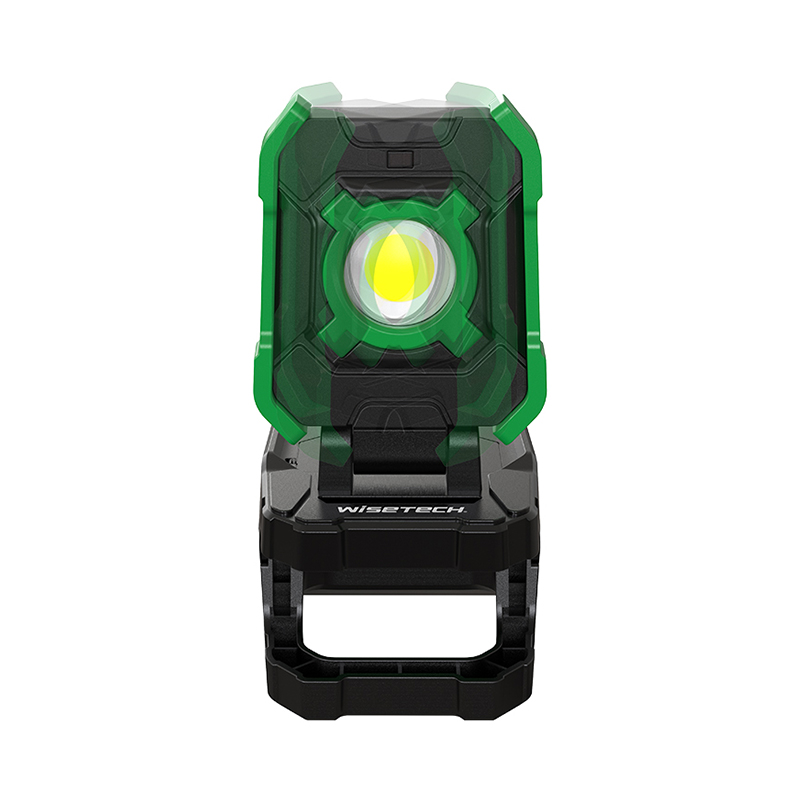
Selecting the correct brightness relies on understanding your physical environment. Scaling the output to the room dimensions prevents visual fatigue. Below is a breakdown of optimal ranges based on real-world applications.
Lumen Range | Ideal Workspace Size | Best Applications | Power Strategy |
|---|---|---|---|
3,000 – 5,000 | Small Enclosures (1-Car Garage) | Engine bays, plumbing, interior painting | Excellent for cordless battery use |
6,000 – 10,000 | Mid-Sized Areas (2-Car Garage) | Drywall, carpentry, framing | Hybrid (AC/DC) recommended |
15,000 – 20,000+ | Commercial Job Sites / Outdoors | Warehouse work, concrete pouring | Strictly 120V corded connection |
This range represents the sweet spot for everyday DIY enthusiasts and precision tradesmen. It is best suited for engine bays, interior painting in standard residential rooms, and under-sink plumbing tasks. At this level, you gain sufficient brightness to see intricate details clearly.
More importantly, you achieve this visibility without causing extreme eye fatigue. Enclosed spaces feature highly reflective surfaces like white walls or polished vehicle paint. Bouncing 10,000 lumens off a white wall creates a blinding hazard. Sticking to the 3,000 to 5,000 range mitigates this glare. From a power perspective, this tier is highly viable for cordless setups. You can realistically run a fixture at this output on standard tool batteries for several hours.
Stepping up to this middle tier unlocks the ability to light larger, open-plan spaces. It is best for two-car garages, widespread drywall installation, carpentry, and structural framing. This output illuminates a standard workshop evenly from corner to corner.
However, managing this volume of light requires strategic hardware. You absolutely need adjustable heads to minimize harsh shadows. Pointing a single 8,000-lumen beam directly at a wall washes out all texture. This makes tasks like mudding drywall impossible. You must angle the light to create cross-illumination. While batteries can power these units, they will drain quickly on the highest settings.
This extreme tier serves massive, uncontrolled environments. It is best for open-air construction, vast warehouse spaces, and nighttime concrete pouring operations. This output level effectively replaces older, dangerous halogen site lighting.
You cannot use this much light indoors without causing severe visual discomfort. Outdoors, the lack of reflective walls allows the light to dissipate safely. The implementation reality here is strictly corded. You will almost certainly require a reliable 120V connection. Sustaining 20,000 lumens safely simply demands more continuous amperage than portable lithium-ion packs can deliver.
Focusing entirely on brightness metrics creates a dangerous blind spot. Several secondary technical dimensions determine how well a fixture actually performs on the ground. You must evaluate these factors just as rigorously.
Beam Spread and Multi-Head Adjustability: A 20,000-lumen single panel is functionally inferior to a 20,000-lumen 3-head adjustable fixture. Pushing massive light through one flat panel creates severe hotspots. It blinds any worker who accidentally looks toward the stand. Multi-directional lighting solves this. You can aim one head at the ceiling for ambient bounce, one at the floor, and one at the task. This spreads the luminous flux evenly and virtually eliminates deep shadows.
Color Temperature (Kelvin): The color of the light dictates your visual comfort. The industry standard sits between 4000K and 5000K. This "neutral" or "daylight" spectrum drastically reduces eye strain over long shifts. Warmer tones (3000K) feel dim, while cooler tones (6000K+) appear blue and harsh. Advanced models now feature individual temperature control. This allows specialized tradesmen to adjust the spectrum for automotive paint matching or electrical color-coding.
Durability and Environmental Compliance: Industrial environments destroy fragile electronics. You must assess the Ingress Protection (IP) ratings. A true job site fixture requires at least an IP65 rating. This specific certification guarantees the unit is entirely dust-tight. It also means the housing can withstand low-pressure water jets from any direction. Outdoor viability depends entirely on these protective seals.
Spec sheets promise perfect performance under laboratory conditions. Job sites present chaotic, unpredictable hazards. Understanding these hidden risks prevents costly equipment failures and bodily injuries.
First, consider tripod stability and build material. High-lumen light heads contain heavy copper wiring and dense heat sinks. This places significant weight at the very top of the stand. Cheap aluminum or thin plastic tripods pose massive tip-over hazards. Uneven terrain, thick extension cords, and construction debris easily destabilize narrow stands. We strongly recommend seeking out wide-stance, weighted bases made from heavy-gauge steel. A falling fixture shatters lenses and ruins the investment instantly.
Second, thermal management dictates the lifespan of your tool. A common misconception states LEDs do not get hot. While they run cooler than halogens, pushing 10,000+ lumens still generates intense thermal loads. Heat degrades LED diodes rapidly. You must evaluate the necessity of die-cast aluminum heat sinks. Look for prominent cooling fins on the back of the light heads. These fins increase surface area, pulling destructive heat away from the sensitive electronic chips.
Finally, address the cord versus battery trade-off. Running a high-output unit on maximum brightness drains standard tool batteries in under an hour. You cannot halt a concrete pour because a battery died. We suggest hybrid solutions for mid-tier needs. A fixture that accepts both a battery pack and a standard AC extension cord offers the ultimate mitigating strategy against downtime.
Navigating the saturated market requires a systematic approach. You can quickly filter out inadequate products by following a strict sequence of decisions. When evaluating a Tripod Work Light, apply these structured criteria to guarantee optimal performance.
Audit the Power Source: Determine your power availability before looking at any other metric. Default to a 120V corded model if you require 10,000+ lumens for extended periods. Opt for a battery-powered unit only if extreme portability outweighs raw output needs.
Match the Lumen Output to the Space: Measure your typical workspace. Use the sizing ranges provided earlier to avoid over-illuminating small enclosures. Buying a 15,000-lumen light for a cramped bathroom remodel will only result in blinding glare.
Check the Stand and Housing: Inspect the physical foundation. Filter out products featuring narrow tripod bases or flimsy plastic collars. Reject any unit lacking an IP65 rating if you plan to step outside a climate-controlled garage.
Your immediate next step is to finalize your primary use case. Sit down and write out where you spend 80% of your working hours. Are you doing indoor paint preparation or outdoor structural construction? Define this environment explicitly before you select a specific model.
Finding the absolute best brightness level is an exercise in environmental matching. It is never a race to acquire the highest number printed on a box. True illumination success comes from balancing raw power against spatial constraints. You must factor in power availability, physical stability, and optical distribution to make a sound investment.
We consistently find that a 5,000-lumen multi-directional fixture outperforms massive single-panel alternatives. Paired with excellent color temperature controls and a sturdy, wide-stance stand, a well-designed moderate light provides incredible utility. It will outlast and outperform a blinding, fragile 15,000-lumen unit in nearly every practical daily scenario.
A: Yes. For a standard 1-to-2 car garage, 5,000 lumens is generally optimal. It provides excellent visibility without causing excessive glare off white walls or vehicle paint. Going much higher often creates harsh reflections that induce rapid eye fatigue during detailed projects.
A: As a reliable rule, a 10,000-lumen LED roughly replaces a traditional 500W to 750W halogen fixture. LEDs achieve this equivalent brightness while operating at vastly lower temperatures. You get similar illumination while generating about 80% less heat, dramatically increasing site safety.
A: Absolutely. Improperly directed, high-output LEDs cause temporary blindness and severe contrast washing. Over-illuminating a small room strains your eyes and washes out detail on light-colored materials. You should always scale your lumen count to your specific environment to maintain visual comfort.

