


Views: 0 Author: Site Editor Publish Time: 2026-08-25 Origin: Site


Maintenance operations inherently expose workers to hazardous environments on a daily basis. Inadequate visibility acts as a massive risk multiplier, quickly turning routine tasks into potential liabilities. When evaluating equipment, you must view a Work Light as a critical safety compliance instrument. It is not merely a basic source of illumination.
Poor lighting conceals mechanical hazards and induces operator fatigue. These factors drastically increase the likelihood of workplace injuries. Safety officers and facility managers need robust tools to protect their teams. A reliable illumination strategy serves as a frontline defense against operational catastrophes.
This guide breaks down exactly how purpose-built lighting mitigates specific maintenance risks. We explore the technical criteria for evaluating industrial solutions across varying environments. Finally, we navigate the implementation realities teams face during rollout. You will learn how to build a safer, more efficient maintenance operation.
Properly specified work lights directly reduce accident rates, visual fatigue, and task-based error frequencies.
Evaluating a work light requires moving beyond standard lumen counts to assess Color Rendering Index (CRI), IK/IP ratings, and operational compliance (e.g., OSHA, ATEX/UL).
Strategic deployment of hands-free and diffused lighting minimizes glare and shadow-induced misjudgments in confined spaces.
Legacy or consumer-grade lighting carries steep hidden costs. It actively increases hazard exposure for your team. You also face slower task completion times. Poor visibility directly causes a higher probability of rework. Missing a hairline fracture or misaligning a seal leads to expensive secondary failures. These inefficiencies drain operational budgets daily.
A successful lighting upgrade fundamentally changes this dynamic. Success means achieving zero-blind-spot visibility. It noticeably reduces operator eye strain. Upgraded equipment also aligns perfectly strictly mandated workplace safety regulations. You want your safety audits to pass without friction.
Industrial-grade lighting requires higher upfront capital expenditure. However, you quickly offset this cost. Reductions in incident-related downtime drive strong returns. You also benefit from lower replacement frequencies. Rugged lights survive drops, eliminating the constant need for replacements. Improved maintenance efficiency speaks for itself. Investing in a professional Work Light transforms maintenance from a liability into a highly controlled process.
Focusing solely on peak brightness while ignoring light distribution.
Equipping heavy industrial teams using fragile consumer-grade flashlights.
Overlooking the ergonomic needs of technicians wearing heavy protective gear.
Harsh spotlights create dangerous high-contrast zones. They cast deep shadows over critical components. Operators struggle to judge depth accurately. Utilizing diffused LED technology provides even light distribution. This prevents operators from being blinded. Diffused lighting is a critical factor near rotating machinery. It is equally vital for intricate aviation components. For example, A320 service areas require smooth, glare-free illumination. Mechanics must see deep into engine cowlings without blinding reflections bouncing off metallic surfaces.
Standard LED lights often wash out colors. This creates severe safety risks during complex repairs. A high Color Rendering Index (CRI >80) ensures true-to-life color representation. High CRI is vital for accurately identifying color-coded wiring. It also helps technicians spot subtle fluid leaks. Differentiating between red hydraulic fluid and orange coolant prevents catastrophic mechanical errors. Accurate color rendering protects operators from cross-wiring high-voltage panels.
Chart: Illuminance and CRI Requirements by Task
Maintenance Task | Minimum CRI | Visual Requirement |
|---|---|---|
General Facility Inspection | 70+ | Basic spatial awareness and obstacle avoidance. |
Engine Diagnostics | 80+ | Identifying part boundaries and fluid variations. |
Electrical Panel Wiring | 90+ | Precision color coding and detail recognition. |
Old-generation halogen lamps generate extreme heat. They frequently exceed temperatures capable of causing third-degree burns. Using these lamps inside confined spaces presents massive dangers. Modern LED heat dissipation eliminates these burn risks. Advanced aluminum heat sinks keep the housing safe to touch. This technology removes the localized fire hazards historically associated high-temperature halogen lamps. Mechanics safely position cool-running LEDs inside tight maintenance bays, fuel tanks, and narrow pipelines.
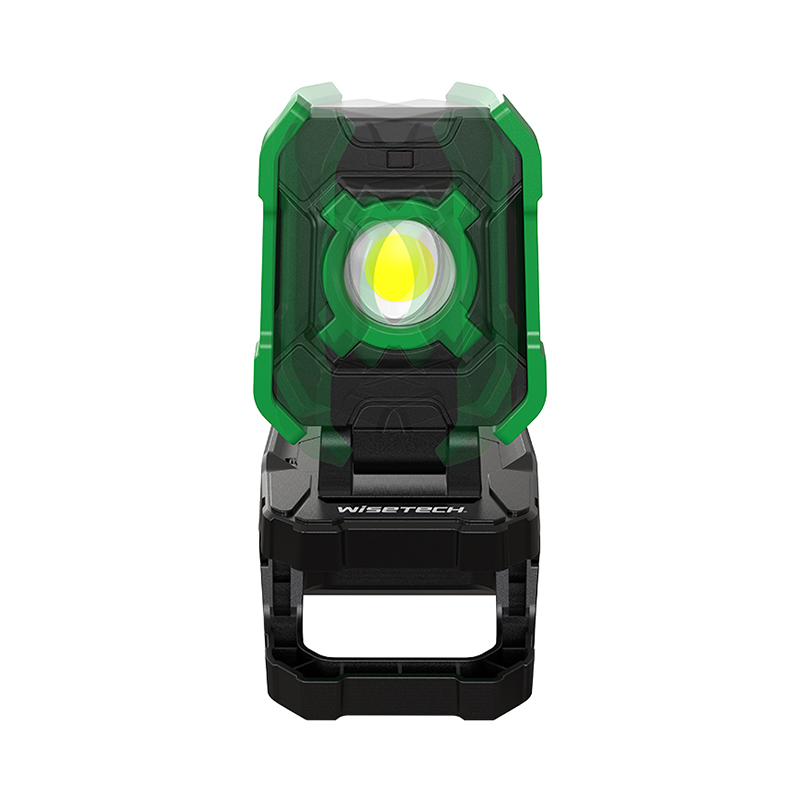
Different industries present entirely distinct hazard profiles. Applying a universal lighting standard rarely works. You must evaluate equipment based on specific environmental stressors. Below, we break down essential features for major operational settings.
Chemical plants and grain silos contain explosive atmospheres. Non-negotiable requirements exist for ATEX or UL certifications. These ensure intrinsically safe, explosion-proof operation. You must prevent electrical sparks in environments containing combustible dust or gases. Even a minor switch toggle can trigger a disaster without proper certification. Intrinsically safe lights completely isolate electrical circuits from the outside atmosphere.
Technicians working on vehicles need their hands free. Form factor prioritization dictates low-profile designs. Adaptable magnetic bases allow mechanics to stick lights onto vehicle frames. Under-hood mounting capabilities ensure hands-free operation. Mechanics can hold heavy tools securely instead of juggling flashlights. A low-profile Work Light fits into wheel wells without obstructing movement.
Roadside crews face unpredictable weather and high-speed traffic. Validating weatherproofing ratings is crucial. You need IP65 or IP67 ratings to block heavy rain and dust. Integration of distinct warning strobe functions is equally important. Amber or red strobes ensure worker visibility against oncoming traffic. This aligns strictly state regulations and roadside safety data. A multi-functional light serves as both task illumination and a personal safety beacon.
Navigating complex racking systems safely requires a dual approach. You must balance high-bay ambient integration alongside localized task lighting. Forklift operators rely on ambient light for navigation. Maintenance crews need high-lux portable lamps to repair specific racking sections. Glare reduction remains vital here. Downward-facing task lights prevent blinding forklift drivers operating in the same aisle.
Table 1: Operational Environment Safety Criteria
Operational Setting | Primary Hazard Focus | Essential Certification / Feature |
|---|---|---|
Chemical & Refining | Explosive Vapors | ATEX / UL HazLoc (Intrinsically Safe) |
Roadside Assistance | Traffic & Weather | IP67 & Amber Warning Strobes |
Automotive Repair | Confined Spaces | Magnetic Bases & Low-Profile Design |
Buying high-quality hardware is only the first step. You must also plan for daily operational realities. Equipment failures during a shift introduce severe vulnerabilities.
Dead batteries paralyze maintenance operations. You must address the reality of charge-time bottlenecks. Evaluating lights featuring pass-through charging solves this problem. Technicians can use the equipment while it charges. Alternatively, look for hot-swappable battery ecosystems. Teams simply snap in a fresh battery to prevent mid-shift darkness. Proper lifecycle management ensures continuous illumination across extended overtime shifts.
Marketing brochures frequently use vague terms like "drop-resistant." You must move past marketing jargon. Demand verifiable IK (Impact Protection) ratings. An IK07 or IK08 rating proves the housing survives concrete drops. It also ensures the lens withstands direct tool impacts. Ruggedized polycarbonate lenses and rubberized bumpers offer genuine protection. Unverified plastic lights shatter on the first day, leaving exposed circuits.
Weak mounts create deadly dropped-object hazards. A heavy light falling from a scaffolding platform endangers everyone below. You must avoid weak magnetic bases or fragile hanging hooks. Test mount strength directly under high-vibration conditions. Neodymium magnets offer vastly superior grip compared to cheap ceramic magnets. Reliable mounting brackets ensure the light stays exactly where technicians place it.
Structuring your procurement process prevents costly mistakes. Follow this logical framework to select the safest equipment for your specific facility.
Step 1: Audit Illumination Requirements. Map required lux levels against specific maintenance tasks. General facility inspection requires far less intensity than precision electronic repair. Avoid over-illuminating small spaces, which causes glare.
Step 2: Filter by Compliance and Environment. Immediately disqualify units failing to meet baseline ratings. Your facility's safety officer dictates required IP, IK, or hazardous location (HazLoc) standards. Compromising here violates safety laws.
Step 3: Assess Ergonomics and Usability. Evaluate weight and overall portability. Check the user interface simplicity. Can technicians operate the switches wearing heavy protective gloves? Ensure the unit offers versatile hands-free configurations.
Step 4: Next-Step Action. Request sample units of the top shortlisted models. Run a 14-day pilot test in actual maintenance shifts. Gather direct feedback from mechanics before committing to a fleet-wide procurement.
Assign the test units to your most demanding technicians.
Require testers to evaluate battery life under maximum brightness.
Test the mounting hardware on dirty, oily, or vibrating surfaces.
Monitor how easily the lenses wipe clean after exposure to grease.
Upgrading to professional-grade work lights is a direct investment in risk mitigation. It aggressively drives error reduction and ensures operational compliance. Technicians perform better, faster, and safer when they can clearly see their objectives. Eradicating shadows and rendering accurate colors stops accidents before they happen.
Prioritize verifiable durability and specific environmental certifications over raw brightness when finalizing your choice. Ergonomic mounting systems and reliable battery management keep your team moving efficiently. Execute a rigorous pilot test to validate performance in the field. Empower your maintenance teams by giving them the illumination tools they truly need to succeed safely.
A: A minimum of IP65 is required for standard water and dust resistance. This handles light rain and airborne debris. However, IP67 is highly recommended for operations exposed to heavy rain or temporary submersion. IP67 ensures the internal electronics survive severe weather events without short-circuiting.
A: A high CRI prevents the misidentification of similarly colored wires or subtle chemical leaks. Standard lights distort colors, making blue wires look black. High CRI drastically reduces the risk of cross-wiring and subsequent equipment failure. It provides sunlight-like accuracy in dark spaces.
A: No. They are only mandated in specific environments where flammable gases, vapors, or combustible dust are present. Standard warehouses do not need them. Always consult your facility's formal hazard risk assessment before purchasing specialized ATEX or UL HazLoc certified equipment.

