


Views: 0 Author: Site Editor Publish Time: 2026-08-31 Origin: Site


Buying high-output exterior lighting often involves a frustrating amount of guesswork. The phrase "6000 lumens" sounds highly impressive on a glossy specification sheet. However, visualizing its real-world impact remains surprisingly difficult without a practical baseline. Over-illuminating an outdoor space creates harsh glare. It often sparks angry neighborhood disputes. Conversely, under-illuminating your property leaves dangerous security blind spots. You need clear, accurate numbers to make an informed choice. To bridge this knowledge gap, we will translate 6000 lumens into highly actionable metrics. You will soon discover the exact square footage it covers. We will also reveal the mandatory mounting heights and traditional wattage equivalents. This comprehensive guide helps you determine if this intense output level fits your specific residential or commercial application perfectly.
Equivalent Power: A 6000-lumen LED roughly equals a 400W–500W traditional halogen bulb.
Coverage Expectation: Properly mounted, it effectively illuminates approximately 1,000 to 1,500 square feet.
Optimal Height: Requires a mounting height of 15 to 22 feet to distribute light evenly and prevent severe ground-level glare.
Primary Risk: Extremely high risk of light trespass (disturbing neighbors) if installed in standard, tightly-packed suburban lots without motion-sensing controls.
Understanding extreme brightness requires a familiar reference point. Lumens measure the total amount of visible light emitted by a source. To grasp the intensity of 6000 lumens, we must look at everyday household items.
Consider a standard 60-watt incandescent indoor bulb. A typical modern LED replacement for this bulb emits about 800 lumens. Therefore, a 6000-lumen fixture produces the same total light as seven or eight of these standard bulbs combined. Imagine taking eight living room lamps and focusing all their light into one specific directional beam. This visual exercise quickly demonstrates the sheer power of this output level. It is not subtle ambient lighting. It is heavy-duty illumination designed for maximum visibility.
Lighting technology underwent a massive efficiency shift over the last decade. Historically, achieving 6000 lumens required outdated, energy-hungry halogen bulbs. Those older halogen fixtures consumed between 400 and 500 watts of electrical power. They generated massive amounts of heat. Today, a modern Flood Light utilizes advanced Light Emitting Diode (LED) arrays. These highly efficient chips produce the exact same 6000 lumens while consuming only 40 to 60 watts. You get massive light output from a vastly smaller electrical load.
Brightness alone does not determine how a space looks. The fixture's beam angle dictates how the light spreads. If you force 6000 lumens through a tight 45-degree lens, you create a blinding, hyper-focused spotlight. This concentrated beam pierces long distances but lights up a very narrow footprint. Alternatively, pushing the same 6000 lumens through a 120-degree wide-angle lens creates a broad flood effect. The wide angle washes a large area in uniform light. Always pair the lumen count with the correct beam angle for your specific application.
Determining raw brightness is only half the battle. You must know how much physical ground the fixture secures. Lighting professionals use specific metrics to measure usable light on surfaces.
In practical applications, 6000 lumens covers a substantial footprint. Properly installed, this output yields enough footcandles to secure a 1,000 to 1,500 square foot area. A footcandle measures the light intensity landing on a one-square-foot surface. The Illuminating Engineering Society (IES) recommends 1 to 2 footcandles for basic outdoor security. A 6000-lumen fixture comfortably meets this standard across 1,500 square feet. Picture a large four-to-six car driveway. Alternatively, imagine a deep, expansive suburban backyard. This single fixture can illuminate those entire spaces effectively.
Light intensity diminishes rapidly as it travels through the air. This behavior follows a physics principle called the inverse-square law. As the distance from the light source doubles, the surface illumination drops to one-quarter of its previous strength. You cannot expect a target 50 feet away to look as bright as a target 10 feet away. The light beam spreads out and loses concentration. You must account for this drop-off when aiming the fixture at distant property lines.
Mounting height dictates the success or failure of high-output lighting. A 6000-lumen source placed at eye level creates dangerous blinding hotspots. It essentially ruins human night vision. You must elevate the fixture to distribute the light safely. Follow these strict height guidelines for 6000-lumen models:
Absolute Minimum: Never install below 15 feet. Anything lower causes severe ground-level glare.
Optimal Range: Target 18 to 20 feet for standard security applications. This height balances coverage spread and surface intensity perfectly.
Maximum Range: Do not exceed 25 feet. Beyond this height, the inverse-square law weakens the light too much for residential security purposes.
Ideal mounting locations include second-story eaves, high barn peaks, or dedicated commercial light poles.
Output levels this high serve very specific purposes. Placing them in the wrong environment creates more problems than they solve. You must match the intensity to the physical scale of the location.
Standard suburban homes rarely need this much light. However, sprawling properties benefit greatly. Large rural acreages require powerful beams to spot wildlife or intruders at a distance. Deep barnyards need broad illumination for early morning agricultural tasks. Long, secluded private driveways utilize these fixtures to deter trespassers effectively. Additionally, mounting one above a detached garage apron provides excellent visibility for late-night mechanical work or vehicle loading.
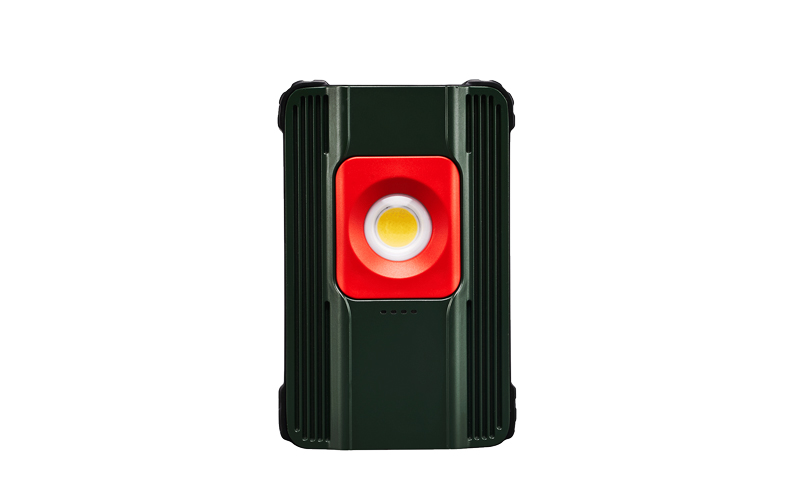
This lumen bracket truly shines in commercial environments. Businesses rely on intense lighting to maintain safety and security after dark. Active construction sites frequently deploy these units as a portable High Lumen Work Light. The massive output eliminates hazardous shadows during complex night tasks. Small retail parking areas use them to protect customer vehicles. Loading docks require them to ensure truck drivers can navigate safely while reversing. Building perimeters utilize 6000-lumen fixtures to expose hidden alcoves and deter vandalism.
You must avoid over-illumination in confined spaces. Never install a 6000-lumen unit on a small suburban front porch. It will blind guests approaching your front door. Do not use them in narrow residential side-yards. The intense light will bounce off fences and flood directly into your windows. Furthermore, avoid these fixtures entirely if your highest available mounting point sits below 10 feet. Installing them low creates an immediate visual hazard. It also guarantees angry complaints from nearby neighbors.
Not all high-output fixtures deliver the same quality. When evaluating different models, you must look beyond the basic lumen count. Several critical engineering factors determine the product's longevity and usability.
Color temperature dictates the visual appearance of the light. We measure this in Kelvin (K). Lower numbers look yellow and warm. Higher numbers look blue and stark. Choosing the correct temperature impacts security camera performance and visual comfort.
Kelvin Range | Appearance | Best Application | Common Mistake |
|---|---|---|---|
3000K - 4000K | Warm to Neutral White | Residential properties, patios, neighborhood boundaries. | Using below 3000K, which is too dim for security. |
5000K - 6000K | Crisp Daylight White | Commercial security, loading docks, night construction. | Using in tight suburbs; creates an unnatural, harsh glare. |
Professionals recommend 5000K–6000K for active work zones. This daylight range maximizes visual contrast. It also helps high-definition security cameras capture sharper details. Conversely, 3000K–4000K reduces harshness. It serves residential areas better by blending with existing street lights.
Running a 6000-lumen unit continuously wastes electricity and annoys the surrounding community. You should never buy one without built-in control mechanisms. Look for Passive Infrared (PIR) motion sensors. These sensors trigger the light only when they detect heat movement. This sudden burst of extreme brightness startles intruders far more effectively than a steady beam. Alternatively, select models equipped with dusk-to-dawn photocells. These automatically power down the unit during daylight hours.
Generating massive light produces significant internal heat. Heat serves as the primary enemy of LED diodes. Poorly cooled chips will degrade quickly, losing their brightness over mere months. You must examine the fixture's thermal management system. High-quality models feature heavy die-cast aluminum housings. They incorporate visible heat sink fins on the back. These fins pull heat away from the internal circuitry. Avoid lightweight plastic housings entirely for this lumen category.
Outdoor fixtures face rain, snow, and dust daily. The industry standardizes weather resistance using Ingress Protection (IP) ratings. A 6000-lumen model requires a verifiable IP65 or IP66 rating. An IP65 rating means the unit resists low-pressure water jets from any direction. An IP66 rating withstands heavy seas or powerful water jets. Anything rated below IP65 risks internal water pooling and catastrophic electrical failure during severe storms.
Installing commercial-grade lighting on residential property introduces unique challenges. You must mitigate specific risks to ensure safety and community harmony.
Light trespass occurs when your illumination spills over your property line and enters a neighbor's windows. A 6000-lumen beam easily penetrates bedroom curtains from 50 feet away. You must act responsibly. Purchase fixtures equipped with adjustable heads. Aim them sharply downward toward your own grass. Utilize visors or attachable glare shields to chop off stray horizontal light. The International Dark-Sky Association strongly advocates keeping all exterior lighting aimed below the horizontal plane.
Many consumers underestimate the electrical requirements of high-output units. Small solar panels cannot reliably sustain 6000 true lumens throughout the night. Therefore, a genuine fixture in this category usually requires hardwiring to a standard 120V electrical junction box. You must verify your existing electrical infrastructure before purchasing. Check your exterior breaker loads. Ensure you have the proper outdoor-rated conduit and weatherproof boxes installed. If you lack experience, hire a licensed electrician to handle the connections safely.
Local municipalities heavily regulate exterior lighting brightness. Many Homeowner Associations (HOAs) enforce strict covenants regarding light pollution. They frequently cap residential exterior fixtures at 3,000 to 4,000 lumens. Check your local dark-sky ordinances immediately. Installing a 6000-lumen model in a restricted zone guarantees code violations. City inspectors can force you to remove the unit at your own expense. Always verify neighborhood rules before drilling holes in your exterior walls.
Navigating exterior lighting parameters does not have to be frustrating. A 6000-lumen fixture represents a heavy-duty, borderline commercial solution. It delivers intense, far-reaching illumination suited for expansive properties. It is the absolute right choice for deep driveways, rural barnyards, and active commercial loading docks. It guarantees definitive security visibility when mounted high above the ground.
Before purchasing, carefully measure your target space. If your driveway or yard falls under 800 square feet, scale down immediately. A 2500 to 3500-lumen fixture serves smaller spaces much better. If your maximum mounting point sits below 15 feet, avoid high-output models entirely to prevent blinding glare. Finally, if your property criteria perfectly match this powerful output, prioritize durability. Always select heavy die-cast aluminum models featuring integrated motion sensors and adjustable glare shields.
A: Yes, usually. For a standard 2-car suburban driveway, 2000–3000 lumens is generally sufficient. A 6000-lumen unit will likely create severe glare and cause light trespass into your neighbors' yards unless you mount it well above 15 feet and angle it aggressively downward.
A: Staring directly into a localized high-output LED array can cause temporary flash blindness and severe visual discomfort. It disrupts human night vision instantly. Proper downward angling and utilizing elevated mounting positions are mandatory safety requirements for these extreme output levels.
A: Modern LED fixtures typically consume between 45W and 60W to produce this brightness. The exact wattage depends on the luminous efficacy (efficiency) of the specific LED chips used by the manufacturer. This represents a massive efficiency upgrade over older 400W halogen bulbs.

