


Views: 0 Author: Site Editor Publish Time: 2026-10-24 Origin: Site


Have you ever tripped over a thick extension cord while navigating a dark, hazardous jobsite? Poor lighting does not just cause costly project delays. It actively invites severe site accidents. The daily choice between wrestling with tangled cables or constantly monitoring battery life fundamentally impacts your crew's overall productivity and safety.
Fortunately, the rapid evolution of LED technology has completely transformed industrial illumination. Modern fixtures are exponentially more powerful, durable, and energy-efficient than their fragile halogen predecessors. Project managers and contractors require intensely bright, reliable solutions. However, selecting the optimal setup depends entirely on the specific demands of the work environment. This comprehensive guide breaks down the critical nuances of corded, cordless, and dual-power options. We will equip you with the exact knowledge needed to select the perfect fixture for your operational needs.
Corded AC Fixtures deliver unlimited runtime and massive lumen outputs. This makes them the standard choice for long-term, stationary projects with reliable power grids.
Battery-Powered Jobsite Lighting provides unmatched agility and rapid deployment. By eliminating dangerous tripping hazards, it serves as the optimal choice for remote, off-grid, or highly dynamic work environments.
Dual-Source Models offer ultimate versatility. They allow professionals to seamlessly switch between grid power and battery power depending on immediate site conditions.
Making the correct purchasing decision requires a careful assessment of your worksite’s power availability, required mobility, and necessary durability metrics like Ingress Protection ratings for dust and water resistance.
Before committing a significant portion of your equipment budget, you must understand the three primary categories dominating the professional market today. Each platform is engineered to solve specific logistical challenges on the site.
An AC Work Light represents the traditional approach to site illumination. These fixtures require a direct, physical connection to a standard wall outlet or a gas-powered generator to function. Because they draw continuous power from a grid, manufacturers engineer them to house high-output LED arrays. These components sustain massive brightness levels for days or weeks at a time without interruption. They remain the backbone of large-scale construction lighting fleets.
Direct Current lighting relies on internal power storage, typically utilizing advanced lithium-ion battery packs. These units operate entirely independent of the electrical grid. A professional-grade Rechargeable DC Work Light offers workers the ability to illuminate isolated areas instantly. In recent years, advancements in battery cell density have allowed these cordless models to successfully bridge the performance gap with plug-in models. They now deliver intense brightness levels previously impossible for battery-operated tools.
Hybrid lighting utilizes dual-source technology, integrating the internal architecture required for both alternating and direct current power inputs. These versatile units can run continuously when plugged into a standard outlet, but they also accept a battery pack for untethered operation. This dual functionality acts as a critical fail-safe for contractors. If site power goes down unexpectedly, the fixture can immediately transition to its battery reserve, ensuring that work continues safely and efficiently.
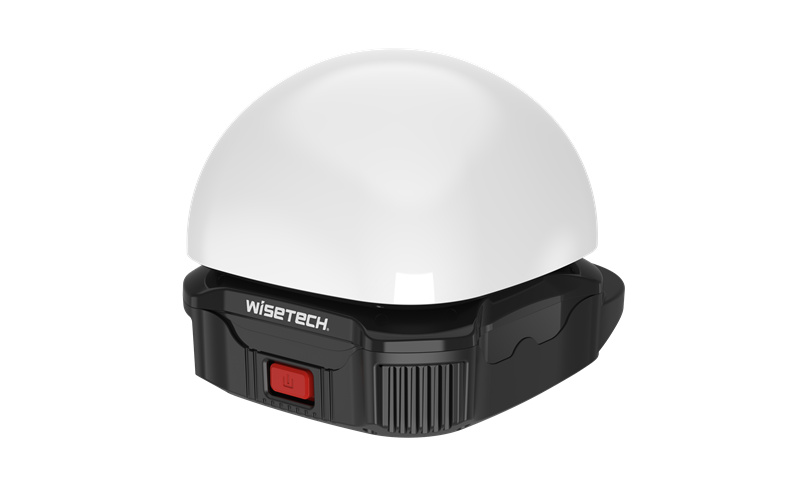
For decades, the standard approach to industrial illumination relied heavily on continuous grid power. Despite the rise of battery technology, this method remains highly relevant for specific, large-scale scenarios.
As long as a site generator hums or the temporary utility pole remains active, the workspace stays brightly lit. Crews completely avoid the logistical headache of rotating battery packs or implementing strict charging schedules. This uninterrupted power delivery makes corded setups highly efficient for stationary tasks spanning multiple days or weeks.
When tasked with illuminating a massive warehouse floor, a large framing project, or a sprawling outdoor concrete pour, sheer raw brightness is non-negotiable. Corded setups easily support massive LED arrays pushing well over 10,000 lumens. Furthermore, the advanced thermal management systems in these larger fixtures are specifically designed to handle the intense heat generated by sustained, high-output operation. They achieve this without the constraint of rapid battery drain.
However, this immense power comes with notable logistical friction. Heavy-duty extension cords create notorious tripping hazards. They frequently draw strict scrutiny from safety inspectors enforcing compliance. If a site lacks an active grid, operating these fixtures necessitates a noisy, exhaust-producing gas generator. Consequently, this severely limits indoor applications and increases overall fuel costs.
Industry analysts observing the construction equipment sector note a massive paradigm shift toward cordless ecosystems. Recent market data indicates that the demand for portable LED solutions is growing at an unprecedented rate. This trend is largely driven by stricter site safety regulations and significant leaps in lithium-ion cell density. Battery-operated site lighting is rapidly transitioning from a niche convenience to a mandatory safety requirement on commercial sites.
The defining advantage here is absolute freedom of movement. A worker can grab a fixture and transition from a dark basement utility room to an exterior trench in seconds, completely untethered. This agility drastically reduces the labor time wasted searching for active outlets or untangling heavy wires. It directly translates to increased daily efficiency.
Removing cables from the floor instantly neutralizes one of the most common causes of worksite injuries: trips and falls. For safety officers and project managers, deploying cordless illumination is a proactive measure. It helps maintain strict compliance and protects personnel navigating high-traffic zones.
In emergency repair scenarios, such as inspecting a burst pipe at midnight or responding to severe weather damage, temporary power is rarely available immediately. Battery units deploy instantly. They provide immediate, high-quality illumination exactly where it is needed. This allows crews to stabilize dangerous situations without delay.
The inherent limitation of any untethered tool is runtime. Contractors must actively manage power reserves. This often requires purchasing multiple backup packs and setting up dedicated charging stations. Running a fixture on its maximum brightness setting will deplete the charge significantly faster than utilizing a medium or eco mode. Operators must carefully balance output with endurance.
To make an informed purchasing decision at the procurement stage, professionals must weigh these technologies against real-world operational metrics. Below is a detailed look at how both platforms perform across key trade requirements.
Corded setups are inherently stationary. Once positioned, they project a wide, powerful flood of light meant to stay in place. They excel in raw output but fail in mobility. Conversely, a Cordless Work Light excels in agile, targeted illumination. While modern battery fixtures can easily hit impressive brightness levels, often between 3,000 and 5,000 lumens, they cannot sustain that peak output indefinitely without requiring a battery swap.
Upfront costs differ drastically between the two categories. Battery-powered models demand a higher initial investment due to the expensive lithium-ion packs and compatible charging bays. Yet, they often recover this premium cost over time. The labor hours saved by not rolling out, taping down, and packing up heavy cables every single day quickly offset the higher initial purchase price. This makes the long-term cost of ownership highly favorable for mobile crews.
Solid-state LED technology eliminates the fragile shattering risk associated with older halogen bulbs. However, maintenance protocols diverge significantly. Plug-in units require strict, routine cable inspections for fraying or grounding issues to prevent electrical shocks. In contrast, battery systems demand proper thermal management. Lithium-ion packs should not be stored in extreme heat or freezing temperatures, as this degrades their overall lifespan and charge capacity.
Committing exclusively to one power source often forces an unnecessary compromise. This reality is driving the rapid adoption of dual-source technology across professional fleets, effectively bridging the gap between endurance and mobility.
By housing both a direct plug-in input and a battery terminal, a Hybrid Work Light adapts dynamically to the shifting lifecycle of a project. Picture a framing crew arriving at a residential build at dawn, well before the utility company has activated the temporary power pole. The team can utilize battery power to safely commence work in the dark. Hours later, once the site generator is running or the grid is live, the crew simply plugs the fixture into an extension cord. This preserves battery health for future needs while maintaining seamless, continuous illumination.
Although they carry a slight price premium over single-source models, hybrid units deliver exceptional return on investment. Purchasing one dual-source unit effectively prevents the need to maintain entirely separate inventories of plug-in and battery-operated tools. It consolidates equipment needs for unpredictable environments.
Matching the tool to the trade is absolutely essential. A lighting setup that works flawlessly for a wide-open commercial build might be entirely inappropriate for a residential plumber pulling wire in a cramped attic.
High-lumen plug-in units or heavy-duty hybrids are the logical choice for expansive environments. Commercial sites, such as high-rise developments or large warehouse builds, typically feature established temporary power grids. The vital need to illuminate expansive, open-air environments safely dictates the use of unlimited runtime and massive lumen output. In these scenarios, mobility is less of a daily concern.
Highway maintenance, remote pipeline inspections, and off-grid agricultural repairs rarely offer access to a reliable electrical grid. Deploying gas generators for short-term tasks is highly inefficient and often restricted by noise ordinances. High-capacity battery-operated fixtures allow crews to deploy instantly, perform the required work safely, and pack up quickly without managing hazardous cables near active traffic lanes.
Tradesmen navigating tight, finished spaces like attics, crawlspaces, or narrow utility closets should heavily favor compact battery models. Dragging a dirty extension cord through a client's finished hallway risks property damage and creates severe trip hazards. Electricians who must shut off a home's main breaker rely entirely on safe, isolated internal power storage to complete their panel work safely.
When evaluating a Portable LED Work Light, look beyond basic marketing jargon. To ensure you are securing commercial-grade equipment rather than a flimsy consumer gadget, scrutinize the technical specifications.
Raw power matters, but output control is paramount. Multi-stage brightness settings are critical for extending battery life. Operators can throttle down the output for close-up electrical work to conserve power. They can switch to the maximum setting only when illuminating an entire room for drywall installation.
The Ingress Protection rating dictates a fixture's resistance to solid particles and liquids. An IP54 rating handles basic indoor dust and light splashes. Specifically, an IP65 rating is completely dust-tight and withstands low-pressure water jets from any direction. This makes it a mandatory specification for outdoor contractors facing unpredictable weather conditions.
Jobsite tools will inevitably be dropped, kicked, or knocked over. Prioritize the physical construction of the housing. Look for heavy-duty cast aluminum heat sinks, shock-absorbing rubberized protective bumpers, and impact-resistant tempered glass or polycarbonate lenses. Compatibility with standard industrial tripods is a significant bonus. It adds versatility for elevated, wide-area lighting.
Finally, consider the quality of the illumination. A color temperature between 5000K and 6000K simulates natural daylight. This provides crisp visibility and minimizes worker eye fatigue during long shifts. A high Color Rendering Index, typically 80 or above, is vital for detail-oriented trades. It allows electricians to accurately distinguish similarly colored wires and helps painters ensure flawless surface finishes.
Ultimately, the perfect illumination strategy does not exist in a vacuum. Plug-in fixtures will always win the endurance race for long, stationary tasks that demand massive lumen outputs. Conversely, cordless alternatives dominate in operational agility, rapid deployment, and overall site safety by eliminating trip hazards.
For the modern contractor navigating wildly unpredictable environments, integrating dual-source hybrid technology or maintaining a balanced fleet of both systems is the smartest operational strategy. Assess your primary work environments, calculate your specific lumen requirements, and invest in professional-grade tools to keep your crew safe, compliant, and highly productive.
Ready to upgrade your jobsite illumination? Explore the comprehensive range of professional-grade lighting solutions at WiseTech Lighting. Whether you need a robust AC fixture, an agile battery-powered unit, or a versatile hybrid model, you will find the exact specifications required to match your toughest project demands.
The requirement scales directly with the workspace and the nature of the task. Small, confined electrical or plumbing repairs generally need 1,000 to 3,000 lumens for clear visibility. Illuminating a large concrete pour or framing an expansive commercial room demands high-end fixtures pushing 5,000 to 10,000 lumens or more to guarantee safe visibility across the entire area.
Endurance depends entirely on the battery's amp-hour capacity and the active brightness setting being used. Most professional-grade units deliver 2 to 4 hours of continuous operation on their maximum output setting. By utilizing lower eco-settings for tasks that require less intense light, that same charge can often stretch to 10 or 12 hours, easily covering a full work shift.
This functionality varies by manufacturer and specific internal circuitry. Certain premium models feature integrated charging systems that replenish the attached battery while simultaneously illuminating the space via grid power. Other models utilize a bypass circuit, running off the wall outlet to save battery life, but requiring a separate, dedicated charging dock to replenish the battery pack. Always verify the exact specifications before procurement.
They are perfectly safe, provided they feature the appropriate Ingress Protection rating. For outdoor projects, roadwork, or plumbing emergencies, you must utilize equipment rated at least IP65. This specific rating guarantees the internal electronics are entirely sealed against dust ingress and are strictly protected from direct water exposure, ensuring safe operation in the rain or damp environments.
Floodlights cast a wide beam spread to illuminate large, open areas like warehouse floors or exterior concrete pours. In contrast, spotlights focus a narrow, intense beam on a specific target. Most general construction tasks rely on floodlights for ambient safety, while specialized trades might use spotlights for targeted inspections inside shafts or deep trenches.
Lithium-ion cells are sensitive to thermal extremes. Freezing conditions temporarily reduce the overall amp-hour capacity, leading to shorter runtimes. Conversely, operating in extreme heat can degrade battery health over time and trigger internal thermal overload sensors, causing the unit to shut down to prevent damage. Always store battery packs in climate-controlled environments when not in active use.

