


Views: 0 Author: Site Editor Publish Time: 2026-09-08 Origin: Site


Mounting a Work Light upside down is a common workaround for illuminating undercarriages, scaffolding, or temporary workspaces where floor space is limited. Mechanics often need clear floors to move creepers safely. Painters require unobstructed walking paths. We often see technicians rig these setups out of pure necessity. Floor clutter causes tripping hazards. Hanging fixtures seems like an obvious solution. While physically possible to rig, inverting a light fixture alters how it manages heat, deflects water, and distributes weight. Gravity fundamentally impacts thermal dynamics. You might unknowingly compromise the structural integrity of the housing. This simple flip often bypasses critical safety engineering. Manufacturers design base stands for downward compression. They do not design them for hanging tension. Whether you can safely invert a fixture depends entirely on its bulb technology, ingress protection (IP) design, and mounting hardware. Using the wrong setup introduces severe thermal and electrical hazards. You need to understand these variables to protect yourself and your equipment. Proper selection prevents catastrophic jobsite accidents.
LEDs are generally safe to invert; Halogens are not. Halogen lights rely on upward heat dissipation; inverting them traps heat at the base, creating a severe fire hazard.
Inversion compromises water resistance. Outdoor work lights use gravity-dependent seals and weep holes; turning them upside down can cause water to pool inside the electronics.
Beam optics shift. Directional reflectors designed for upright use will cast light inefficiently and may cause severe glare when inverted.
Opt for purpose-built solutions. A high-quality portable work light with 360-degree pivoting heads and integrated hanging hooks eliminates the need for risky, makeshift inverted mounting.
Evaluating lighting setups requires analyzing thermal management and physical failure risks. Bulb technology dictates how safely a unit operates in unconventional orientations.
Halogen bulbs generate extreme temperatures during normal operation. The quartz glass envelope can reach hundreds of degrees. Manufacturers engineer their casings using sophisticated top-venting systems. These vents allow rising hot air to escape safely. Convection naturally carries thermal energy upward and away. Inverting a halogen fixture disrupts this thermal flow entirely. You force heat back into the electrical base. The ceramic socket absorbs this unintended thermal load. This bakes the internal wiring harness inside the housing. It rapidly accelerates component degradation over time. Insulation hardens, cracks, and eventually fails. You risk catastrophic electrical shorts. Melted plastics become highly toxic. Ultimately, trapped heat creates a severe fire hazard. Never invert a halogen fixture. Always keep them grounded and upright.
LEDs generate significantly less ambient infrared heat. They convert energy into visible light much more efficiently. This makes orientation less critical for the bulb itself. You can generally flip them safely regarding raw temperature output. The diode does not rely on rising convection. However, high-lumen LED arrays still utilize passive heat sinks. These aluminum ridges draw thermal energy away from the board. Heat sink fins need adequate airflow to function correctly. Ensure mounting straps do not obstruct these fins. Hanging units tightly against a ceiling blocks natural convection. The surrounding air remains stagnant and warms up. This induces immediate thermal throttling. The light will automatically dim to protect internal components. You lose essential brightness precisely when you need it most. Leave at least three inches of clearance around the chassis.
Safety and compliance in wet or dusty conditions depend entirely on orientation. Manufacturers design weatherproofing mechanisms assuming a standard upright posture.
Many portable lighting tools achieve IPX4 or IPX5 ratings specifically. They use overlapping bezels and bottom-placed weep holes. Engineers design these physical features to shed water downward naturally. Gravity pulls the moisture away from sensitive internal electronics. The design mimics shingles on a roof. When you invert the fixture, dynamics change completely. The top housing becomes an unintended collection tray. This top area rarely features heavy seals against direct pooling. Water easily seeps past unsealed upper joints. Rainwater enters the main chassis. This compromises the entire system.
Water ingress from inversion quickly bridges delicate internal circuits. Moisture destroys the main logic board almost instantly. It corrodes solder joints and battery terminals. This creates a severe electrocution hazard on wet jobsites. If you must use fixtures upside down outdoors, upgrade them immediately. Require a fully sealed IP65 or IP67 rating. These robust ratings do not rely on directional drainage at all. They utilize thick, solid silicone gaskets instead. Potted electronics offer another layer of internal protection. The manufacturer seals the circuit board entirely in resin. This guarantees water cannot bridge electrical connections. Always inspect rubber grommets before hanging any unit.
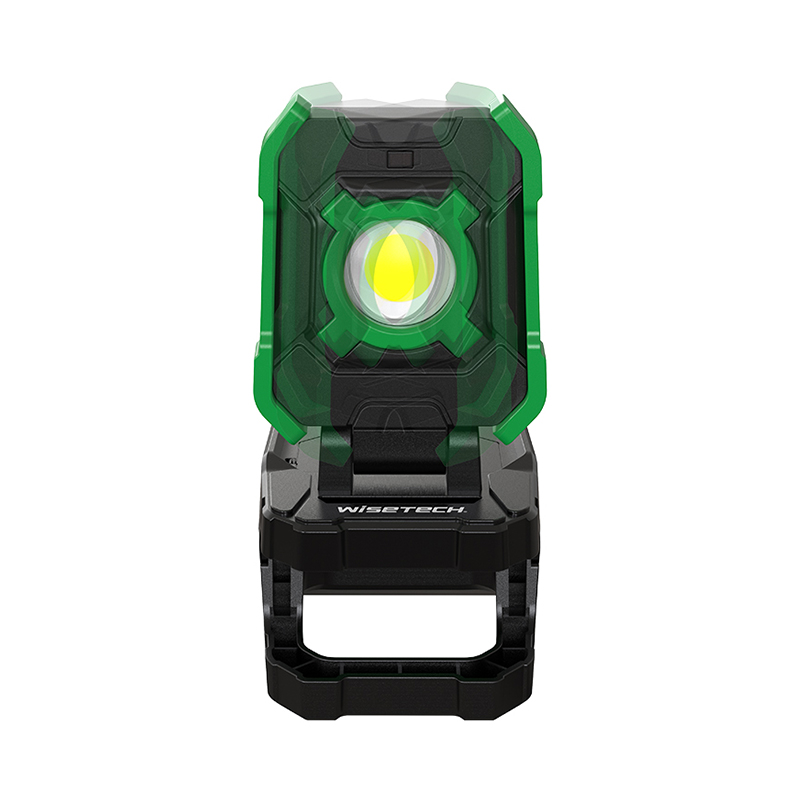
Orientation heavily influences usability and visual comfort. An inverted light often ruins the engineered beam pattern.
Standard standing fixtures utilize highly specific asymmetric reflectors. They push light forward and downward toward a work surface. Engineers calculate these angles to prevent light spill. This design maximizes visibility precisely where you need it most. Inverting the light reverses this essential cut-off line. You project the brightest part of the beam upward instead. This often shines directly into the user’s eyes. You create severe glare instead of useful illumination. Glare causes eye fatigue and reduces jobsite safety. It washes out fine details on the material. Furthermore, the unit casts deep shadows on the actual workspace below. You effectively defeat the primary purpose of the tool.
Overhead lighting demands entirely different optical properties. To achieve effective results, you need specific modifications. The fixture requires omnidirectional diffusion to scatter light evenly. Frosted lenses help soften harsh directional beams. Alternatively, find a fully articulating yoke mount. This mechanical design allows you to point the lens independently. The base stays secured while the head rotates freely. You avoid blinding yourself while working underneath. Dual-head fixtures offer even greater flexibility. You can cross the beams to eliminate harsh shadows. Proper optical alignment drastically improves work efficiency.
Understanding hardware limits prevents dangerous accidents. You must evaluate shear force versus direct pull when hanging heavy equipment.
Many units feature magnetic bases for quick attachment. Manufacturers rate these magnets for horizontal sliding resistance. We call this shear force. They also rate them for upright stabilization on flat floors. Using magnets for an inverted vertical hang poses immense risks. Gravity pulls the entire unit away from the metal surface. You must verify the direct pull rating specifically. Most standard magnets lack sufficient direct pull strength. Vibrations heavily compromise this holding power over time. Heavy machinery operation shakes the surrounding environment. Uneven metal surfaces severely reduce magnetic grip strength. Hanging a magnetic base under a dirty car hood often fails. Oil and grease act as lubricants against the magnet. The unit will eventually drop unexpectedly. Falling fixtures damage expensive equipment below. They also pose serious concussion risks to operators.
People often clamp a tripod leg upside down. They use basic C-clamps or zip ties. This stresses hinges in unintended directions. Manufacturers did not engineer joints to support inverted tension. Plastic friction locks easily crack under reversed strain. Purpose-built hanging hooks offer much safer alternatives. Carabiner loops integrated directly into the chassis work best. These loops connect directly to the internal metal frame. They bypass weak plastic housing components entirely. These are the only compliant ways to suspend a unit overhead. Makeshift clamps will eventually slip and fall.
Moving from risky hacked setups to reliable overhead illumination requires a systematic approach. You must select the right tools for the job.
Evaluating a Portable Work Light requires looking at specific structural features. You must move away from makeshift setups. Dependable overhead illumination demands purpose-built engineering. Look for a U-bracket or yoke mount first. This setup allows continuous 360-degree rotation. The base stays upright and securely mounted to a solid surface. The light head inverts easily for optimal aiming. You never have to compromise the base orientation. Follow these numbered steps to audit your needs:
Assess the primary environment for moisture and dust.
Determine the required mounting angle and overhead height.
Verify the heat dissipation mechanism of the internal bulb.
Check the direct pull rating of any magnetic mounts.
Inspect the surrounding area for potential vibration sources.
Strictly limit your selection to modern LED models. Ensure they feature enclosed, multi-directional heat sinks. Heat management remains paramount for long-term safety. Check the chassis for heavy-duty rubberized bumpers. Drops happen even with proper mounting hardware. Require models featuring specific mounting integrations:
Drop-forged hanging hooks specifically engineered for scaffold attachment.
Integrated tripod threads (usually 1/4"-20 or 5/8").
Specialized scaffolding clamps over basic friction grips.
Reinforced eyelets for secondary safety cable attachments.
Next-Step Action: Audit your current inventory immediately. Identify all aging halogen models in your toolkits. Restrict them strictly to floor-use only. Apply highly visible warning labels to their cords. Upgrade overhead lighting requirements systematically across your teams. Invest in dedicated, multi-position LED portable work units. Prioritize models featuring independent yoke mounts. Safe lighting drastically improves overall productivity.
Mounting Safety Evaluation Guide
Feature | Standard Upright Setup | Inverted Setup Requirements |
|---|---|---|
Bulb Type | Halogen or LED | Strictly LED only |
IP Rating Mechanism | Weep holes and overlapping bezels | Fully sealed gaskets (IP65/IP67) |
Mounting Hardware | Friction hinges or simple stands | Yoke mounts or integrated carabiners |
Reflector Optics | Directional/Asymmetric | Omnidirectional diffusion |
While modern LED technology has made inverted lighting setups mechanically possible, standard upright fixtures are rarely optimized for the task. Risks involving trapped heat, compromised weatherproofing, and structural failure make makeshift inverted setups a liability. For safe, compliant, and effective overhead illumination, avoid turning floor lights upside down. Instead, invest in a specialized portable unit designed with dedicated suspension hardware and multi-axis pivoting heads. Proper equipment prevents jobsite accidents. Always prioritize engineered mounting solutions over hacked rigs. Inspect your current inventory today and upgrade any outdated halogen models.
A: For incandescent and halogen bulbs, yes. Excess heat gets trapped near the base, degrading the filament supports and melting wiring insulation. For standard LEDs, orientation rarely impacts lifespan unless heat sinks are smothered.
A: While smart bulbs (like Philips Hue) operate fine upside down, the metal cages or heavy-duty reflectors on work lights can act as a Faraday cage, severely limiting Wi-Fi or Zigbee signal range when mounted overhead.
A: Only if the manufacturer explicitly states the direct-pull strength of the magnet is rated for the fixture's weight. Dust, grease, or curved metal on a car hood significantly reduce magnetic adhesion, leading to drop hazards.

